
Sabudana Khichdi Recipe
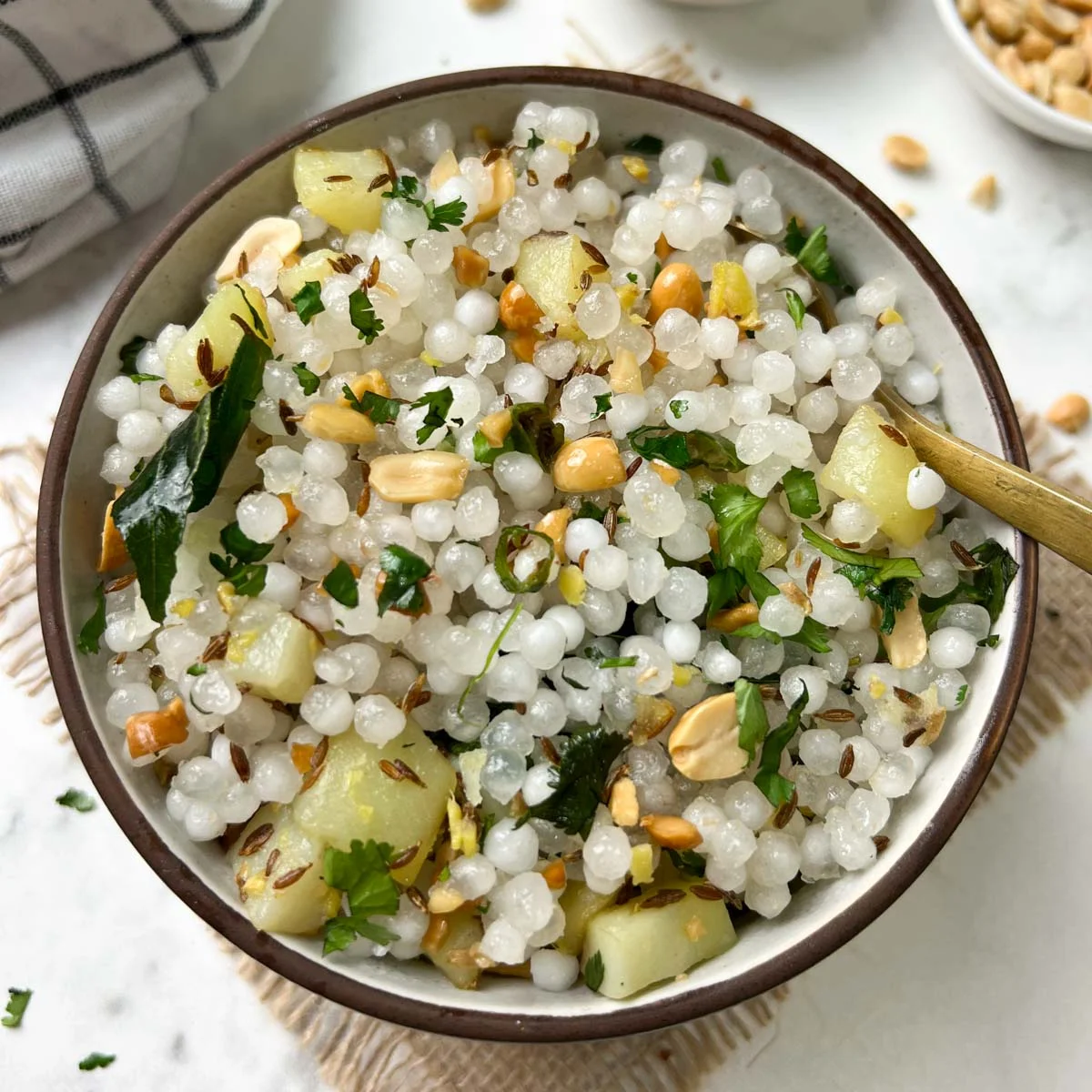
Sabudana khichdi is a North Indian dish of tapioca pearls tossed with potato, peanuts and warming spices. It is especially popular during fasting periods, and careful soaking helps the pearls cook up soft and separate rather than sticky.
Ingredients
- 150 g (1 cup)sabudana (sago or tapioca pearls)
- 480 ml (2 cups)water, for soaking
- 2 tablespoonsoil
- ½ teaspooncumin seeds
- 1 mediumpotato, diced into 6 mm cubes
- 3green chillies, finely chopped
- 1 stalkcurry leaves
- 1 teaspoonginger, minced (optional)
- 35 g (¼ cup)peanuts, roasted and crushed
- to tastesalt (use sendha namak if making for a fast)
- ½ teaspoonsugar (optional)
- 1 tablespoonlemon juice
- 2 tablespoonscoriander leaves
Instructions
- 1
Rinse and soak
Rinse the sabudana thoroughly under water to remove excess starch, then drain. Soak it in 480 ml water for 2–3 hours; the pearls should roughly double in size and mash easily between your fingers. Drain off any remaining water in a colander and set aside.
- 2
Roast peanuts
Dry-roast the peanuts in a pan over medium heat, or in an air fryer, until nicely roasted. Leave them to cool, then halve them or crush them lightly in a blender. Set aside.
- 3
Cook the potatoes
Heat the oil in a kadai. Add the cumin seeds and let them splutter, then add the diced potatoes and cook for 3–4 minutes until tender and cooked through. Alternatively, use pre-boiled, peeled and cubed potatoes and sauté them for 2 minutes.
- 4
Add aromatics
Add the chopped green chillies, ginger if using, and curry leaves. Cook for 1 minute.
- 5
Finish the khichdi
Add the drained sabudana, crushed roasted peanuts, salt and sugar, and mix well. Cover and cook for a few minutes until the pearls look translucent, stirring in between. Avoid overcooking or the sabudana may turn mushy and lumpy. Turn off the heat, add the lemon juice and chopped coriander leaves, and toss to combine.
- 6
Serve hot
Serve the sabudana khichdi hot on a plate with yoghurt.
What is sabudana khichdi?
Sabudana khichdi is an Indian preparation of soaked tapioca pearls cooked with potato, peanuts and spices. It is closely associated with fasting periods such as Navratri and Maha Shivaratri.
This version balances the pearls’ gentle chew with tender potato and roasted peanuts. Lemon and fresh coriander are added at the end to bring brightness.
Nutrition and macros by portion
The nutrition label shows one serving as written: 568 calories, 5g protein, 96g carbs, 19g fat.
| Portion | Adjustment | kcal | Protein | Carbs | Fat |
|---|---|---|---|---|---|
| Lighter | Use less oil | 398 kcal | 4g | 67g | 13g |
| This serving | As written | 568 kcal | 5g | 96g | 19g |
| Hungry | Serve a larger portion | 852 kcal | 8g | 144g | 29g |
Most of the carbohydrates come from the sabudana and potato, while the oil and peanuts provide much of the fat. Peanuts contribute some protein, though the dish is not especially protein-rich; serve it with yoghurt for a practical way to add protein and round out the plate.
Soaking the pearls
Rinsing first: Wash away excess surface starch before soaking, which helps the cooked pearls stay more distinct.
Checking readiness: Soak for 2–3 hours, but use the texture as your guide: the pearls should have expanded and mash easily between your fingers. Drain them well before adding to the pan.
The role of peanuts
Roasting: Toast the peanuts until fragrant and let them cool before crushing. This brings out their flavour and gives the dish a contrast to the soft pearls.
Crushing: Keep the pieces coarse rather than blending them into a fine powder. The recipe uses the crushed peanuts both for texture and to help coat the sabudana.
Cooking the potatoes
Small cubes: The 6 mm pieces cook quickly in the pan and distribute evenly through the dish. Keep them a similar size so they become tender at roughly the same time.
Tenderness cue: Cook for 3–4 minutes, checking that the cubes are cooked through before adding the chillies and other aromatics. Pre-boiled potato can be sautéed for 2 minutes instead.
Keeping the texture light
Gentle cooking: Once the sabudana goes in, cover the pan and cook only until the pearls turn translucent, stirring occasionally. Too much cooking can make them sticky and lumpy.
Finishing off the heat: Add lemon juice and coriander after switching off the heat. Toss gently so the pearls remain as separate as possible.
Timing the recipe
The stated 15-minute total time does not include the 2–3 hours needed to soak the sabudana. Plan that soaking time ahead, then the cooking itself is brief.
Have the peanuts roasted and the potato diced before heating the oil. This makes it easier to add each ingredient at the right stage.
Serving suggestions
Serve the khichdi hot, as its soft-and-crunchy texture is best just after cooking. Yoghurt is suggested alongside in the recipe and makes a cooling accompaniment.
For a fuller plate, serve with a portion of yoghurt and fresh vegetables if they suit your meal. If preparing it for a fast, follow the fasting rules you observe when choosing the salt.
Recipe notes & tips
- Check the sabudana by pressing a pearl between your fingers rather than relying on soaking time alone.
- Drain the soaked pearls thoroughly so excess water does not make the khichdi soggy.
- Cut the potato into evenly sized small cubes for more even cooking.
- Keep the peanuts coarsely crushed to retain some crunch.
- Stir gently and stop cooking as soon as the pearls look translucent.
- Add the lemon juice and coriander after turning off the heat.
Variations
- Adjust the heat: Use fewer green chillies for a milder dish.
- Skip the ginger: Leave it out for a simpler flavour.
- Omit the sugar: Leave out the optional sugar if you prefer a less sweet finish.
- Use pre-boiled potato: Peel and cube it, then sauté for 2 minutes.
- Change the crunch: Lightly crush the roasted peanuts rather than halving them.
Common mistakes to avoid
- Skipping the rinse: Excess surface starch can encourage clumping; rinse the pearls well before soaking.
- Leaving water behind: Drain the soaked sabudana thoroughly before adding it to the pan.
- Uneven potato cubes: Large or varied pieces cook inconsistently; cut them into similar 6 mm cubes.
- Overcooking the pearls: They can turn mushy and lumpy; stop once they look translucent.
- Crushing peanuts too finely: A fine powder loses the intended texture; keep the pieces coarse.
How to store
Refrigerate leftovers in a covered container and eat within 2 days. Reheat gently in a pan until hot, adding a small splash of water if the pearls have firmed up.
Frequently asked questions
How do I know when sabudana is soaked enough?
The pearls should have expanded and mash easily between your fingers. The recipe gives 2–3 hours as a guide, but the time can vary with the sabudana.
Can I use pre-boiled potatoes?
Yes. The method suggests using peeled, cubed pre-boiled potatoes and sautéing them for 2 minutes.
Why has my sabudana khichdi turned sticky?
It may have been overcooked or not drained well after soaking. Drain thoroughly and stop cooking as soon as the pearls turn translucent.
Can I make this for a fast?
The recipe suggests using sendha namak when preparing it for a fast. Check that the other ingredients suit the fasting rules you follow.
Can I prepare the peanuts ahead?
Yes. Roast and cool them ahead of time, then crush them before adding to the pan.
What should I serve with sabudana khichdi?
The recipe suggests serving it hot with yoghurt.
Cook it from the original
This recipe comes from indianveggiedelight.com. Their page has the author’s own photos, notes and tips — the best place to cook it from.
Open the recipe on indianveggiedelight.com