
Beetroot Kurma | Beetroot Korma - Instant Pot Pressure Cooker
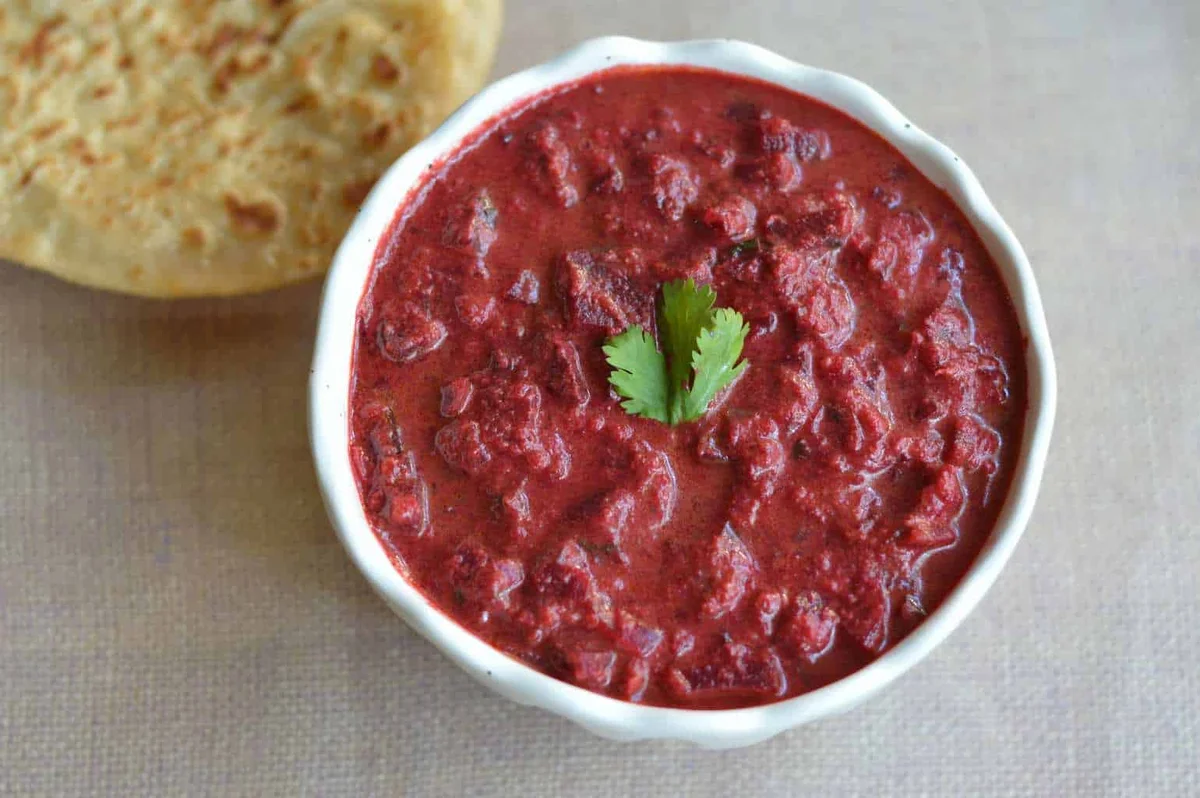
Beetroot kurma is a warmly spiced Indian curry in which beetroot cooks in a creamy coconut and cashew sauce. Make it in an Instant Pot or a stovetop pressure cooker, then serve it with flatbread or pooris.
Ingredients
- 300 g (2 cups)beetroot, cut into small cubes
- 150 g (1 cup)onion, finely chopped
- 75 g (½ cup)tomato, finely chopped
- 15 ml (1 tablespoon)ginger-garlic paste
- 7.5 ml (½ tablespoon)red chilli powder
- 5 ml (1 teaspoon)coriander powder
- 2.5 ml (½ teaspoon)jeera powder (cumin powder)
- 5 ml (1 teaspoon)garam masala powder
- to tastesalt
- 30 ml (2 tablespoons)oil
- 15 ml (1 tablespoon)coriander leaves, chopped, for garnish
- 15 ml (1 tablespoon)lime juice
- 120 ml (½ cup), or as requiredwater
- 20 g (¼ cup)grated coconut, fresh or frozen
- 6–8cashew nuts
- 2.5 cm (1 inch)cinnamon
- 5 ml (1 teaspoon), optionalsaunf (fennel seeds)
- as requiredwater, for grinding
Instructions
- 1
Prepare the beetroot
Peel the beetroot and cut it into small cubes.
- 2
Grind the paste
Grind the coconut, cashews and cinnamon with a little water until smooth.
- 3
Sauté the onion
Press SAUTE on the Instant Pot and add the oil. When the pot is hot, add the onion and ginger-garlic paste; sauté until the onion is light brown.
- 4
Soften the tomato
Add the chopped tomato and cook until soft.
- 5
Add the spices
Add the beetroot, red chilli powder, garam masala, coriander powder, jeera powder, ground coconut-cashew paste and salt. Mix well, add the water and stir.
- 6
Pressure cook
Close the Instant Pot lid with the pressure valve set to Sealing. Cook on High Pressure for 5 minutes.
- 7
Release pressure
When the pot beeps, allow the pressure to release naturally.
- 8
Finish the curry
Open the lid, directing it away from you. Add the lime juice and chopped coriander leaves, then mix well.
- 9
Serve the kurma
Serve hot with pooris, chapatis, roti or parathas.
- 10
Prepare the beetroot
For the stovetop pressure cooker method, peel the beetroot and cut it into small cubes.
- 11
Grind the paste
Grind the coconut, cashews and cinnamon into a smooth paste.
- 12
Heat the oil
Add the oil to a pressure cooker.
- 13
Sauté the onion
When the oil is hot, add the onion and ginger-garlic paste. Sauté until the onion is light brown.
- 14
Soften the tomato
Add the chopped tomato and cook until soft.
- 15
Add the spices
Add the beetroot, red chilli powder, garam masala, coriander powder, jeera powder, ground coconut-cashew paste and salt. Mix well and cook for 1–2 minutes, then add the water and stir.
- 16
Pressure cook
Close the lid, fit the weight and cook for 2–3 whistles over a medium flame.
- 17
Release pressure
Turn off the heat and let the pressure release naturally.
- 18
Finish the curry
Open the lid, add the lime juice and chopped coriander leaves, then mix well.
- 19
Serve the kurma
Serve hot with pooris, chapatis, roti or parathas.
What is beetroot kurma?
Kurma, also called korma, is a family of Indian dishes made with a spiced sauce; recipes vary across regions and households. This version pairs beetroot with coconut, cashews and warm spices for a creamy, gently sweet curry.
Pressure cooking softens the beetroot in a short time, while the ground coconut and cashews give the sauce body. The two cooker methods offer the same flavour with different pressure-cooking cues.
Nutrition and macros by portion
The nutrition label shows one serving as written: 232 calories, 7g protein, 26g carbs, 11g fat.
| Portion | Adjustment | kcal | Protein | Carbs | Fat |
|---|---|---|---|---|---|
| Lighter | Use less oil | 162 kcal | 5g | 18g | 8g |
| This serving | As written | 232 kcal | 7g | 26g | 11g |
| Hungry | Serve with extra flatbread | 348 kcal | 11g | 39g | 17g |
The beetroot and onion provide most of the carbohydrate, while the oil, coconut and cashews contribute much of the fat. Cashews and the other ingredients provide some protein, though the dish is not centred on a high-protein ingredient; serve it with a protein-rich side such as dal to balance the plate.
Building the flavour
Aromatic base: sauté the onion with ginger-garlic paste until the onion turns light brown, then cook the tomato until soft. These steps build the savoury base before the beetroot and spices go in.
Spice mix: chilli, coriander, cumin and garam masala season the curry. Salt is added to taste, so adjust it to suit your palate.
The coconut-cashew paste
Smooth paste: grind the coconut, cashews and cinnamon with just a little water until smooth. Add water sparingly so the mixture stays thick enough to enrich the curry.
Optional saunf: the ingredients list includes fennel seeds, but the method does not specify when to add them. If using them, grind them with the coconut, cashews and cinnamon.
Getting the beetroot tender
Even pieces: cut the beetroot into small, similarly sized cubes so they cook evenly under pressure. The Instant Pot method calls for 5 minutes on High Pressure followed by a natural pressure release.
Stovetop cues: cook for 2–3 whistles over a medium flame, then let the pressure release naturally. Whistle counts can vary between cookers, so check that the beetroot is tender when the lid is safe to open.
Finishing the sauce
Lime at the end: stir in the lime juice after pressure cooking, along with the chopped coriander leaves. This keeps the citrus and herb flavours fresh in the finished curry.
Sauce consistency: the recipe gives 120 ml water, or as required. Add the listed amount and adjust only as needed for the consistency you prefer.
What to serve with it
Flatbreads: serve the hot kurma with chapatis, roti or parathas to scoop up the sauce. Pooris are another suggested pairing.
For a fuller meal, pair it with rice or another simple side; keep the accompaniments mild so the spiced, creamy curry remains the focus.
Recipe notes & tips
- Cut the beetroot into small, even cubes for more consistent cooking.
- Use only a little water when grinding the coconut and cashews to help make a smooth paste.
- Wait until the onion is light brown and the tomato is soft before adding the beetroot.
- Follow the natural pressure-release instruction for either cooker method.
- Add the lime juice and coriander leaves after cooking, just before serving.
Variations
- Adjust the heat: use less or more red chilli powder to suit your preference.
- Use fresh coconut: swap frozen grated coconut for fresh, keeping the listed quantity.
- Include fennel: grind the optional saunf with the coconut, cashews and cinnamon.
- Choose your cooker: use the Instant Pot or stovetop pressure-cooker method provided.
- Change the accompaniment: serve with rice instead of the suggested breads.
Common mistakes to avoid
- Large uneven beetroot pieces: cut them into small, similar-sized cubes for even cooking.
- Watery paste: add only a little water while grinding the coconut and cashews.
- Pale onion: sauté until it turns light brown before moving on.
- Firm tomato: cook it until soft before adding the beetroot and spices.
- Quick pressure release: let the pressure release naturally as directed.
- Adding lime too early: stir it in after pressure cooking to finish the curry.
How to store
Refrigerate leftovers in a covered container and use within 3 days. Reheat gently in a pan or microwave until piping hot, adding a splash of water if the sauce has thickened.
Frequently asked questions
Can I make this without an Instant Pot?
Yes. The recipe includes a stovetop pressure-cooker method: cook for 2–3 whistles over a medium flame and let the pressure release naturally.
How much water should I add?
The ingredient list gives 120 ml, or as required. Use only a little water for grinding the paste, then add the curry water as listed.
When should I add the fennel seeds?
Fennel is listed as optional but is not mentioned in the method. If you want to use it, grind it with the coconut, cashews and cinnamon.
How do I know when the beetroot is cooked?
It should be tender when the pressure has released and the lid is safe to open. Cut the cubes small and evenly to help them cook consistently.
What can I serve with beetroot kurma?
The recipe suggests pooris, chapatis, roti or parathas. Rice is another possible accompaniment.
Can I make the curry ahead?
Yes. Refrigerate it in a covered container and reheat it gently before serving. Stir in a little water if the sauce thickens in storage.
Cook it from the original
This recipe comes from indianveggiedelight.com. Their page has the author’s own photos, notes and tips — the best place to cook it from.
Open the recipe on indianveggiedelight.com