
Sri Lankan green gram milk rice(mung kiribath).
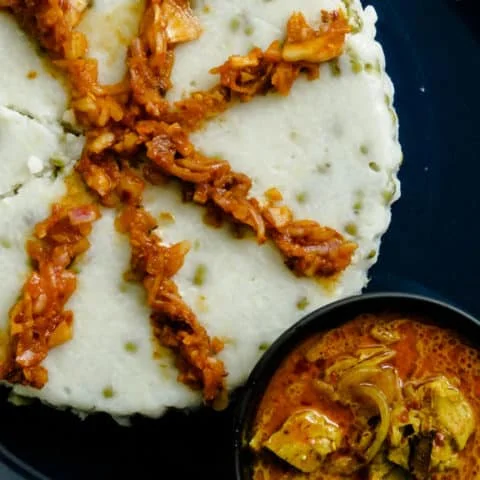
Sri Lankan mung kiribath is a savoury, sliceable rice dish enriched with coconut milk and tender green gram. The beans add a pleasingly soft, substantial texture, making it a comforting dish to serve with curry and sambol.
Ingredients
- 400 g (2 cups)raw white rice, glutinous or jasmine
- 1 cup soaked (about 200 g)green gram (mung beans)
- 480 ml (2 cups)water
- 300 ml (1¼ cups), with up to 60 ml (¼ cup) extra if neededthick coconut milk
- to tastesalt
Instructions
- 1
Prepare the tin
If using a cake tin or pie dish, line the bottom with cling film, leaving the edges hanging over the sides.
- 2
Soak the beans
Rinse the mung beans, cover them completely with water and soak overnight, or for 12 hours.
- 3
Rinse the rice
When you are ready to cook, wash the raw rice and set it aside.
- 4
Boil the beans
Drain the soaked mung beans, cover them with fresh water (2–3 cups) and cook over medium heat for 25 minutes, or until semi-soft.
- 5
Reserve the water
Drain the partially cooked beans, keeping the cooking water in a cup rather than discarding it. It can be left to cool and drunk.
- 6
Set beans aside
Set the boiled mung beans aside.
- 7
Cook the rice
Put the rice in a large pan, add the water, season with salt and cook over medium heat.
- 8
Soften the rice
Continue cooking until the water has reduced and the rice is soft.
- 9
Add coconut milk
Stir in the mung beans and thick coconut milk. Taste and add salt if needed, then keep cooking until the rice, beans and coconut milk come together as a thick, milky porridge.
- 10
Press into dish
Transfer the mixture to the prepared tin or a Pyrex dish, or onto a banana leaf. Spread it out and press it down gently but firmly.
- 11
Cool and slice
Leave the kiribath to cool for 20 minutes, then slice it with a knife.
- 12
Serve with sambol
Serve with your favourite curries and a spicy sambol.
What is mung kiribath?
Kiribath is a Sri Lankan dish of rice cooked with coconut milk, traditionally shaped or cut for serving. This version includes green gram, also called mung beans, for extra texture alongside the rich, soft rice.
The key to this variation is cooking the beans until semi-soft before adding them to the rice. That way they remain distinct while the coconut milk binds everything into a thick mixture that can be pressed and sliced.
Nutrition and macros by portion
The nutrition label shows one serving as written: 470 calories, 9g protein, 80g carbs, 14g fat.
| Portion | Adjustment | kcal | Protein | Carbs | Fat |
|---|---|---|---|---|---|
| Lighter | Use less coconut milk | 329 kcal | 6g | 56g | 10g |
| This serving | As written | 470 kcal | 9g | 80g | 14g |
| Hungry | Serve a larger slice | 705 kcal | 14g | 120g | 21g |
Most of the carbohydrates come from the rice, with the mung beans contributing both carbohydrates and some protein. Coconut milk supplies much of the fat, while the beans add a little more protein to each portion. Pair a slice with vegetable-rich curry and sambol to add variety to the plate.
Choosing the rice and beans
Rice: Glutinous rice gives a particularly cohesive result, while jasmine rice is a suitable alternative. Wash it before cooking so it is ready to go into the pan.
Green gram: The beans need an overnight soak, or 12 hours, before boiling. Cook them until semi-soft rather than fully falling apart; they will cook further when added to the rice.
Getting the texture right
Rice: Cook the rice in water until soft and the water has reduced. Keep the heat at medium and watch the pan as it thickens.
Coconut milk: Add it after the beans, then continue cooking until the mixture is thick and milky. The recipe allows up to 60 ml extra if the kiribath does not seem thick or milky enough.
Pressing and slicing
Prepare the dish before you start shaping the kiribath, lining a tin with cling film if you want to lift it out easily. Leave plenty of film overhanging the edges.
Spread the mixture evenly and press it down gently but firmly. Let it cool for 20 minutes before slicing so the pieces hold together better.
Timing the preparation
Soaking takes 12 hours, so plan ahead; it is not part of the hands-on cooking. The beans then take about 25 minutes to become semi-soft, while the rice and coconut milk are cooked until soft and thick.
The kiribath needs a further 20 minutes to cool before slicing. The cooking stages are guided by texture, so allow the mixture to become properly thick rather than relying only on the clock.
What to serve with it
A spicy sambol brings heat and contrast to the mild, coconut-rich rice. Curries also make a natural accompaniment, as suggested in the serving instructions.
For a balanced plate, pair a slice with a vegetable-rich curry and a modest spoonful of sambol. Serve the kiribath warm or at room temperature.
Recipe notes & tips
- Soak the mung beans for the full 12 hours to help them cook evenly.
- Keep the drained bean water if you would like to follow the method's suggestion to drink it once cooled.
- Check the beans at 25 minutes and stop cooking when they are semi-soft.
- Add the coconut milk after the beans so you can judge how thick the mixture is becoming.
- Line the tin with cling film if you want to lift the kiribath out for slicing.
- Use a sharp knife to cut the cooled kiribath into neat pieces.
Variations
- Use glutinous rice: Choose it instead of jasmine rice for a more cohesive texture.
- Use jasmine rice: Choose it instead of glutinous rice if that is what you have available.
- Adjust the coconut milk: Add up to 60 ml extra if the mixture is not thick or milky enough.
- Serve with curry: Choose your favourite curry to accompany the slices.
- Add sambol: Serve with a spicy sambol for a hot, sharp contrast.
Common mistakes to avoid
- Skipping the soak: Soak the mung beans overnight or for 12 hours before cooking.
- Overcooking the beans: Stop boiling them when they are semi-soft, as they cook further with the rice.
- Discarding the bean water: Keep it in a cup if you want to drink it cooled, as the method suggests.
- Adding too much coconut milk at once: Start with the stated amount and use the extra only if the mixture needs it.
- Slicing while hot: Leave the kiribath to cool for 20 minutes before cutting.
- Pressing too hard: Spread and press the mixture gently but firmly to shape it without crushing the beans.
How to store
Refrigerate leftover kiribath in an airtight container and use within 3 days. Reheat gently in a covered pan or microwave until hot, adding a small splash of water if it has become dry.
Frequently asked questions
How long do the mung beans need to soak?
Soak them overnight, or for 12 hours, after rinsing and covering them completely with water.
Can I use jasmine rice instead of glutinous rice?
Yes. The recipe lists glutinous or jasmine rice as options; glutinous rice will generally give a more cohesive result.
How soft should the beans be before adding them?
Boil them for about 25 minutes, or until semi-soft. They will continue cooking when mixed with the rice and coconut milk.
What if the kiribath is not thick enough?
Continue cooking until the mixture becomes a thick, milky porridge. The recipe suggests adding up to 60 ml extra coconut milk if it is not thick or milky enough.
Do I have to shape it in a tin?
No. You can use a cake tin or pie dish, a Pyrex dish or a banana leaf. Cling film lining is suggested for a tin.
What should I serve with mung kiribath?
Serve it with your favourite curries and a spicy sambol.
Cook it from the original
This recipe comes from islandsmile.org. Their page has the author’s own photos, notes and tips — the best place to cook it from.
Open the recipe on islandsmile.org