
Palak Raita | Spinach Raita
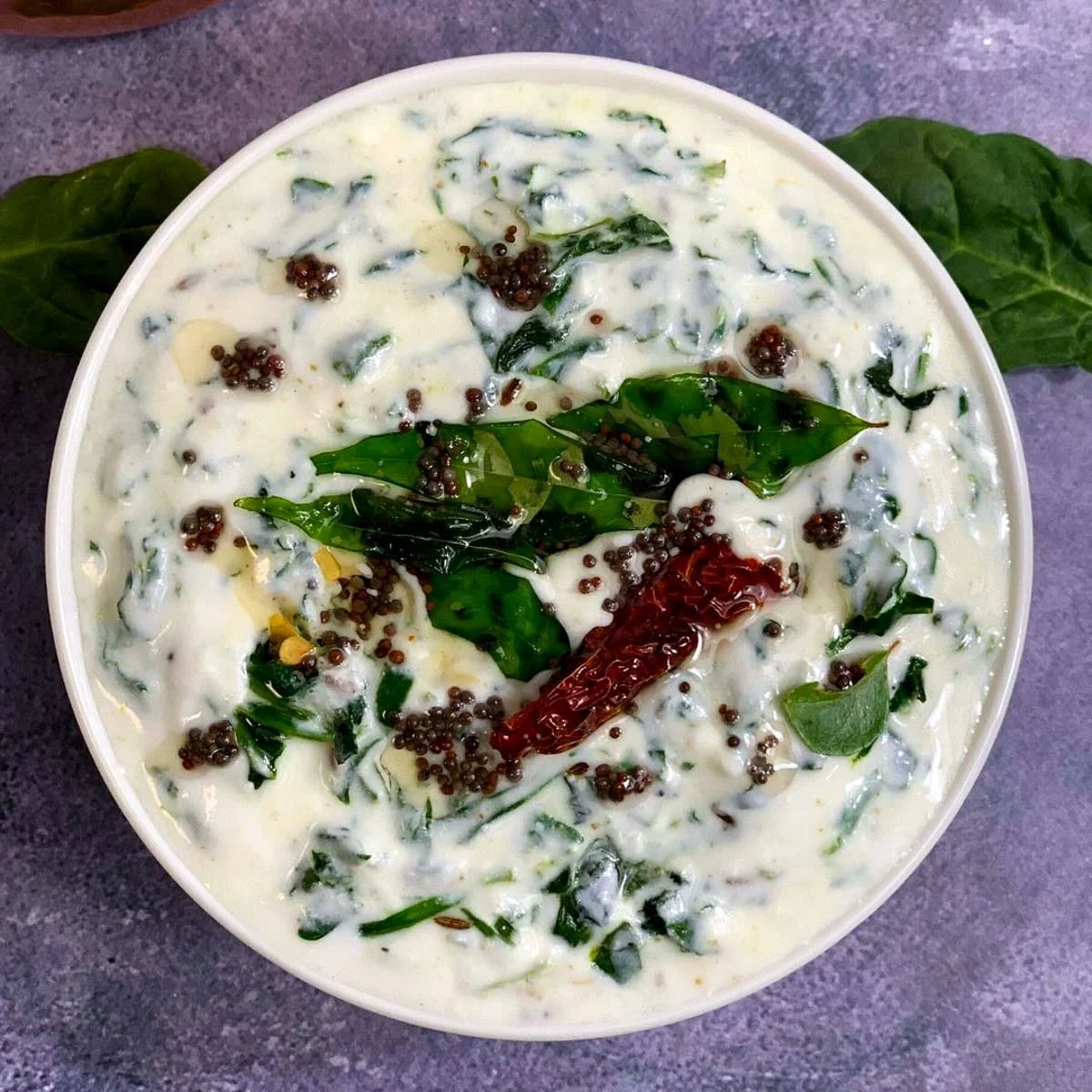
Palak raita is a cooling Indian yoghurt side dish made with cooked spinach, spices and a fragrant oil tempering. It comes together quickly and pairs well with richly spiced meals.
Ingredients
- 480 ml (2 cups)yoghurt (curd)
- 60 g (2 cups)finely chopped spinach (palak)
- 1 teaspooncumin seeds (jeera)
- ½ teaspoonroasted cumin powder (jeera)
- ½ teaspoonblack salt
- ¼ teaspoonblack pepper
- to tastesalt
- 1 teaspoonoil
- 1 teaspoonoil
- 1dried red chilli
- ½ teaspoonmustard seeds
- a fewcurry leaves
Instructions
- 1
Toast the cumin
Heat 1 teaspoon of oil in a kadai. Add the cumin seeds and let them splutter.
- 2
Cook the spinach
Add the chopped spinach and salt, then sauté for 2–3 minutes, until the leaves have wilted and are cooked through. Leave the mixture to cool before adding it to the yoghurt.
- 3
Whisk the yoghurt
Whisk the yoghurt in a large mixing bowl, then stir in the cooled spinach mixture.
- 4
Season the raita
Add the roasted cumin powder, black salt, pepper and regular salt, then mix well. Taste and adjust the seasoning if needed.
- 5
Make the tempering
Heat 1 teaspoon of oil. Once hot, add the mustard seeds, dried red chilli and curry leaves, and let them crackle for a few seconds. This step is optional.
- 6
Finish and chill
Pour the tempering over the palak raita. Serve chilled.
What is palak raita?
Raita is an Indian yoghurt-based accompaniment, often served alongside spiced dishes. Palak means spinach, and this version combines cooked leaves with seasoned yoghurt and a quick tempering.
Cooking the spinach first softens it and keeps the finished raita easy to mix. The cool, tangy yoghurt balances the earthy greens and aromatic spices.
Nutrition and macros by portion
The nutrition label shows one serving as written: 167 calories, 5g protein, 9g carbs, 11g fat.
| Portion | Adjustment | kcal | Protein | Carbs | Fat |
|---|---|---|---|---|---|
| Lighter | Use less tempering oil | 117 kcal | 4g | 6g | 8g |
| This serving | As written | 167 kcal | 5g | 9g | 11g |
| Hungry | Serve a larger portion | 251 kcal | 8g | 14g | 17g |
The yoghurt supplies most of the protein, while the spinach contributes some carbohydrates and fibre. The oil provides much of the fat; serve the raita with a portion of lentils and vegetables for a more balanced plate.
Cook the spinach gently
Spinach: add it to the cumin-scented oil with salt and sauté just until wilted and cooked through. The brief cooking time keeps the leaves tender without making them lose their character.
Cooling: let the spinach mixture cool before stirring it into the yoghurt. This prevents the yoghurt from warming up as you combine the ingredients.
Season in layers
Roasted cumin: its warm, toasty flavour is stirred into the yoghurt along with black salt and pepper. Taste before adding more regular salt, as the black salt already contributes seasoning.
Cumin seeds: these are added to the first measure of oil and allowed to splutter before the spinach goes in, flavouring the greens from the start.
Make the tempering
Hot oil: heat the second measure of oil before adding the mustard seeds, chilli and curry leaves. Let them crackle for only a few seconds, then pour the tempering over the raita.
Chilli: keep it whole for a milder infusion, or break it before adding if you prefer more heat. The tempering is optional, but adds a final aromatic note.
Serve it chilled
Chilling lets the flavours come together and makes the yoghurt refreshing alongside warm food. Stir gently before serving if the raita has been standing for a while.
It works well with rice, flatbreads, lentils or a spiced vegetable dish. Serve it as a cool side rather than heating it.
Recipe notes & tips
- Chop the spinach finely so it mixes evenly through the yoghurt.
- Let the cooked spinach cool completely before combining it with the yoghurt.
- Taste after adding the black salt before adjusting with regular salt.
- Add the tempering as soon as the mustard seeds and curry leaves crackle.
- Chill the raita before serving for a refreshing side.
Variations
- More heat: break the dried chilli before adding it to the tempering.
- Milder finish: leave out the dried chilli.
- Herby version: add chopped fresh coriander when mixing in the spinach.
- Thicker raita: use thick yoghurt in place of regular yoghurt.
- Extra spice: add a little more roasted cumin powder to taste.
Common mistakes to avoid
- Adding hot spinach: it can warm the yoghurt; let the spinach mixture cool first.
- Overcooking the leaves: they can become overly soft; stop sautéing once they are wilted and cooked.
- Adding salt too soon: black salt is already seasoned; taste before adding more regular salt.
- Heating the tempering too long: the spices and leaves can burn; take the oil off the heat after they crackle.
- Serving it warm: the dish is best served chilled; refrigerate it before serving.
How to store
Keep the raita covered in the refrigerator and eat it within 2 days. Serve it cold; do not reheat, as warming can affect the yoghurt's texture.
Frequently asked questions
Can I make palak raita ahead of time?
Yes. Prepare it ahead and keep it covered in the refrigerator. Add the tempering before serving for the freshest aroma.
Do I have to add the tempering?
No, the method marks it as optional. The raita will still be seasoned with cumin powder, black salt and pepper.
Can I use frozen spinach?
Yes, thaw it and cook it until the excess moisture has evaporated. Let it cool before mixing it into the yoghurt.
How do I stop the raita becoming watery?
Cook off excess moisture from the spinach and cool it before mixing. Thick yoghurt can also give the raita a firmer consistency.
What can I serve with palak raita?
Serve it chilled alongside rice, flatbreads, lentils or spiced vegetables.
Cook it from the original
This recipe comes from indianveggiedelight.com. Their page has the author’s own photos, notes and tips — the best place to cook it from.
Open the recipe on indianveggiedelight.com