
Guanciale Pasta
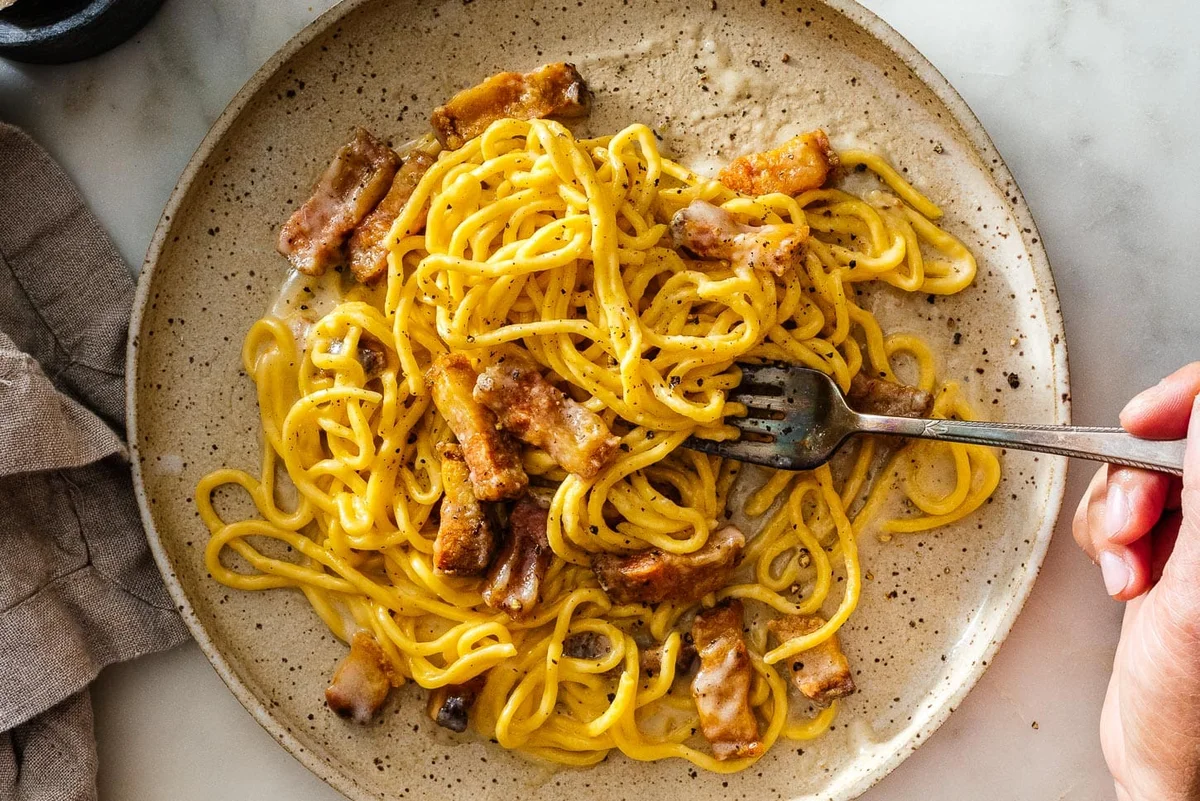
Guanciale pasta, or pasta alla gricia, pairs crisp cured pork cheek with Pecorino Romano and plenty of black pepper. It is a quick Roman-style pasta that gets its glossy sauce from rendered fat, starchy pasta water and cheese.
Ingredients
- 113 g (4 oz)guanciale, cubed
- 170 g (6 oz)pasta, any shape
- 85 g (3 oz)Pecorino Romano, finely grated
- At least 10 ml (2 tsp)freshly ground black pepper, or more to taste
Instructions
- 1
Crisp the guanciale
Cook the guanciale in a non-stick frying pan over medium-low heat until its fat has rendered and the meat is crisp to your liking. Transfer the meat to a bowl, then take the pan off the heat and set it aside.
- 2
Cook the pasta
While the guanciale cooks, boil the pasta in a large pan of water, stirring occasionally, until it is 3 minutes short of the time stated on the packet. Reserve 355 ml (1½ cups) of pasta water, then drain the pasta without rinsing it.
- 3
Emulsify the sauce
Pour 180 ml (¾ cup) of pasta water into the frying pan and bring it to a gentle boil over medium heat, swirling often to combine it with the rendered fat, for about 1 minute. Add the pasta and keep swirling until it is al dente and the sauce is thick and glossy, about 2 minutes. Use silicone-coated tongs if needed to avoid breaking the pasta.
- 4
Finish and serve
Turn the heat up to medium-high. Add the crisped guanciale, pepper and two-thirds of the grated Pecorino, then toss well to melt the cheese and combine. Serve straight away with the remaining Pecorino on top.
What is pasta alla gricia?
Pasta alla gricia is a Roman pasta dish from Lazio, made with guanciale, Pecorino Romano and black pepper. It is often described as a simple, sauce-free pasta whose richness comes from the pork fat and cheese.
This version uses pasta water to bring the rendered fat and grated cheese together into a glossy coating. The short cooking time makes it practical for a quick meal.
Nutrition and macros by portion
The nutrition label shows one serving as written: 570 calories, 29g protein, 47g carbs, 28g fat.
| Portion | Adjustment | kcal | Protein | Carbs | Fat |
|---|---|---|---|---|---|
| Lighter | Smaller pasta portion | 399 kcal | 20g | 33g | 20g |
| This serving | As written | 570 kcal | 29g | 47g | 28g |
| Hungry | Larger pasta portion | 855 kcal | 44g | 70g | 42g |
The pasta provides most of the carbohydrates, while guanciale and Pecorino contribute much of the fat and protein. Serve with a green salad or vegetables to add freshness and balance the plate.
Choose the key ingredients
Guanciale: cured pork cheek renders savoury fat as it crisps, which forms the base of the sauce. Cut it into cubes so the pieces cook evenly.
Pecorino Romano: this sharp, salty sheep’s milk cheese supplies much of the dish’s flavour. Grating it finely helps it melt and coat the pasta.
Build the sauce in the pan
Rendered fat: take the pan off the heat while you drain the pasta, then add the measured pasta water and return the pan to the hob. Swirling helps the water and fat emulsify.
Starchy water: reserve it before draining, as it helps the sauce cling to the pasta. The recipe uses 180 ml first; keep the remaining reserved water available, though the method does not call for adding it.
Get the pasta texture right
Finish cooking: drain the pasta 3 minutes before the packet time and let it finish in the pan with the sauce for about 2 minutes. Check that it is al dente before serving.
Glossy coating: keep the pan moving as the pasta cooks. The sauce should thicken and coat the strands or shapes rather than sit as a pool in the pan.
Balance the salt and pepper
Black pepper: freshly grind at least 2 teaspoons for the bold, warming flavour associated with gricia. Add more to taste if you want a stronger pepper note.
Pecorino and guanciale are both salty, so taste the finished pasta before adding any extra salt. The recipe does not specify salt for the cooking water.
Serve it straight away
Timing: have the grated cheese and pepper ready before the pasta reaches the skillet, so you can finish the dish while it is hot. Toss in the guanciale and two-thirds of the cheese, then serve with the rest on top.
On the side: a crisp green salad or simply cooked vegetables offer a fresh contrast to the rich pasta. Serve them separately so the sauce stays glossy.
Recipe notes & tips
- Grate the Pecorino finely so it combines more readily with the hot pasta.
- Reserve the pasta water before draining; it is easy to forget once the pasta is ready.
- Keep the guanciale over medium-low heat so its fat can render as the cubes crisp.
- Use a large pot and stir the pasta occasionally while it cooks.
- Serve immediately, with the final Pecorino added at the table.
Variations
- Change the shape: use any pasta shape you like, as the recipe allows.
- Pepper it up: grind in more black pepper for a stronger, warmer flavour.
- Adjust the cheese: add the remaining Pecorino to each serving to taste.
- Add a salad: serve with crisp leaves for a fresh contrast to the rich pasta.
Common mistakes to avoid
- Discarding the pasta water: reserve 355 ml before draining so you can emulsify the sauce.
- Rinsing the pasta: drain it without rinsing so its surface starch remains.
- Cooking the pasta fully in the pot: drain it 3 minutes before the packet time so it can finish in the skillet.
- Adding cheese too early: wait until the pasta and guanciale are in the pan, then toss with the cheese.
- Letting the pasta sit: serve as soon as the sauce is glossy, before it cools.
How to store
For the best texture, serve this pasta immediately. Refrigerate leftovers in an airtight container and use within 2 days; reheat gently in a pan with a small splash of water, stirring until hot.
Frequently asked questions
What is pasta alla gricia?
It is a Roman pasta dish made with guanciale, Pecorino Romano and black pepper. In this recipe, pasta water helps bring the rendered fat and cheese together.
Can I use a different pasta shape?
Yes. The recipe calls for a pasta shape of your choice; cook it according to its packet instructions, draining it 3 minutes early.
Can I replace guanciale?
Guanciale is the defining pork ingredient here and provides the rendered fat for the sauce. Replacing it will change the dish’s flavour and texture.
Why reserve pasta water?
Its starch helps the rendered fat and cheese form a coating sauce. Reserve it before draining and use 180 ml as directed.
How do I know when the pasta is ready?
It should be al dente after about 2 minutes in the skillet, having started there 3 minutes short of the packet time. The sauce should look thick and glossy.
Can I make it ahead?
It is best made just before serving, when the sauce is glossy and the pasta is hot. Leftovers can be refrigerated and reheated gently, though the texture may be less silky.
Cook it from the original
This recipe comes from iamafoodblog.com. Their page has the author’s own photos, notes and tips — the best place to cook it from.
Open the recipe on iamafoodblog.com