
Lemon Curd Cake
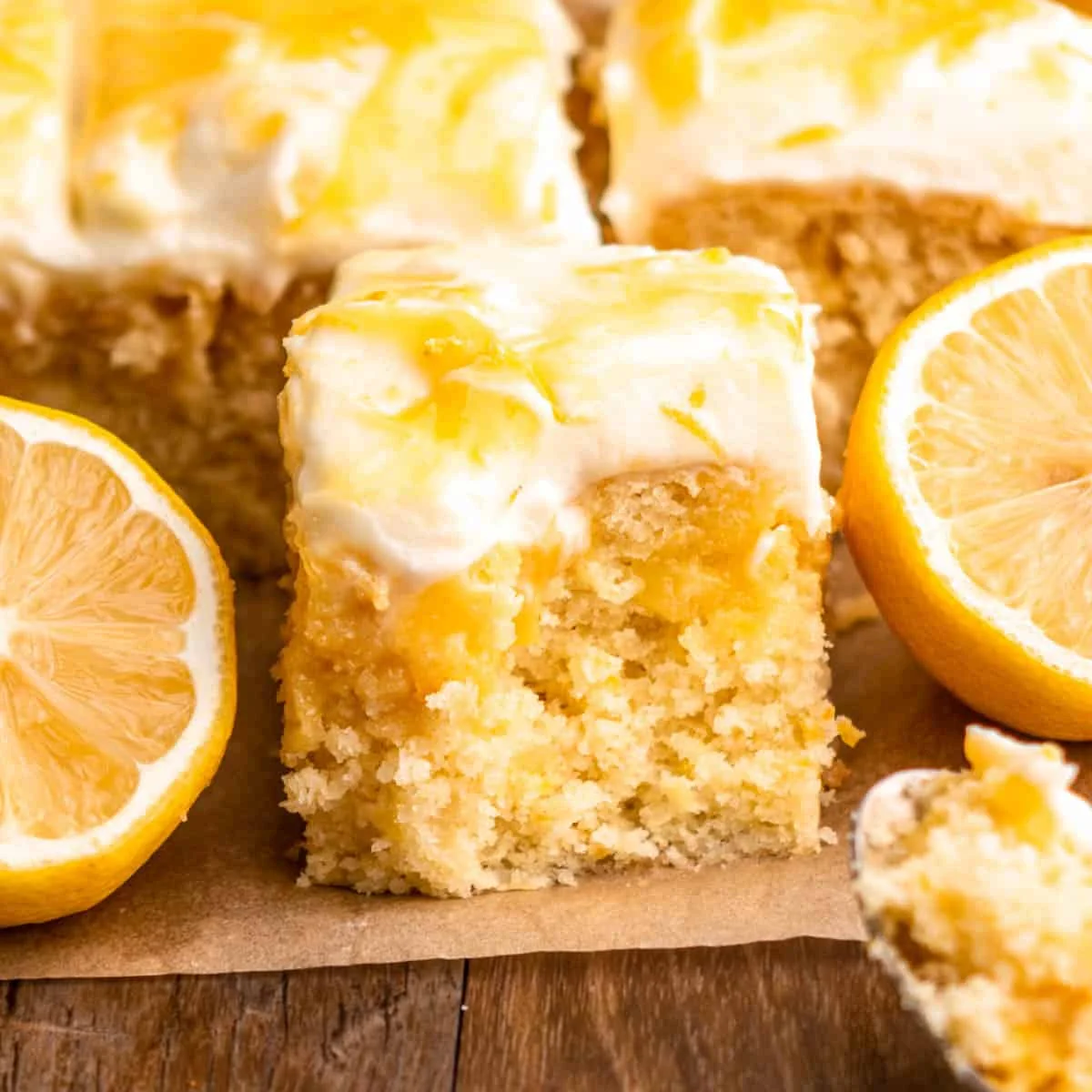
A soft lemon cake is filled with homemade lemon curd and finished with a tangy lemon cream cheese frosting. Make it for a celebration or whenever you want a generous, distinctly lemony tray cake to share.
Ingredients
- 120 ml (½ cup)fresh lemon juice
- 4 largeegg yolks, at room temperature
- 150 g (¾ cup)granulated white sugar
- ⅛ tspsalt
- 10 g (1 tbsp; about 1 large lemon)lemon zest
- 112 g (½ cup)unsalted butter, cold and cut into cubes
- 281 g (2¼ cups), spooned and levelledplain flour
- 1½ tspbaking powder
- ¼ tspbicarbonate of soda
- ½ tspsalt
- 140 g (10 tbsp)unsalted butter, softened
- 300 g (1½ cups)granulated white sugar
- 3 largeeggs, at room temperature
- 1 tbspvanilla
- 240 ml (1 cup)buttermilk, at room temperature
- 30 g (3 tbsp; about 3 large lemons)lemon zest
- 168 g (¾ cup)unsalted butter, softened
- 170 g (6 oz)cream cheese, cold
- 293 g (2¼ cups)icing sugar
- 5 g (½ tbsp; about ½ large lemon)lemon zest
Instructions
- 1
Whisk the curd
Put the lemon juice, egg yolks, sugar, salt and lemon zest in a medium saucepan and whisk them together.
- 2
Cook until thick
Heat the mixture over medium-low heat for 20–25 minutes, whisking frequently, until it thickens enough to coat the back of a spoon.
- 3
Add the butter
Take the pan off the heat and slowly whisk in the cold, cubed butter.
- 4
Chill the curd
Once the butter has melted in, transfer the curd to a small heatproof bowl. Press cling film directly onto its surface to prevent a skin forming, then chill until completely cool.
- 5
Prepare the tin
Heat the oven to 175°C (350°F). Grease a 23 × 23 cm (9 × 9 inch) tin with non-stick spray and line it with baking parchment.
- 6
Mix the dry ingredients
Whisk the flour, baking powder, bicarbonate of soda and salt together in a medium bowl, then set aside.
- 7
Cream butter and sugar
In a large bowl, beat the softened butter and sugar with an electric mixer for 2 minutes. A stand mixer fitted with a paddle attachment can also be used.
- 8
Add eggs and vanilla
Add the eggs and vanilla, then mix on medium speed for about 1 minute, until the mixture is smooth and pale.
- 9
Combine the batter
Add the dry ingredients and buttermilk to the wet mixture a little at a time, mixing on low speed until combined. Scrape down the bowl with a rubber spatula as needed.
- 10
Fold in zest
Fold the lemon zest into the batter.
- 11
Fill the tin
Pour the batter into the prepared tin.
- 12
Bake the cake
Bake for 35–40 minutes, or until a cake tester inserted into the centre comes out clean.
- 13
Cool completely
Leave the cake in its tin on a wire rack until completely cool.
- 14
Whip the butter
Beat the butter in a large mixing bowl on high speed for about 5 minutes, until pale and fluffy. If using a stand mixer, fit it with the whisk attachment.
- 15
Add cream cheese
Add the cold cream cheese and beat on high speed for about 1 minute, until fluffy.
- 16
Mix in sugar
Sift in the icing sugar and mix on low speed until combined.
- 17
Finish the frosting
Add the lemon zest and beat on high speed until the frosting is fluffy again.
- 18
Release the cake
Once the cake is completely cool, carefully turn the tin over to release it and transfer it to a serving plate. Use a wooden skewer or the handle of a wooden spoon to poke holes across the top.
- 19
Prepare the curd
Transfer the lemon curd to a piping bag.
- 20
Fill the holes
Pipe lemon curd into the holes in the cake.
- 21
Frost and serve
Spread a thick layer of lemon cream cheese frosting over the top with an offset spatula. Swirl lemon curd into the frosting, then serve.
What is lemon curd cake?
Lemon curd cake pairs a tender American-style butter cake with the sharp, silky citrus filling known as lemon curd. This version tucks the curd into holes in the baked cake, then tops it with lemon cream cheese frosting.
The layered lemon flavour comes from juice and zest in the curd, zest in the sponge and zest in the frosting. Buttermilk helps give the cake a soft, moist crumb.
Nutrition and macros by portion
The nutrition label shows one serving as written: 507 calories, 6g protein, 60g carbs, 27g fat.
| Portion | Adjustment | kcal | Protein | Carbs | Fat |
|---|---|---|---|---|---|
| Lighter | Smaller slice, more berries | 355 kcal | 4g | 42g | 19g |
| This serving | As written | 507 kcal | 6g | 60g | 27g |
| Hungry | Larger cake slice | 761 kcal | 9g | 90g | 41g |
The flour and sugars supply most of the carbohydrate, while butter and cream cheese contribute much of the fat. Eggs and cream cheese provide some protein, though this is mainly a cake-and-frosting dessert. Pair a slice with fresh berries or serve a smaller piece after a meal with a source of protein.
Making the lemon curd
Gentle heat: Cook the juice, yolks, sugar, salt and zest over medium-low heat, whisking frequently. The curd is ready when it thickly coats the back of a spoon.
Butter and chilling: Whisk the cold butter in gradually off the heat. Press cling film onto the surface before chilling so the curd cools without forming a skin.
Getting a tender cake
Creaming: Beat the softened butter and sugar for the full 2 minutes to start with an even, fluffy mixture. Add the eggs and vanilla and mix until smooth and pale.
Combining: Add the dry ingredients and buttermilk gradually on low speed, stopping once the batter comes together. Fold in the zest so it is distributed without overmixing.
Checking for doneness
Centre test: Begin checking at 35 minutes, the start of the stated baking window. A tester inserted in the centre should come out clean.
Cooling: Cool the cake completely in the tin on a wire rack before turning it out. A warm cake can break when released and can soften the frosting.
Filling and frosting
Curd pockets: Make holes across the top with a wooden skewer or spoon handle, then pipe the cooled curd into them. This gives the filling a place to sit inside the cake rather than only on top.
Cream cheese frosting: Whip the butter until pale and fluffy before adding the cold cream cheese. Add sifted icing sugar on low speed, then beat in the zest and finish with a swirl of curd.
Serving the cake
Cut the cake into 16 portions and serve it once the frosting is spread and swirled. The lemon filling and creamy topping make each piece rich, so a simple accompaniment such as fresh berries works well.
Recipe notes & tips
- Use room-temperature egg yolks and cake eggs as specified so they mix smoothly into their respective mixtures.
- Keep the curd over medium-low heat and whisk often as it thickens.
- Press cling film directly onto the curd before chilling to prevent a skin.
- Scrape the sides of the cake batter bowl as needed while adding the dry ingredients and buttermilk.
- Wait until the cake is completely cool before filling and frosting it.
- Sift the icing sugar before mixing it into the frosting to help it combine evenly.
Variations
- More citrus: Add extra lemon zest to the frosting for a brighter finish.
- Berry pairing: Serve slices with fresh berries for a fruity contrast.
- Orange twist: Replace some lemon zest with orange zest for a mixed-citrus flavour.
- Decorative finish: Pipe some frosting around the edge before adding the curd swirl.
- Individual portions: Cut the cooled cake into smaller squares for a dessert platter.
Common mistakes to avoid
- High curd heat: The mixture can cook unevenly; keep it over medium-low heat and whisk frequently.
- Curd not thick enough: It may not stay in the cake well; cook until it coats the back of a spoon.
- Overmixing the batter: This can make the crumb less tender; mix on low just until combined.
- Warm cake: Frosting can soften or slide; cool the cake completely before assembling.
- Shallow holes: The curd may remain on the surface; make holes deep enough to fill without piercing through the cake.
How to store
Cover and refrigerate leftover cake because it is topped with cream cheese frosting. Keep it chilled for up to 4 days, then bring a portion towards room temperature before serving for a softer texture. Avoid heating the frosted cake, as the topping can melt.
Frequently asked questions
Can I make the lemon curd ahead?
Yes. Make it in advance and chill it with cling film pressed directly onto the surface. It needs to be completely cool before you pipe it into the cake.
How do I know when the curd is thick enough?
It should coat the back of a spoon after cooking. Keep whisking frequently as it thickens over medium-low heat.
Can I use a different-sized tin?
The method is written for a 23 × 23 cm (9 × 9 inch) tin. A different size will change the cake's depth and may affect its baking time.
Why must the cake cool completely before frosting?
A warm cake can break as you turn it out, and heat can soften the cream cheese frosting. Let it cool fully on the rack first.
How should I serve lemon curd cake?
Cut it into 16 portions and serve as it is, or add fresh berries alongside. The frosting and curd provide a rich, tangy finish.
Cook it from the original
This recipe comes from inbloombakery.com. Their page has the author’s own photos, notes and tips — the best place to cook it from.
Open the recipe on inbloombakery.com