
Texas Toast
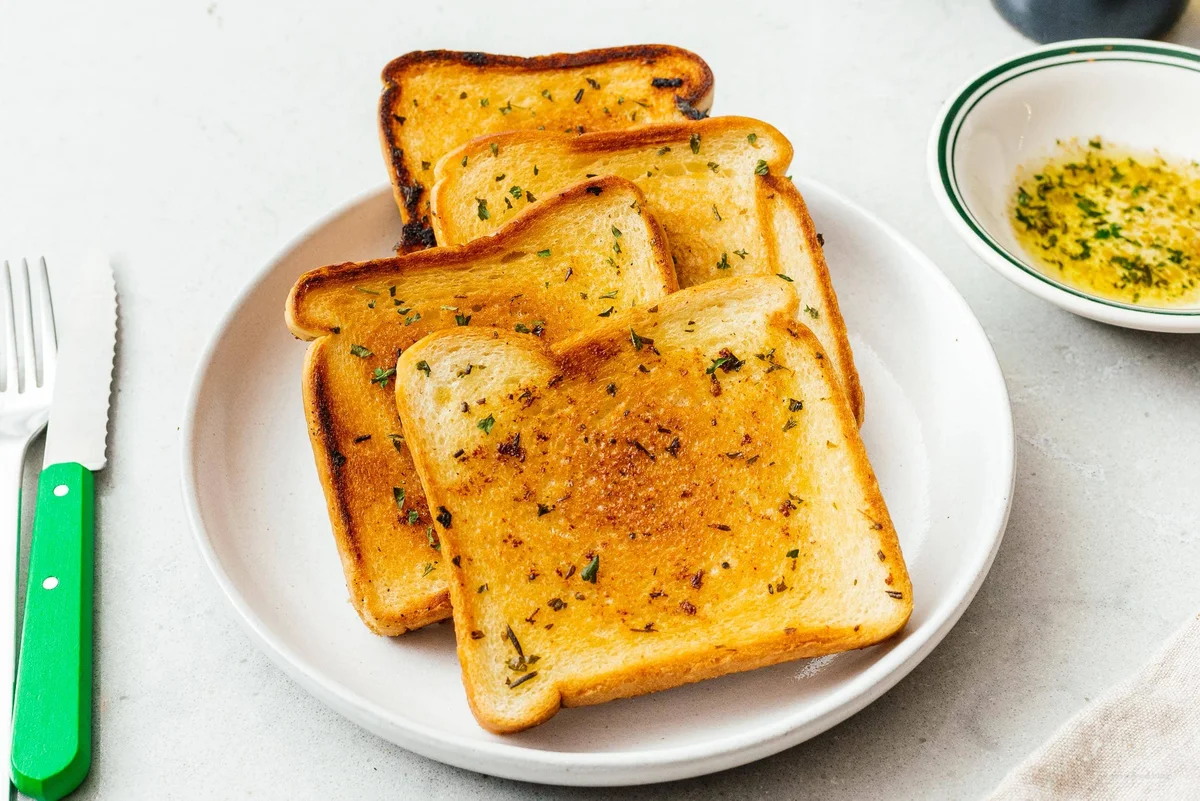
Texas toast is thick-cut bread brushed with a buttery garlic mixture and toasted in a frying pan until crisp and golden. It comes together quickly and makes a satisfying side for soups, pasta or grilled dishes.
Ingredients
- 2 tbspbutter
- 2 tbspneutral oil
- 1 1/2 tspgarlic powder
- 1/4 tspdried parsley (optional)
- to tastesalt
- to tastefreshly ground black pepper
- 4 slicesbread (Texas-style or thick-cut preferred)
Instructions
- 1
Melt the mixture
Melt the butter, oil, garlic powder and dried parsley in a small saucepan. Season with salt and freshly ground pepper.
- 2
Brush the bread
Use a pastry brush to coat both sides of each slice with the garlic butter mixture. If you have some left over, store it in the fridge for another batch of toast.
- 3
Toast until crisp
Heat a frying pan over medium heat. Cook the bread until golden and crisp, turning it once, then serve hot.
What is Texas toast?
Texas toast is a style of thick-cut American toast, often served as a side with barbecue, pasta or soup. Its generous slices give the outside room to turn crisp while the middle stays soft.
This version uses a quick garlic-butter mixture and a frying pan rather than a long bake. The oil helps the bread toast in the pan, while garlic powder spreads its flavour evenly.
Nutrition and macros by portion
The nutrition label shows one serving as written: 225 calories, 3g protein, 21g carbs, 14g fat.
| Portion | Adjustment | kcal | Protein | Carbs | Fat |
|---|---|---|---|---|---|
| Lighter | Use less garlic butter | 158 kcal | 2g | 15g | 10g |
| This serving | As written | 225 kcal | 3g | 21g | 14g |
| Hungry | Add an extra slice | 338 kcal | 5g | 31g | 21g |
The bread provides most of the carbohydrates, while the butter and oil contribute most of the fat. There is a modest amount of protein in the bread; serve a slice alongside a protein-rich main and vegetables for a more balanced plate.
Choosing the bread
Thick-cut slices: Texas-style bread is ideal, but any sturdy, thick-sliced loaf works. Thin slices toast quickly and may not keep a soft centre.
Making the garlic mixture
Butter and oil: Melt them together so the mixture is easy to brush on and can coat both sides of the bread.
Garlic and parsley: Garlic powder gives an even coating without needing to chop fresh garlic. Parsley is optional; season the mixture with salt and freshly ground pepper.
Getting an even coating
Brush both sides: A pastry brush helps distribute the mixture across the surface without soaking one spot. If some mixture remains, save it in the fridge for another round of toast.
Toasting and doneness
Medium heat: Let the pan heat before adding the bread, then cook until each side is crisp and golden, flipping once. Keep an eye on the slices, as the time will vary with their thickness and the pan.
When to serve it
Serve the toast hot, straight from the pan, while the surface is crisp. It pairs well with soup, pasta, salads or grilled mains, and can also be served as a simple snack.
Recipe notes & tips
- Use a small saucepan so the butter mixture melts evenly without needing a large pot.
- Brush the mixture over the whole surface of each slice, including the edges.
- Keep the pan at medium heat so the bread has time to crisp without browning too quickly.
- Cook in batches if the slices do not fit in the pan without overlapping.
- Serve as soon as the toast is crisp for the best contrast between the outside and centre.
Variations
- Fresh garlic: Replace the garlic powder with finely minced garlic and watch closely as it cooks.
- Herby toast: Add another dried herb, such as oregano, to the butter mixture.
- Cheesy topping: Sprinkle grated cheese over the bread near the end of cooking and let it melt.
- Spicy version: Add a pinch of chilli flakes to the garlic mixture.
- Fresh parsley: Scatter chopped parsley over the toast just before serving.
Common mistakes to avoid
- Overheating the pan: The bread can brown before it turns crisp; keep the heat at medium.
- Uneven brushing: Bare patches toast differently; coat both sides and reach the edges.
- Using very thin bread: It may crisp through before the centre stays soft; choose thick-cut slices.
- Crowding the pan: Overlapping slices will not toast evenly; cook them in batches.
- Walking away from the pan: Toast can colour quickly; watch it and flip once it is golden.
How to store
This toast is best eaten hot and freshly made. If needed, refrigerate cooked leftovers in an airtight container and reheat them in a frying pan until crisp; keep any unused garlic butter covered in the fridge.
Frequently asked questions
Can I use ordinary sliced bread?
Yes, but thick-cut bread gives the toast its characteristic soft centre. Keep a closer eye on thinner slices, as they will toast faster.
Can I use fresh garlic instead of garlic powder?
You can use finely minced fresh garlic, though it may brown more quickly in the pan. Cook over medium heat and watch the toast closely.
Can I make the garlic butter ahead?
Yes. Make the mixture ahead and refrigerate it in a covered container, then warm it gently until brushable before using.
How do I know when the toast is done?
Look for a golden surface that feels crisp, while the middle remains softer. Turn each slice once as it cooks.
Can I toast it in the oven instead?
This method uses a frying pan. An oven can work, but the browning and timing will differ, so watch the bread and turn it if needed.
Cook it from the original
This recipe comes from iamafoodblog.com. Their page has the author’s own photos, notes and tips — the best place to cook it from.
Open the recipe on iamafoodblog.com