
French Toast Restaurant Style
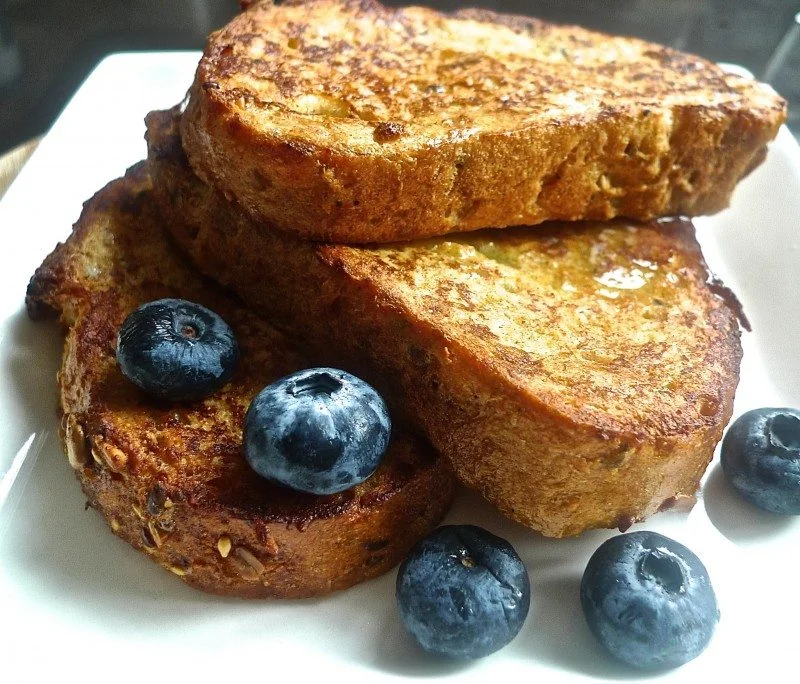
Restaurant-style French toast is thick bread soaked in a cinnamon-vanilla egg mixture, browned in butter and finished in the oven. Using day-old bread helps it absorb the custard while keeping its shape.
Ingredients
- 6 slicesthick French bread, preferably day-old
- 2eggs
- 160 ml (⅔ cup)milk
- 1 tablespoonbrown sugar
- ¼ teaspoonground cinnamon
- 1 teaspoonvanilla extract
- ⅛ teaspoonsalt
- 1 tablespoonbutter, for frying the bread
Instructions
- 1
Cut the bread
Cut the French bread into 6 thick slices.
- 2
Measure ingredients
Measure out the ingredients needed to prepare the bread.
- 3
Add the eggs
Crack the 2 eggs into a large, shallow bowl.
- 4
Add milk and spice
Pour in the milk, then add the ground cinnamon and salt.
- 5
Add flavourings
Stir in the brown sugar, followed by the vanilla extract.
- 6
Whisk the mixture
Whisk everything together in the shallow bowl.
- 7
Dip the bread
Dip each thick slice of bread into the egg mixture.
- 8
Soak both sides
Turn each slice so both sides are soaked and the bread is thoroughly saturated.
- 9
Soak all slices
Soak all 6 slices, then let the excess mixture drain off.
- 10
Set on a plate
Place the soaked slices on a plate.
- 11
Chill if desired
Optionally, refrigerate the soaked bread for 10 minutes, then dip it in the mixture again before frying.
- 12
Preheat the oven
Preheat the oven to 200°C (400°F).
- 13
Melt the butter
Melt the butter in a frying pan over medium heat.
- 14
Brown the first side
Working in batches, fry the bread for about 3 minutes, until lightly golden; this helps set the egg coating.
- 15
Brown the second side
Flip each slice and fry for another 3 minutes, until golden brown.
- 16
Move to a tray
Transfer the browned slices to a baking sheet.
- 17
Bake until set
Bake in the preheated oven for 12–15 minutes. The bread should puff slightly, with a crisp exterior and a moist, soft centre.
- 18
Keep warm
If you are not serving the French toast straight away, keep it warm in the oven at a low temperature.
- 19
Serve hot
Serve hot with butter.
What is French toast?
French toast, also called eggy bread, is bread dipped in an egg mixture and cooked until browned. Versions of the dish appear in different food traditions, and it is a practical way to use bread that is no longer fresh.
This restaurant-style version uses thick slices, a lightly sweetened cinnamon-and-vanilla custard, a quick pan-fry and a final bake. The two-stage cooking gives the outside colour while allowing the centre to finish cooking.
Nutrition and macros by portion
The nutrition label shows one serving as written: 340 calories, 11g protein, 49g carbs, 11g fat.
| Portion | Adjustment | kcal | Protein | Carbs | Fat |
|---|---|---|---|---|---|
| Lighter | Use less butter | 238 kcal | 8g | 34g | 8g |
| This serving | As written | 340 kcal | 11g | 49g | 11g |
| Hungry | Add another slice | 510 kcal | 17g | 74g | 17g |
The bread supplies most of the carbohydrates, while the eggs and milk contribute protein and the butter, eggs and milk provide much of the fat. Serve a portion with fruit or yoghurt for a more rounded plate.
Choose bread that holds its shape
Day-old bread: Slightly stale slices absorb the egg mixture without becoming as fragile as very soft fresh bread.
Thick slices: French bread gives the custard room to soak in while leaving enough structure to handle the frying and baking.
Soak for an even centre
Full coverage: Turn each slice so both sides meet the egg mixture, and allow the excess to drain before placing the bread on a plate.
Optional chill: The recipe suggests refrigerating the soaked slices for 10 minutes, then dipping them again before frying. Keep an eye on very soft bread so it does not become difficult to lift.
Brown gently in batches
Moderate heat: Melt the butter over medium heat and fry each side for about 3 minutes, aiming for a light golden colour rather than a deeply browned crust.
Room in the pan: Cook in batches if needed so the slices can sit flat and turn easily. Move each browned slice to the baking sheet as it is ready.
Let the oven finish the custard
Oven stage: Bake the browned slices at 200°C for 12–15 minutes. The oven gives the soaked interior time to cook through without relying on a long fry in the pan.
Doneness cues: The toast may puff slightly and should have a crisp outside with a soft centre. If it needs more time, continue baking briefly and check again.
Serve straight from the oven
Keep warm: If the slices are ready before everyone is at the table, hold them in the oven at a low temperature, as the method suggests.
To serve: Butter is the stated accompaniment. Fresh fruit or yoghurt can also make a useful contrast to the warm, sweet toast.
Recipe notes & tips
- Use day-old bread if available, as it is less likely to fall apart while soaking.
- Choose slices thick enough to lift and turn easily after dipping.
- Whisk the egg mixture until the cinnamon and sugar are distributed throughout.
- Let excess custard drain off before transferring a slice to the plate.
- Fry in batches rather than crowding the pan.
- Serve soon after baking for the best contrast between the crisp outside and soft centre.
Variations
- Use challah: Its rich, soft crumb makes a particularly tender-centred toast.
- Try wholemeal bread: Use thick slices for a heartier flavour and texture.
- Add nutmeg: Include a little alongside the cinnamon for a warmer spice note.
- Serve with fruit: Add berries or sliced banana at the table.
- Use a baguette: Cut it diagonally into thick slices for a chewier result.
Common mistakes to avoid
- Using very soft bread: It can break during dipping; choose day-old bread that holds its shape.
- Using bread with large holes: Custard may run through instead of soaking evenly; use a closer-crumbed loaf.
- Skipping the second side: Turn each slice in the mixture so the custard reaches both sides.
- Frying too dark: The toast still needs time in the oven, so aim for light golden browning in the pan.
- Overcrowding the pan: The slices are harder to turn evenly; fry in batches.
- Serving before the bake: The centre needs the 12–15-minute oven finish to cook through.
How to store
Refrigerate leftovers in a covered container for up to 3 days. Reheat in an oven until warmed through; the outside may be less crisp than when freshly made.
Frequently asked questions
Can I use fresh bread?
Yes, but fresh bread may soften more quickly in the egg mixture. Dip it carefully and let excess custard drain before frying.
Why is day-old bread preferred?
It is generally sturdier and can absorb the mixture while being easier to handle than very soft fresh bread.
Can I prepare the soaked bread ahead?
The method offers an optional 10-minute chill before frying, followed by another dip in the mixture. It does not specify a longer make-ahead period.
Why fry the bread before baking it?
The pan browns the outside and helps set the egg coating, while the oven finishes cooking the soaked centre.
How do I know when it is done?
After 12–15 minutes at 200°C, the slices should be lightly puffed, crisp outside and soft in the middle.
What can I serve with French toast?
The recipe serves it with butter. Fruit or yoghurt are also simple accompaniments.
Cook it from the original
This recipe comes from huangkitchen.com. Their page has the author’s own photos, notes and tips — the best place to cook it from.
Open the recipe on huangkitchen.com