
Deep Fried Fish Thai Style
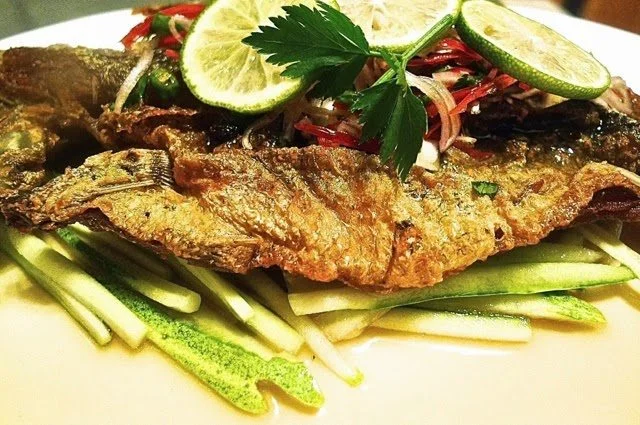
Whole fish is deep-fried until crisp, then served with a sweet, sour and spicy Thai-style sauce. The crunchy skin and delicate fish make a lively contrast, while shredded cucumber adds a cool, fresh base.
Ingredients
- 600 gwhole fish
- ½ teaspoonsalt
- 1 tablespooncornflour
- 480 ml (2 cups)oil, for deep-frying the fish
- 1cucumber, shredded
- 2½ tablespoonssugar
- 2 tablespoonslime juice or kaffir lime juice
- 3 tablespoonsfish sauce
- 2shallots, thinly sliced
- 3bird’s-eye chillies or chilli padi
- 1red chilli, thinly shredded
- 1 stalkcoriander leaves, chopped
Instructions
- 1
Prepare the fish
Clean and wash the fish, then rinse and drain it well. Butterfly it by splitting it with a sharp knife.
- 2
Season the fish
Rub the salt all over the fish.
- 3
Coat with cornflour
Coat both sides of the fish with cornflour, including the flesh inside and the outside of the skin.
- 4
Deep-fry until crisp
Deep-fry the fish in hot oil until golden brown and crispy. Lift it out and drain it on kitchen paper.
- 5
Prepare the plate
Arrange the shredded cucumber on a serving plate.
- 6
Add the fish
Place the fried fish on top of the cucumber.
- 7
Add the sauce
Pour the sauce mixture over the fish.
- 8
Garnish and serve
Garnish with slices of kaffir lime and coriander leaves. Serve immediately.
What is Thai-style deep-fried fish?
This dish pairs whole fried fish with a punchy sauce built around sweetness, citrus, fish sauce and chilli. It draws on the Thai-style balance of sweet, sour, salty and hot flavours, served here over crisp fish and fresh cucumber.
Butterflying helps expose more of the fish to the hot oil, while the light cornflour coating supports a crisp exterior. The sauce brings sharp, savoury flavour to the mild flesh.
Nutrition and macros by portion
The nutrition label shows one serving as written: 430 calories, 22g protein, 16g carbs, 31g fat.
| Portion | Adjustment | kcal | Protein | Carbs | Fat |
|---|---|---|---|---|---|
| Lighter | Use less sauce | 301 kcal | 15g | 11g | 22g |
| This serving | As written | 430 kcal | 22g | 16g | 31g |
| Hungry | Serve with steamed rice | 645 kcal | 33g | 24g | 47g |
The fish provides most of the protein, while sugar and cucumber contribute carbohydrates; the frying oil is the main source of fat. Serve with rice and extra fresh vegetables if you want a more substantial plate, keeping in mind that the oil absorbed during frying can vary.
Choosing and preparing the fish
Whole fish: Choose one that fits your frying vessel and ask the fishmonger to clean it if you prefer. The recipe calls for 600 g; drying it thoroughly after rinsing helps the coating adhere and limits splattering.
Butterflying: Split the fish with a sharp knife as directed, taking care around the bones. The opened fish is easier to coat on both the flesh and skin sides.
Getting a crisp coating
Cornflour: Coat the fish lightly and evenly, including the inside flesh and outside skin. Brush away any thick patches, which can turn pasty rather than crisp.
Hot oil: The method specifies hot oil but gives no temperature, so watch the fish closely as it fries. Avoid crowding the pan, and let the fish drain on kitchen paper after frying.
Balancing the sauce
Sweet and sour: Sugar rounds out the lime juice, while fish sauce supplies a salty, savoury note. Stir the sauce ingredients together so the sugar is distributed before pouring the mixture over the fish.
Heat and aromatics: Bird’s-eye chillies and red chilli bring heat, and shallots add a sharp, fresh edge. Adjust the amount of chilli to suit your preference.
Serving and texture
Cucumber base: Shredded cucumber gives the plate a cool, crisp element beneath the fried fish. Keep it ready on the serving plate so the fish can be added as soon as it is drained.
Serve promptly: The recipe directs you to pour the sauce over the fish and serve immediately. This preserves the contrast between the crisp coating and tender flesh as much as possible.
What to serve alongside
Rice: Plain steamed rice is a simple accompaniment for the sweet-sour sauce and fish. Serve it separately so diners can choose how much sauce to spoon over it.
Fresh sides: Extra cucumber or a lightly dressed salad can complement the fried fish without competing with its sauce. Keep additional chilli on the side for anyone who wants more heat.
Recipe notes & tips
- Pat the fish very dry after rinsing before seasoning and coating it.
- Coat the fish evenly with a thin layer of cornflour rather than leaving thick clumps.
- Keep the cucumber shredded and the sauce ready before you fry the fish.
- Use a pan deep enough for frying and avoid overcrowding it.
- Drain the fish on kitchen paper before placing it over the cucumber.
- Serve straight after adding the sauce for the best contrast in texture.
Variations
- Use kaffir lime juice: Choose it instead of regular lime juice for a more fragrant citrus note.
- Adjust the chilli: Use fewer bird’s-eye chillies for a milder sauce.
- Add more cucumber: Increase the shredded cucumber for a fresher base.
- Choose a suitable white fish: Use a similarly sized whole white fish if the listed fish is unavailable.
- Serve with rice: Add steamed rice on the side to make the meal more filling.
Common mistakes to avoid
- Wet fish: Excess water can make the coating uneven and cause oil to splatter; drain the fish thoroughly.
- Heavy cornflour coating: Thick patches can turn pasty; use a light, even layer.
- Crowded frying pan: Too much fish at once can interfere with crisp frying; cook in batches if needed.
- Sauce added too early: The coating can lose its crispness; pour the sauce over just before serving.
- Leaving the fish unattended: The coating can go from golden to too dark quickly; watch it as it fries.
How to store
For the best texture, eat the fish immediately after serving. Refrigerate leftovers in a sealed container for up to 2 days, storing the fish separately from the cucumber where possible; reheat the fish in an oven until hot, though it will not be as crisp.
Frequently asked questions
Can I use a different whole fish?
Yes, choose a whole white fish that fits your frying vessel. Cooking time will depend on its size and thickness.
Can I use regular lime juice?
Yes. The ingredients list regular lime juice as an alternative to kaffir lime juice.
How can I tell when the fish is cooked?
The method describes frying until the fish is golden brown and crispy. Check that the flesh is cooked through near the thickest part before serving.
Can I make the sauce less spicy?
Yes. Reduce the bird’s-eye chillies or leave them out, then add more only if you want extra heat.
Can I prepare any part ahead?
You can shred the cucumber and prepare the sauce ingredients ahead. Fry the fish and pour over the sauce just before serving to retain as much crispness as possible.
What should I serve with the fish?
Steamed rice is a straightforward side, with extra cucumber or a fresh salad alongside.
Cook it from the original
This recipe comes from huangkitchen.com. Their page has the author’s own photos, notes and tips — the best place to cook it from.
Open the recipe on huangkitchen.com