
Fish Head Noodle Soup
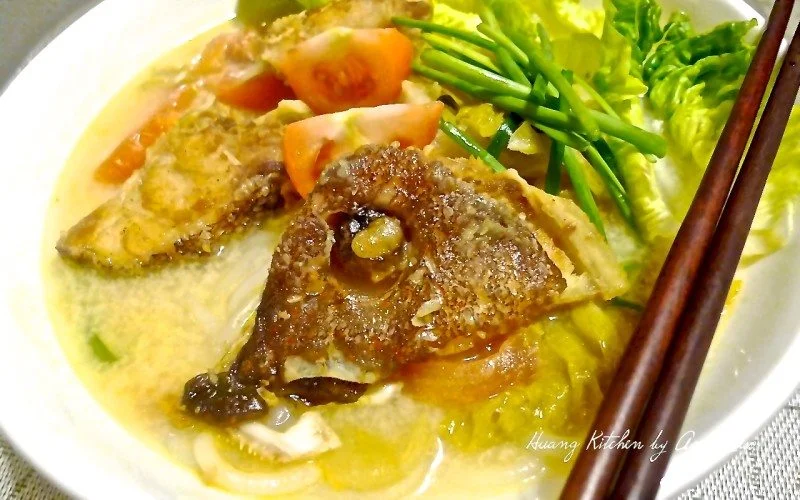
Fish head noodle soup pairs fried fish with rice noodles in a savoury, milky broth flavoured with ginger, tomatoes and pickled mustard greens. This homemade version builds depth by simmering the soup ingredients before adding the fish and evaporated milk.
Ingredients
- 350 gfish head, cut into large pieces, preferably garoupa
- 1 tablespoonsalt
- 120 g (1 cup)cornflour (or tapioca flour)
- 250 grice noodles (or round, spaghetti-thick beehoon)
- 1 piecepickled mustard greens, cut into long strips
- 50 gyoung ginger, thinly sliced
- 2tomatoes, cut into wedges
- 3pickled plums, mashed
- 1 teaspoonoil
- 1 teaspoonsesame oil
- 1 litrewater (or chicken stock for more flavour)
- 60 ml (1/4 cup)evaporated milk
- 1/2 tablespoonfish sauce
- 1 tablespoonchicken stock granules
- 1/4 teaspoonpepper
- 1/2 teaspoonsalt
- 1 stalkspring onions, cut into sections
Instructions
- 1
Prepare the fish
Wash the fish head, cut it into large pieces and drain well.
- 2
Season the fish
Sprinkle the fish with some salt and pepper, rub them in and leave the pieces to marinate for 1 hour.
- 3
Coat the pieces
Rub a light coating of cornflour over the fish.
- 4
Fry until crisp
Fry the fish in the oil for about 5 minutes, then turn it over and cook for another 10 minutes, until brown and crisp. Lift it out and drain in a strainer.
- 5
Prepare vegetables
Cut the pickled mustard greens into strips and the tomatoes into wedges. Slice the ginger and cut the spring onions for the garnish.
- 6
Warm the ginger
Heat a little oil in a wok or pan and add the sliced ginger.
- 7
Add sesame oil
Add a dash of sesame oil and stir-fry until fragrant.
- 8
Add sour flavours
Add the tomato wedges and pickled mustard greens, followed by the mashed sour pickled plums.
- 9
Boil the soup
Pour in the chicken stock or water. Cover and bring to the boil, then boil over high heat for 10 minutes.
- 10
Simmer gently
Remove the lid, stir, reduce the heat to low and cook for another 10 minutes.
- 11
Strain the vegetables
Use a strainer to remove the cooked vegetables, ginger and plum seeds from the wok.
- 12
Blanch the lettuce
Blanch the green lettuce in the boiling soup and set it aside.
- 13
Heat the fish
Add the fried fish pieces to the soup and boil for a few minutes. Remove them with a strainer and set aside.
- 14
Finish the broth
Stir in the evaporated milk and fish sauce, adjusting the fish sauce to taste.
- 15
Assemble the bowls
Put the cooked noodles in a serving bowl. Add the blanched lettuce and fried fish, then ladle over the milky soup.
- 16
Add the garnish
Garnish with cut tomatoes, pickled mustard greens and spring onions.
- 17
Serve the soup
Serve hot with chopped bird's eye chillies in soy sauce.
What is fish head noodle soup?
Fish head noodle soup is a Chinese hawker-style dish built around noodles, fried fish and a savoury broth. Its appeal is the contrast between crisp-edged fish and a warming soup with tangy, salty notes.
This version uses ginger, pickled mustard greens, tomatoes and pickled plums to flavour the broth, then adds evaporated milk for its pale, creamy finish. Frying the fish before it goes into the soup gives it a browned exterior.
Nutrition and macros by portion
The nutrition label shows one serving as written: 650 calories, 31g protein, 90g carbs, 16g fat.
| Portion | Adjustment | kcal | Protein | Carbs | Fat |
|---|---|---|---|---|---|
| Lighter | Use less oil and milk | 455 kcal | 22g | 63g | 11g |
| This serving | As written | 650 kcal | 31g | 90g | 16g |
| Hungry | Add more noodles | 975 kcal | 47g | 135g | 24g |
The noodles provide most of the carbohydrate, while the fish contributes protein and the frying oil and evaporated milk add fat. Pickled ingredients, salt, fish sauce and stock granules account for much of the sodium. Serve with extra vegetables on the side to make a more balanced plate.
Build the broth in stages
Aromatics first: stir-fry the ginger in oil with sesame oil until fragrant, then add the tomatoes, mustard greens and mashed plums.
Simmer next: cook the mixture in water or chicken stock, first covered over high heat and then uncovered over low heat. The recipe removes the cooked vegetables and plum seeds before adding the fish and milk.
Getting the fish ready
Dry pieces: drain the washed fish well before seasoning so excess water does not interfere with frying.
Light coating: rub on a thin layer of cornflour, as directed, before frying. The coating helps form a crisp surface; take care when turning the pieces so they stay intact.
Watch the frying
Browned exterior: fry for about 5 minutes on the first side, then turn and cook for another 10 minutes, until the fish is brown and crisp. The exact time can vary with the size of the pieces, so use the colour and texture as cues too.
Drain after frying: lift the fish onto a strainer before adding it to the soup. This lets excess oil run off and keeps the broth from becoming unnecessarily greasy.
Noodles and serving
Cook the rice noodles according to their packet instructions, then divide them between serving bowls. The recipe does not specify a noodle-cooking time, so avoid leaving them in the broth while it simmers.
Add the fish and broth just before serving. The recipe also suggests serving the soup hot with chopped bird's eye chillies in soy sauce.
Choosing the liquid
Water: use it for a lighter-tasting base that lets the ginger, pickles and tomatoes stand out.
Chicken stock: choose this option for a fuller savoury flavour. The recipe also lists chicken stock granules in its seasoning, so consider the saltiness of your stock when seasoning the broth.
Recipe notes & tips
- Drain the fish thoroughly before seasoning and coating it.
- Use a wok or pan large enough to fry the fish without crowding the pieces.
- Keep the ginger moving in the pan so it becomes fragrant without burning.
- Taste the broth after adding the fish sauce, especially if you used stock and stock granules.
- Cook the noodles separately and assemble the bowls just before serving.
Variations
- Use tapioca flour: coat the fish with it instead of cornflour.
- Choose chicken stock: use it in place of water for a more savoury broth.
- Adjust the tang: add the mashed pickled plums to the broth gradually and taste as you go.
- Add chilli at the table: serve bird's eye chillies in soy sauce alongside the bowls.
- Try beehoon: use round, spaghetti-thick beehoon instead of rice noodles.
Common mistakes to avoid
- Wet fish: it can be harder to coat evenly, so drain the pieces well before seasoning.
- Heavy coating: too much flour can make the fish's crust thick, so rub on only a light layer.
- Turning too soon: the fish may break apart, so give it time to brown before turning.
- Overcooking the noodles: they can soften further in hot soup, so cook them separately and serve promptly.
- Over-seasoning the broth: stock and pickled ingredients can be salty, so taste before adding more fish sauce or salt.
How to store
Store leftover broth and fish in a covered container in the fridge for up to 2 days; keep noodles separate if possible. Reheat the soup gently until hot and add freshly cooked noodles for serving. The fish will lose its crispness after sitting in the broth.
Frequently asked questions
Can I use chicken stock instead of water?
Yes. The recipe gives chicken stock as an alternative for a more savoury broth.
Can I use tapioca flour for the fish?
Yes, it is listed as an alternative to cornflour for coating the fish.
How do I know the fish is ready?
The method looks for a brown, crisp exterior after frying. Cooking time depends on the size of the pieces, so check that the fish is cooked through as well.
Why does the recipe strain the vegetables from the soup?
It removes the cooked vegetables, ginger and plum seeds before the fried fish and milk are added, leaving a smoother broth.
Can I prepare parts of the soup ahead?
You can make the broth ahead, but cook the noodles separately and assemble the bowls close to serving so they do not become too soft.
What should I serve with it?
Serve the soup hot, with chopped bird's eye chillies in soy sauce as suggested. Extra vegetables on the side also make a useful accompaniment.
Cook it from the original
This recipe comes from huangkitchen.com. Their page has the author’s own photos, notes and tips — the best place to cook it from.
Open the recipe on huangkitchen.com