
Homemade Savory Turnip Pau
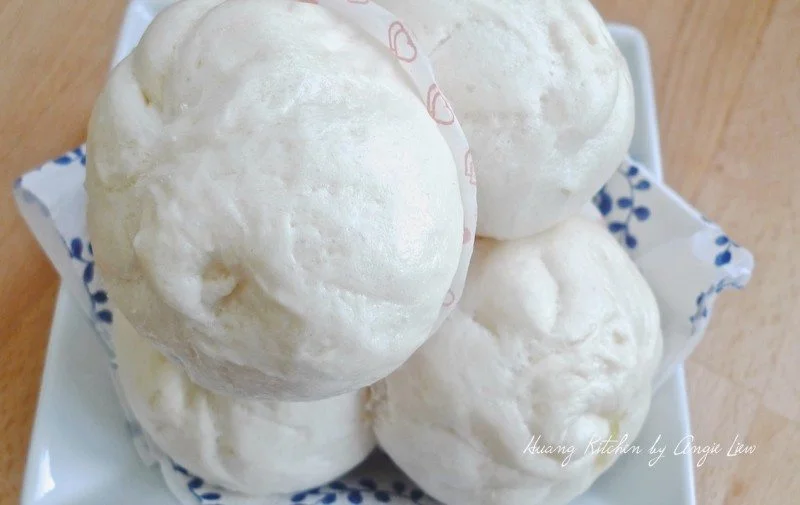
These soft, lightly sweet steamed buns are made with a simple yeast dough and filled with savoury turnip filling. They make a useful dim sum-style snack, though the filling itself is not included in the ingredient list here.
Ingredients
- 500 gpau flour
- 130 gsugar
- 250 gwater
- 1 tbspinstant yeast
- 1 tspbaking powder
- 1 tbspwhite shortening
Instructions
- 1
Mix dry ingredients
Put the pau flour in a mixing bowl, then add the sugar, baking powder and instant yeast. Using the dough hook, mix the dry ingredients together.
- 2
Make the dough
Add the 250 g water gradually, just until a soft dough forms. Knead on medium speed for about 5 minutes to bring the flour and water together.
- 3
Knead until smooth
Add the shortening and knead on medium speed for another 8–10 minutes, until the dough is soft, smooth and elastic and no longer sticks to the bowl or your fingers.
- 4
Portion the dough
Turn the dough out onto a floured surface and knead briefly so it is evenly mixed. Divide it in half, roll each half into a long cylinder, then cut and weigh pieces of 50 g. Shape each piece into a ball.
- 5
Roll the wrappers
Use a small rolling pin to roll each dough ball into a flat circle. Repeat with the remaining balls.
- 6
Fill and pleat
Have the savoury turnip filling ready. Spoon some onto each dough circle, bring the edges together and pleat the top to seal the bun.
- 7
Prepare to prove
Set each bun on a square of parchment or greaseproof paper, or use a flattened white cupcake liner. Arrange them on a steaming tray or a plate with holes that allow steam through.
- 8
Prove the buns
Leave the buns to prove until doubled in size, about 20–30 minutes. Near the end of this time, bring water to the boil in a wok or steamer.
- 9
Steam and rest
Place the tray of buns in the wok or steamer, cover and steam over high heat for 15 minutes. Turn off the heat and leave them covered for about 3 minutes before uncovering, to help prevent wrinkled or rough skins.
- 10
Cool and serve
Transfer the buns to a rack to cool, then serve warm, in dim sum baskets if you have them.
What are savoury turnip pau?
Pau are steamed, filled buns found in Chinese and wider Southeast Asian food traditions, often served as part of dim sum. This version uses a soft, yeasted wrapper for a savoury turnip filling.
The method focuses on the bun dough rather than the filling: it is not listed or explained here, so prepare it separately before shaping the pau.
Nutrition and macros by portion
The nutrition label shows one serving as written: 136 calories, 4g protein, 25g carbs, 1g fat.
| Portion | Adjustment | kcal | Protein | Carbs | Fat |
|---|---|---|---|---|---|
| Lighter | Smaller buns, less sugar | 95 kcal | 2g | 18g | 1g |
| This serving | As written | 136 kcal | 4g | 25g | 1g |
| Hungry | Serve extra buns | 204 kcal | 5g | 38g | 1g |
Most of the estimated carbohydrates come from the pau flour and sugar, while the small amount of shortening contributes most of the dough's fat. The dough also supplies some protein, but these estimates exclude the savoury turnip filling, which is not specified. Serve a bun alongside vegetables or soup for a more balanced plate.
The dough ingredients
Pau flour: this is intended for the pale, tender wrapper associated with steamed buns. Measure it carefully so the dough does not become dry.
Yeast and baking powder: the yeast gives the dough time to rise, while the baking powder is included in the recipe alongside it.
Shortening: adding it after the first knead helps bring the dough together into a smooth, pliable mixture.
Kneading for a soft wrapper
Gradual water: add the measured water in stages, stopping when the dough is soft. Flour can absorb liquid differently, so the texture is a useful cue as you mix.
Elastic dough: after the full 8–10 minutes of kneading with shortening, the dough should look smooth and pull away from the bowl. A brief hand-knead on a floured surface evens it out before portioning.
Shaping and sealing
Even portions: weighing the pieces to 50 g helps the buns cook at a similar rate. The recipe makes 18 servings, though the number of pieces depends on the final portioning.
Pleated tops: roll each ball into a circle, add the filling and gather the edges securely. Keep the filling inside the wrapper so the seam can close cleanly.
Proofing and steaming
Proofing: leave the shaped buns for about 20–30 minutes, until they have doubled in size. Allow enough room between them because they expand.
Steaming: use high heat for 15 minutes, then rest the buns, covered and off the heat, for about 3 minutes. This pause helps avoid a sudden change that can leave the skins wrinkled.
Serving the buns
Serve the pau warm, when the wrapper is soft and fluffy with a little chew. Dim sum baskets make a traditional presentation, but a warm plate works just as well.
Pair them with a light vegetable dish or soup for a more balanced meal. Because the filling recipe is not given, seasonings and accompaniments can be adjusted to suit the filling you have prepared.
Recipe notes & tips
- Add the measured water gradually and stop once the dough is soft.
- Use a light dusting of flour on the work surface so the dough does not become tough from excess flour.
- Weigh each piece to 50 g for more even-sized buns.
- Seal the gathered edges well so the filling stays inside during steaming.
- Leave space between buns on the steaming tray because they expand as they prove.
- Keep the lid on during the 3-minute rest after steaming.
Variations
- Add spring onion: mix finely sliced spring onion into the separately prepared turnip filling.
- Add mushroom: stir chopped cooked mushrooms into the filling for extra savoury flavour.
- Use a different filling: replace the turnip mixture with another prepared savoury bun filling.
- Make smaller buns: divide the dough into smaller portions and check for doneness after steaming.
- Serve with chilli: offer chilli sauce alongside the warm buns.
Common mistakes to avoid
- Adding water too quickly: the dough may turn sticky; add it gradually and assess the texture as you mix.
- Under-kneading: the wrapper can lack elasticity; knead for the full stated time until smooth.
- Overfilling: the edges may not seal; use only enough filling to gather the dough around it.
- Loose pleats: the bun can open during steaming; pinch the gathered dough together firmly.
- Crowding the tray: expanding buns may touch; leave room between them.
- Uncovering immediately: the skins may wrinkle; rest the buns covered off the heat for about 3 minutes.
How to store
Cool the buns completely and refrigerate in an airtight container for up to 3 days. Reheat by steaming until hot throughout; the exact reheating time depends on the bun size and whether it is chilled.
Frequently asked questions
Is the turnip filling included in this recipe?
No. The method refers to savoury turnip filling prepared earlier, but no filling ingredients or instructions are provided here.
Can I make the dough without a stand mixer?
Yes. Mix the ingredients in a bowl, then knead by hand until the dough is smooth and elastic. The method gives kneading times for a mixer, so use the texture cues to judge by hand.
How do I know the buns have proved enough?
The recipe says to prove them until doubled in size, about 20–30 minutes. The time can vary with the room temperature.
Why rest the buns after steaming?
The method leaves them covered and off the heat for about 3 minutes before uncovering. This helps reduce the chance of wrinkled or rough skins.
Can I use cupcake liners instead of parchment?
Yes. The recipe suggests flattening white cupcake liners and using them under the buns.
Why is the nutrition estimate incomplete?
The filling is not listed, so the estimate covers only the dough ingredients. The actual nutrition per bun will depend on the filling and its quantity.
Cook it from the original
This recipe comes from huangkitchen.com. Their page has the author’s own photos, notes and tips — the best place to cook it from.
Open the recipe on huangkitchen.com