
Dry Chicken Curry
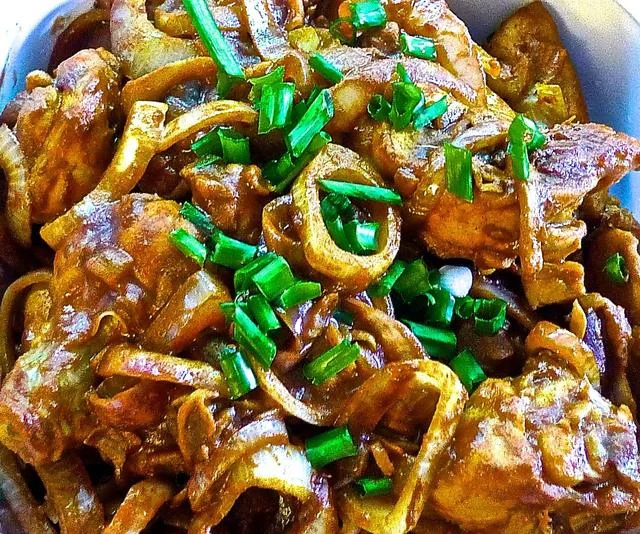
Dry Chicken Curry is a chicken curry cooked until the sauce reduces and the pieces are coated in fragrant spices. It makes a generous, flavourful main that works with rice, naan or wraps.
Ingredients
- 1.5 kgchicken legs, cut into bite-sized pieces
- 4 largeonions, half diced and half cut into rings
- 3 cmyoung ginger, cut into thin strips
- 3 tbspmeat curry powder
- 1 piece, 2 cm longcinnamon stick
- 2spring onions, chopped
- 5 tbspvegetable oil
- 60 ml (¼ cup)hot water
- 2limes or calamansi, juiced
- to tastesalt
Instructions
- 1
Prepare the chicken
Rinse and cut the chicken into bite-sized pieces. Measure out 3 tablespoons of meat curry powder.
- 2
Prepare aromatics
Cut the ginger into thin strips and dice half the onions. Set out the 2 cm cinnamon stick and 5 tablespoons of oil for frying.
- 3
Prepare garnishes
Cut the remaining onions into rings, juice 2 limes or calamansi, chop the spring onions and set out salt to taste.
- 4
Fry the aromatics
Heat the oil in a wok, preferably non-stick. Add the cinnamon stick, ginger and diced onion, then fry until fragrant.
- 5
Add the chicken
Add the chicken pieces and stir-fry until they are mixed with the ginger and onions.
- 6
Brown the chicken
Season with salt to taste and stir-fry until the chicken turns brown.
- 7
Add curry powder
Add the curry powder and fry over high heat, stirring gently.
- 8
Simmer until tender
Stir gently until the chicken is coated with curry powder. Add the hot water, cover and simmer over medium heat until the liquid has dried up and the chicken is tender.
- 9
Add onion rings
Add the onion rings to the chicken mixture.
- 10
Mix the onions
Stir-fry until the onion rings are well mixed with the chicken.
- 11
Add lime juice
Stir in the lime or calamansi juice.
- 12
Finish with spring onion
Add some chopped spring onions for colour and stir quickly before serving.
- 13
Serve the curry
Transfer the chicken to a serving dish and garnish with more chopped spring onions. Serve with tortilla wraps, naan, chapatis or plain boiled or steamed rice.
- 14
Enjoy the dish
The dry chicken curry is ready to serve.
What is dry chicken curry?
Curry is a broad term for many dishes, rather than one recipe that represents all Indian cooking. This version is a dry-style chicken curry: the chicken simmers with a little water, then the liquid reduces so the spice coating clings to the pieces.
The recipe pairs curry powder with ginger, onion and cinnamon, then finishes with citrus and spring onion. That combination gives the dish a warm, savoury base and a bright final note.
Nutrition and macros by portion
The nutrition label shows one serving as written: 500 calories, 36g protein, 12g carbs, 34g fat.
| Portion | Adjustment | kcal | Protein | Carbs | Fat |
|---|---|---|---|---|---|
| Lighter | Use less oil | 350 kcal | 25g | 8g | 24g |
| This serving | As written | 500 kcal | 36g | 12g | 34g |
| Hungry | Add rice or naan | 750 kcal | 54g | 18g | 51g |
The chicken provides most of the protein, while the onions and any rice or bread served alongside supply much of the carbohydrate. The oil contributes a substantial share of the fat. Pair a portion with vegetables and a moderate serving of rice or bread to round out the plate.
Get the onions ready
Diced onion: it goes into the wok early and softens with the ginger, helping form the aromatic base.
Onion rings: these go in near the end, so they retain more shape and a little bite. Keep the two cuts separate while preparing the ingredients.
Build flavour in the wok
Cinnamon and ginger: fry them with the diced onion until fragrant, rather than letting them sit in hot oil unattended. This gives the aromatics a chance to flavour the oil before the chicken goes in.
Curry powder: add it once the chicken has browned, then stir gently over high heat. Keep it moving so it coats the chicken without catching on the base of the wok.
Reduce the liquid
The covered simmer is the main tenderising stage. Use medium heat and check that the pan is simmering rather than boiling hard; the small amount of hot water should gradually cook down.
The curry is ready for its finishing ingredients when the chicken is tender and there is no loose pool of liquid. If the chicken needs longer, keep it covered and check it again rather than rushing the reduction.
Keep the finish fresh
Onion rings: stir them through at the end, just long enough to mix them with the chicken. This keeps them from disappearing into the reduced sauce.
Lime juice and spring onion: add these after cooking, with a quick stir. Their fresh, sharp flavour contrasts with the warm curry powder and cinnamon.
Choose a side
Rice: plain boiled or steamed rice is a simple partner that catches any spice coating left on the plate.
Bread: naan, chapatis or tortilla wraps make it easy to scoop up the chicken. Add a simple vegetable side if you want a more balanced plate.
Recipe notes & tips
- Cut the chicken into pieces of similar size so they cook at a similar pace.
- Have the onions, ginger, curry powder and finishing ingredients ready before heating the wok.
- Use a wok or wide pan that gives the chicken room to brown.
- Stir the curry powder gently and keep it moving so it does not catch.
- Add the lime juice and spring onion at the end to keep their flavour fresh.
Variations
- Add chilli: stir in sliced fresh chilli with the ginger for extra heat.
- Use boneless chicken: cut it into bite-sized pieces and check it regularly during the simmer.
- Add vegetables: stir in quick-cooking vegetables near the end so they do not overcook.
- Try a different citrus: use lime or calamansi juice according to what is available.
- Serve with greens: add a side of steamed greens for colour and contrast.
Common mistakes to avoid
- Crowding the wok: the chicken may steam rather than brown; cook in batches if the pan is too full.
- Burning the aromatics: keep the ginger and onion moving and lower the heat if they start to catch.
- Adding curry powder too early: wait until the chicken has browned, then stir the powder through.
- Leaving too much liquid: uncover only once the chicken is tender if needed, and simmer until the sauce reduces.
- Overcooking the onion rings: add them near the end and stir just until mixed through.
How to store
Cool leftovers promptly, store them covered in the fridge and use within 2 days. Reheat until piping hot throughout, adding a small splash of water if the curry has become too dry.
Frequently asked questions
Why is this curry called dry?
It is simmered with only a little water, and the liquid is cooked down until it no longer forms a loose sauce. The spice coating stays on the chicken.
Can I use boneless chicken?
Yes. Cut it into bite-sized pieces and follow the same method, checking for tenderness as it simmers because boneless pieces may cook sooner.
What can I use instead of calamansi?
Use lime juice, as the recipe allows. Add it at the end so its fresh flavour remains noticeable.
How do I know when the chicken is done?
It should be tender, with no loose liquid left in the pan. Check the largest piece before serving.
What should I serve with dry chicken curry?
The recipe suggests plain boiled or steamed rice, naan, chapatis or tortilla wraps. A vegetable side also works well.
Can I make it less oily?
You can reduce the vegetable oil, though the aromatics may need closer attention to stop them catching in the wok.
Cook it from the original
This recipe comes from huangkitchen.com. Their page has the author’s own photos, notes and tips — the best place to cook it from.
Open the recipe on huangkitchen.com