
Steamed Ginger Milk Pudding
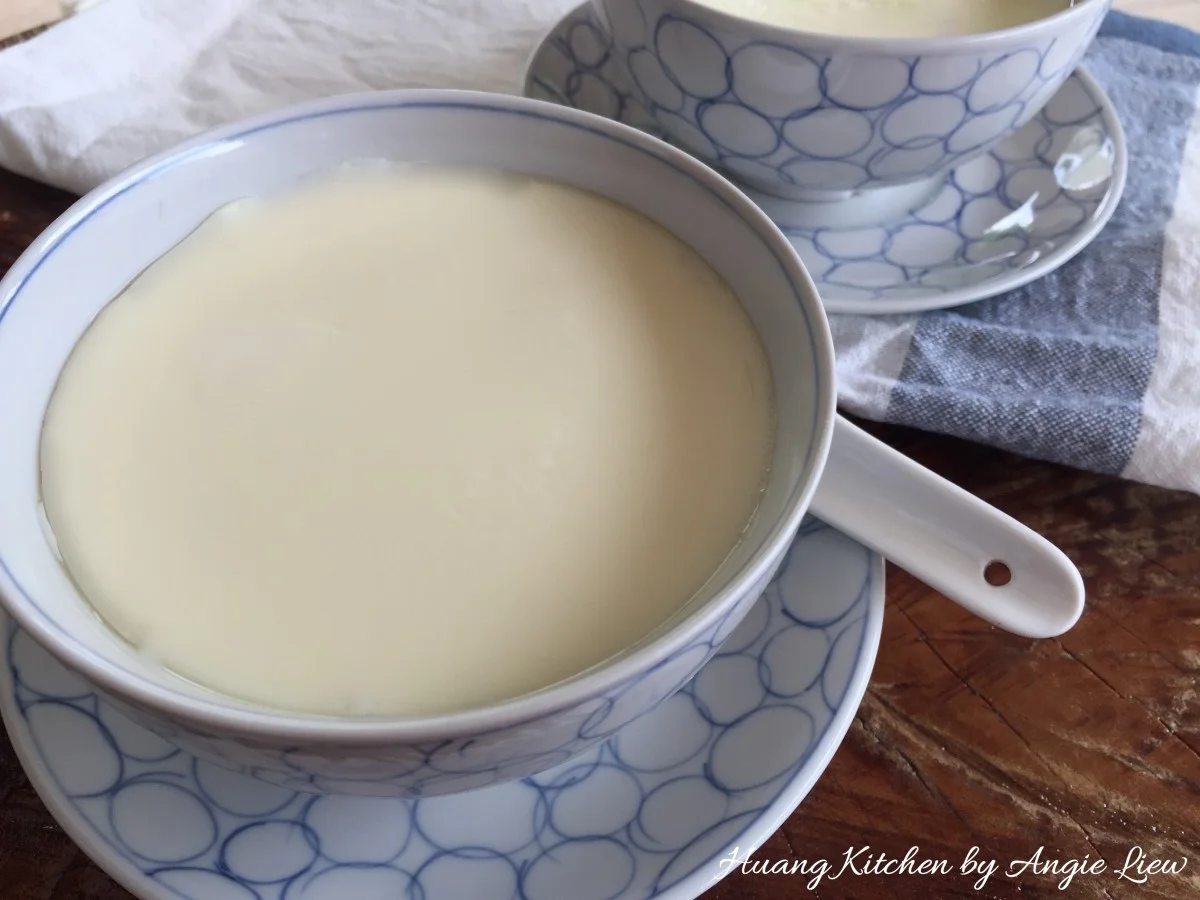
This Chinese-style steamed ginger milk pudding is a gently sweet dessert with a warm ginger flavour and a delicate, silky set. It uses egg whites to create a soft texture that is especially satisfying served warm, though it can also be chilled.
Ingredients
- 4egg whites, at room temperature
- 450 mlfresh milk
- 2 tbspsugar
- 1/8 tspsalt
- 2 tbspginger juice (from 50 g old ginger)
Instructions
- 1
Prepare ingredients
Set out and measure the ingredients. Separate the eggs, keeping the whites for the pudding and saving the yolks for another use.
- 2
Extract ginger juice
Scrape the ginger skin away with the edge of a metal spoon, then grate the ginger as finely as possible. Press the grated ginger pulp against the side of a bowl with a spatula, then strain the juice through a fine-mesh strainer into a bowl or jar.
- 3
Mix egg whites
Pour the egg whites into a large measuring jug or container. Add the sugar and salt, then whisk until dissolved.
- 4
Add the milk
Slowly pour in the fresh milk, whisking to combine. Strain the mixture into a clean container to remove air bubbles, then stir in the freshly squeezed ginger juice.
- 5
Fill the bowls
Strain the mixture into a steaming bowl or divide it evenly among individual bowls. Skim off any bubbles on the surface, then cover each bowl tightly with cling film.
- 6
Prepare the steamer
Bring water to the boil in a wok and place a perforated steaming plate inside, allowing room for steam to circulate.
- 7
Steam the pudding
Carefully set the covered bowls in the steamer. Cover the wok and steam over medium-low heat for 15 minutes.
- 8
Serve warm or chilled
Serve the puddings hot, or let them cool to room temperature, cover and chill in the refrigerator before serving.
What is ginger milk pudding?
Ginger milk pudding is a Chinese dessert made by gently setting milk with ginger and an egg-white mixture. It is known for a tender, smooth texture rather than the firmness of a baked custard.
This version uses steaming to cook the mixture gently, while freshly extracted ginger juice brings a warm, fragrant edge to the sweetness.
Nutrition and macros by portion
The nutrition label shows one serving as written: 128 calories, 10g protein, 10g carbs, 6g fat.
| Portion | Adjustment | kcal | Protein | Carbs | Fat |
|---|---|---|---|---|---|
| Lighter | Use semi-skimmed milk | 90 kcal | 7g | 7g | 4g |
| This serving | As written | 128 kcal | 10g | 10g | 6g |
| Hungry | Serve a larger bowl | 192 kcal | 14g | 15g | 8g |
The milk contributes much of the fat and some of the protein, while the egg whites provide most of the remaining protein; sugar supplies most of the carbohydrates. Serve a bowl with fresh fruit for a little more variety and a refreshing contrast.
Fresh ginger juice
Peeling with a spoon helps follow the ginger’s uneven surface while removing only the skin. A fine grater breaks it down enough to release juice when pressed.
Strain the pressed juice before adding it so that ginger fibres do not interrupt the pudding’s smooth texture.
Whisking and straining
Dissolve the sugar and salt in the egg whites before adding the milk. Whisk steadily rather than vigorously, as excess foam can leave bubbles in the finished surface.
Straining the combined milk mixture catches bubbles and any small bits of egg white. Skimming the filled bowls gives you a final chance to smooth the top.
Gentle steaming
A medium-low heat keeps the water simmering steadily without creating an overly forceful rush of steam. Keep the bowls level and handle them carefully when placing them in the wok.
The recipe gives a steaming time of 15 minutes. The pudding should be softly set, with a delicate wobble rather than a firm, rubbery texture.
Covering the bowls
Cover each bowl tightly with cling film before steaming, as directed. This helps keep water from the steamer lid from dripping directly onto the pudding.
Use bowls that fit comfortably in the steamer with space around them for steam to circulate.
Warm or chilled
Serve the pudding hot for a soft, comforting dessert with a pronounced ginger aroma. If you prefer it cold, let it reach room temperature before covering and refrigerating.
A small portion of fresh fruit alongside it can add a bright contrast to the milk’s richness and the ginger’s warmth.
Recipe notes & tips
- Bring the egg whites to room temperature before mixing, as specified in the ingredients.
- Use a fine grater to make it easier to extract juice from the ginger.
- Whisk gently to limit foam before straining the mixture.
- Strain the mixture as you fill the bowls to catch any remaining bubbles.
- Keep the steamer at medium-low heat for the full 15 minutes.
- Let chilled puddings cool to room temperature before covering and refrigerating.
Variations
- More ginger: Add a little extra ginger juice for a more pronounced warmth.
- Less sweet: Reduce the sugar slightly for a subtler sweetness.
- Citrus finish: Add a little finely grated citrus zest just before serving.
- Fruit topping: Serve with sliced mango or berries for a fresh contrast.
Common mistakes to avoid
- Foamy mixture: Whisk gently and strain before filling the bowls.
- Ginger fibres: Strain the pressed ginger juice through a fine-mesh strainer.
- Water on the surface: Cover each bowl tightly with cling film before steaming.
- Uneven cooking: Divide the mixture evenly among bowls of similar size.
- Overcooking: Keep to the stated 15 minutes over medium-low heat.
- Rushing the chill: Let the puddings reach room temperature before refrigerating.
How to store
Cover and refrigerate the puddings once they have cooled to room temperature, and eat within 2 days. Serve chilled, or reheat gently by steaming until warmed through; avoid vigorous heating, which can make the texture less delicate.
Frequently asked questions
Can I make the pudding ahead?
Yes. Steam it, let it cool to room temperature, then cover and refrigerate. It can be served chilled.
How do I know when it is set?
After 15 minutes of steaming over medium-low heat, it should be softly set with a slight wobble rather than liquid or firm.
Can I use bottled ginger juice?
Freshly squeezed juice is specified for this recipe and gives a fresh ginger flavour. If using bottled juice, check its strength and add it gradually to taste.
Why strain the milk mixture?
Straining removes air bubbles and small bits of egg white, helping the pudding finish with a smoother surface.
Can I serve it cold?
Yes. Let it cool to room temperature, cover it and chill it in the refrigerator before serving.
Cook it from the original
This recipe comes from huangkitchen.com. Their page has the author’s own photos, notes and tips — the best place to cook it from.
Open the recipe on huangkitchen.com