
Traditional Malaysian Chicken Rendang 马来西亚冷当咖喱鸡
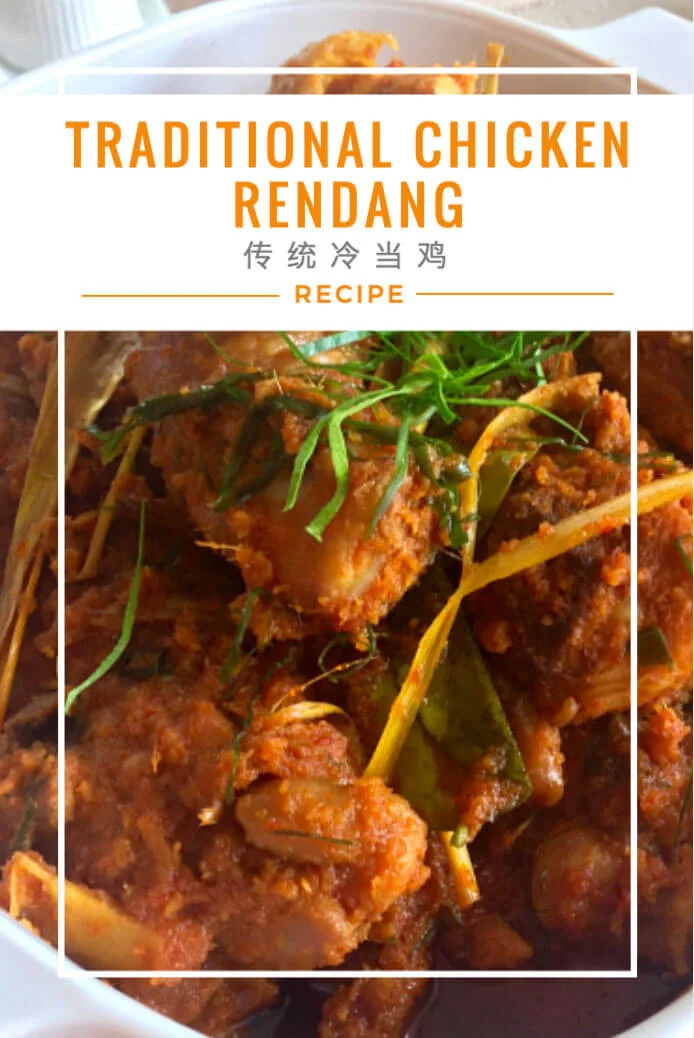
Traditional Malaysian chicken rendang is a richly spiced curry cooked until its sauce is thick and reduced rather than soupy. Toasted coconut, coconut milk, chillies and aromatic leaves build a deep, fragrant flavour for serving with rice.
Ingredients
- 1.5 kgchicken, cut into bite-sized pieces
- 90 ggrated coconut, for kerisik (about 1 cup)
- 240 mlthick coconut milk (about 1 cup)
- 30 gpalm sugar, coarsely chopped
- 120 mlvegetable oil (about ½ cup)
- 1 tbspsalt, to taste
- 1 piece, 2.5 cmgalangal (lengkuas), peeled and crushed
- 3 stalkslemongrass (serai), crushed
- 1 leafturmeric leaf (daun kunyit), crushed
- 1 leafturmeric leaf (daun kunyit), finely sliced
- 2 leaveskaffir lime leaves, crushed
- 2 leaveskaffir lime leaves, finely sliced
- 5red chillies, deseeded
- 20dried chillies, soaked and deseeded
- 20shallots, peeled
- 5 clovesgarlic, peeled
- 5candlenuts (buah keras)
- 1 piece, 2.5 cmgalangal (lengkuas), peeled
- 1 piece, 2.5 cmginger, peeled
- 1 piece, 2.5 cmturmeric (kunyit), peeled
- 3 stalkslemongrass (serai)
Instructions
- 1
Prepare chicken
Wash the chicken and cut it into pieces. Larger pieces can withstand the longer cooking and reduction. Season with salt and set aside.
- 2
Prepare chillies
Prepare the spice ingredients for the rempah. Remove the seeds from the dried chillies, soak them in hot water until soft, then drain. Deseed the fresh red chillies and cut them into smaller pieces.
- 3
Blend chillies
Put the dried and fresh chillies in a blender with a little water. Blend to a coarse paste and set aside.
- 4
Prepare spices
Cut the garlic into smaller pieces and thinly slice the shallots. Scrub the galangal clean and cut it into chunks. Scrape the ginger skin off with the edge of a spoon or knife and cut it into small pieces.
- 5
Prepare lemongrass
Rinse the lemongrass thoroughly, peel away a few outer layers from the bulb, and trim off and discard the tip of the bulb. Chop the bulb into small pieces.
- 6
Blend spice paste
Put the cut spices and turmeric piece in a blender with a little water. Blend to a coarse paste.
- 7
Crush aromatics
Clean and crush another 3 lemongrass stalks, using about 8 cm of each root end, and a piece of galangal for frying. Set aside.
- 8
Slice the leaves
Remove the midrib and stalk from the turmeric leaf. Roll it up and finely shred it with a sharp knife. Remove the midribs and stalks from the kaffir lime leaves, roll them together and slice thinly.
- 9
Fry aromatics
Heat the oil in a wok over medium-low heat. Sauté the crushed lemongrass and galangal until fragrant.
- 10
Cook the pastes
Stir in the red chilli paste, then add the blended spice paste. Mix well and sauté for 5–10 minutes, until aromatic, considerably darker and beginning to release oil.
- 11
Coat the chicken
Add the chicken and stir-fry until it is well coated with the spice paste and the skin begins to brown slightly.
- 12
Add coconut milk
Stir in the thick coconut milk, followed by the crushed kaffir lime and turmeric leaves. Add the palm sugar and stir occasionally as the curry comes to a boil.
- 13
Simmer uncovered
Reduce the heat to low and simmer uncovered for 30 minutes. Stir frequently so the chicken cooks evenly and the mixture does not stick to the bottom of the wok.
- 14
Toast the coconut
Meanwhile, dry-fry the grated coconut in a pan over medium-low heat for about 10 minutes, until brown, toasted and aromatic.
- 15
Pound kerisik
Pound the toasted coconut in a mortar to release some of its oils and bring out its nutty aroma. Set it aside to cool.
- 16
Thicken the rendang
After the chicken has simmered for 30 minutes, add the kerisik and stir it into the sauce. Add the finely shredded kaffir lime and turmeric leaves, then taste and adjust the salt.
- 17
Finish cooking
Cook for another 10 minutes, until the chicken is tender and cooked through and the sauce is thick and reduced.
- 18
Serve with rice
Transfer to a serving dish and garnish with finely shredded turmeric leaf and kerisik. Serve with steamed or saffron rice.
What is chicken rendang?
Rendang is a Malaysian dish of meat cooked slowly with a concentrated mixture of spices and coconut. As the liquid reduces, the sauce clings to the meat, giving rendang its characteristic dry-curry texture.
This version layers fresh and dried chillies with aromatics, coconut milk and toasted coconut. The separate pastes and leaves give the long-cooked chicken both depth and a fresh, fragrant finish.
Nutrition and macros by portion
The nutrition label shows one serving as written: 790 calories, 44g protein, 17g carbs, 61g fat.
| Portion | Adjustment | kcal | Protein | Carbs | Fat |
|---|---|---|---|---|---|
| Lighter | Use less oil and coconut | 553 kcal | 31g | 12g | 43g |
| This serving | As written | 790 kcal | 44g | 17g | 61g |
| Hungry | Add extra rice | 1185 kcal | 66g | 26g | 92g |
Chicken provides most of the protein, while the rice served alongside contributes most of the meal’s carbohydrates. The vegetable oil, coconut milk and grated coconut supply much of the fat; serve a moderate amount of rendang with rice and vegetables to balance the plate.
Build the rempah
Chilli paste: soaking the dried chillies softens them for blending, while fresh red chillies add another layer of flavour. Blend with only a little water so the paste can fry rather than dilute the wok.
Spice paste: galangal, ginger, turmeric, shallots, garlic, lemongrass and candlenuts form the aromatic base. A coarse blend is fine; the paste will cook down as it fries.
Fry the paste patiently
The pastes need several minutes over medium-low heat before the chicken goes in. Stir for 5–10 minutes and look for a darker colour, a fragrant smell and oil beginning to separate at the edges.
Avoid rushing this stage with high heat. A steady temperature helps cook the raw, sharp notes from the paste without scorching its spices.
Make kerisik
Toasted coconut: dry-fry the grated coconut over medium-low heat for about 10 minutes, stirring often so it browns evenly. It is ready when it is aromatic and brown, not burnt.
Pounding: crush the toasted coconut in a mortar before adding it to the curry. This releases some of its oils and helps it blend into the sauce.
Reduce to the right texture
Uncovered simmering allows moisture to evaporate and concentrates the coconut and spice mixture. Keep the heat low and stir frequently, especially as the sauce thickens and begins to cling to the wok.
Finish with the extra 10 minutes of cooking after adding kerisik and the finely sliced leaves. The chicken should be tender and cooked through, with a thick sauce rather than a pool of liquid.
Keep the leaves in two forms
Crushed leaves: the first turmeric and kaffir lime leaves go into the curry early, where they infuse the sauce as it simmers.
Sliced leaves: the remaining leaves are added near the end for a more noticeable leafy aroma. Finely shred them so they distribute through the rendang.
Serve it with rice
Steamed rice is a straightforward partner for this rich, reduced curry and catches the sauce. Saffron rice is the other serving suggestion in the method.
For a more balanced plate, serve a moderate amount of rendang alongside rice and a generous portion of plain vegetables.
Recipe notes & tips
- Cut the chicken into similarly sized pieces so they cook at a similar rate.
- Keep a little hot water nearby in case the paste catches before the chicken is added.
- Stir the paste as it fries, watching for darkening and oil separating rather than relying only on the clock.
- Toast the coconut slowly and stir it often to prevent uneven browning.
- Use a wide wok or pan so the curry can reduce effectively during the uncovered simmer.
- Taste for salt near the end, as the sauce becomes more concentrated as it reduces.
Variations
- Adjust the heat: use fewer dried chillies for a milder curry.
- Use boneless chicken: cut it into generous pieces and check it for doneness during the final cooking.
- Choose another sugar: use granulated sugar in place of palm sugar if needed.
- Change the rice: serve the rendang with steamed rice or saffron rice.
- Prepare ahead: make the kerisik before starting the curry so it is ready to add after the first simmer.
Common mistakes to avoid
- Scorching the paste: keep the heat medium-low and stir frequently during frying.
- Adding too much water to the blender: use just a little so the paste can fry and the curry can reduce.
- Burning the kerisik: toast the coconut over medium-low heat and keep it moving in the pan.
- Leaving the curry unattended: stir often during the uncovered simmer so the thickening sauce does not stick.
- Stopping while the sauce is thin: continue cooking until it has reduced and clings to the chicken.
- Adding all the leaves at once: reserve the finely sliced leaves for the final stage as directed.
How to store
Cool leftovers promptly and store them in an airtight container in the fridge for up to 3 days. Reheat gently in a covered pan until piping hot, stirring and adding a small splash of water if the sauce is too thick.
Frequently asked questions
How hot is this rendang?
It uses both dried and fresh chillies, so it can be quite spicy. Reduce the number of chillies to suit your preference.
What is kerisik?
Kerisik is toasted grated coconut, pounded to release some of its oils. In this recipe it is stirred into the rendang to add a toasted, nutty flavour.
Can I use tinned coconut milk?
Yes. Use thick coconut milk as listed, rather than a thin coconut drink, so the sauce has enough richness.
How do I know when the chicken is done?
After the simmer and final 10 minutes, check that the thickest pieces are cooked through and tender. The sauce should also be reduced and thick.
Why does the recipe simmer uncovered?
The uncovered simmer lets liquid evaporate, concentrating the sauce and helping it cling to the chicken. Stir regularly as it thickens.
What should I serve with chicken rendang?
Serve it with steamed rice or saffron rice, as suggested in the method.
Cook it from the original
This recipe comes from huangkitchen.com. Their page has the author’s own photos, notes and tips — the best place to cook it from.
Open the recipe on huangkitchen.com