
No Knead Turkish Bread (Ramazan Pidesi)
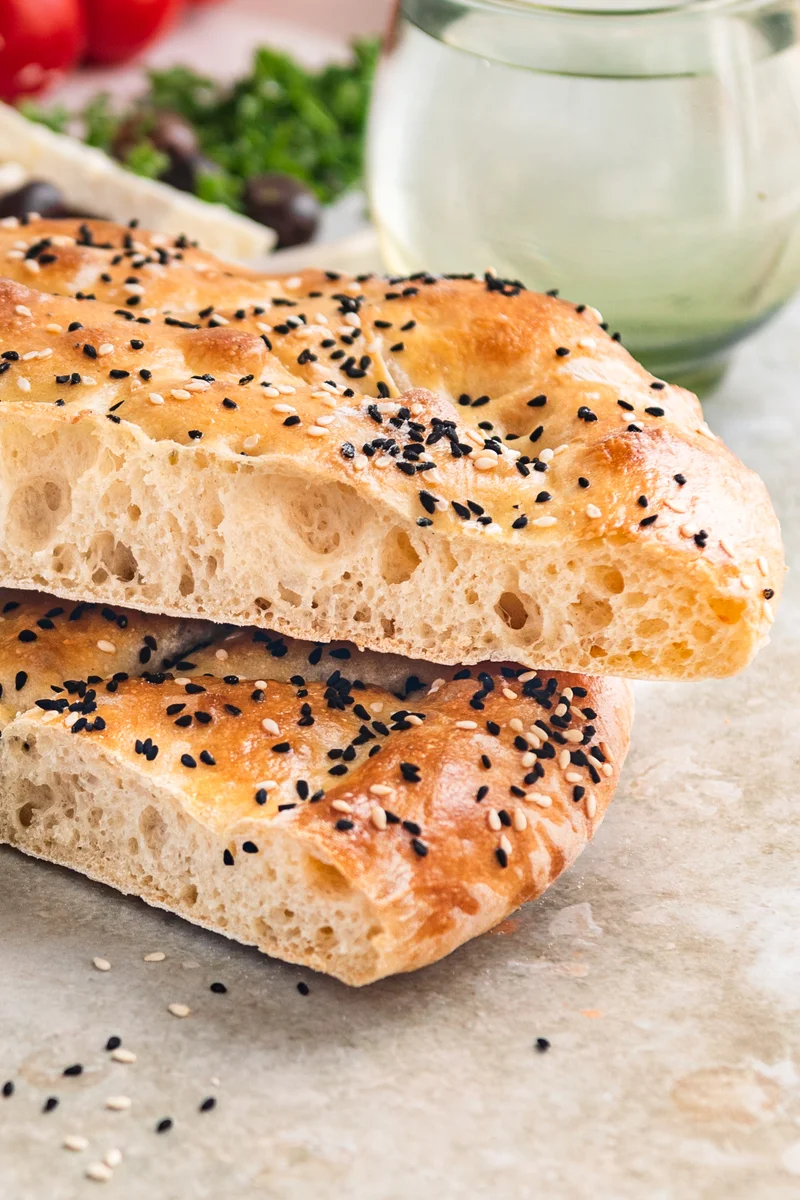
Ramazan pidesi is a soft, chewy Turkish flatbread with a golden, egg-washed top patterned with sesame and nigella seeds. This no-knead version needs only a spoon and a little patience, making it a lovely bread to share with tea, cheese or dips.
Ingredients
- 300 mlwarm water
- 1 tablespooninstant yeast
- 1 tablespoonsugar
- 360 gplain flour
- 1 teaspoonsalt
- 1 egg yolkegg yolk
- 1 tablespoonwater
- 2 teaspoonsplain flour
- 1½ tablespoonssesame seeds
- 1 tablespoonnigella seeds
Instructions
- 1
Mix the dough
In a large bowl, combine the warm water, instant yeast and sugar. Add the flour and salt, then stir with a wooden spoon for about 2 minutes, until no dry flour remains and the sticky dough holds together. Cover with cling film and leave to rise for 1 hour, or until doubled in size.
- 2
Shape the rounds
Heavily flour two large pieces of baking parchment on your work surface. Turn the dough out onto the parchment and divide it into two equal pieces, placing one on each sheet. With floured hands, gently press each piece into a 24 cm circle. Cover loosely with a tea towel and rest for 40 minutes.
- 3
Heat the oven
Position the oven racks in the centre and place a 30.5 × 43 cm baking tray on each rack. Preheat the oven to 220°C with the trays inside.
- 4
Add the topping
Whisk the egg yolk, 1 tablespoon of water and 2 teaspoons of flour in a small bowl. Brush the rested dough rounds with the mixture. Use your fingertips to press a circular groove 2–3 cm in from each edge, then make diagonal criss-cross lines 2–3 cm apart across the centre. Take care not to tear the dough or burst any air bubbles. Sprinkle both rounds evenly with the sesame and nigella seeds.
- 5
Bake the bread
Slide the parchment onto the back of another large baking sheet or a pizza peel, then carefully transfer each round onto a preheated tray. Bake for 15–20 minutes, switching the trays halfway through, until lightly golden. Cool the breads on a wire rack for a few minutes before slicing.
What is Ramazan pidesi?
Ramazan pidesi is a Turkish flatbread traditionally associated with Ramadan, though its soft, tearable crumb and seeded top make it welcome at any meal. This version keeps the dough simple and skips kneading, relying on a long rise to develop its texture.
The signature pattern is pressed into the dough before baking: a defined ring around the edge and a criss-crossed centre. An egg-yolk glaze helps the seeds adhere and gives the surface its golden finish.
Nutrition and macros by portion
The nutrition label shows one serving as written: 383 calories, 11g protein, 74g carbs, 4g fat.
| Portion | Adjustment | kcal | Protein | Carbs | Fat |
|---|---|---|---|---|---|
| Lighter | Smaller bread portion | 268 kcal | 8g | 52g | 3g |
| This serving | As written | 383 kcal | 11g | 74g | 4g |
| Hungry | Larger bread portion | 575 kcal | 17g | 111g | 6g |
The flour supplies most of the carbohydrates, while the egg yolk and seeds contribute fat; the flour, egg and seeds also provide some protein. Pair a portion with a protein-rich dish and vegetables for a more balanced plate.
Why this dough needs no kneading
A spoon is enough to mix the dough until the flour is incorporated. It will feel sticky rather than forming a neat ball, so resist the urge to add extra flour to the bowl.
The hour-long rise gives the yeast time to aerate the dough. Handle it gently when dividing and shaping so the bubbles built during that rise are not pressed out.
Shaping the pide
Floured parchment: work on two generously floured sheets, which make it easier to shape and move the soft dough. Press each portion into a 24 cm circle without stretching it thin.
The pattern: make the outer groove first, then mark diagonal lines across the middle at 2–3 cm intervals. Use fingertips rather than a knife, and press firmly enough to leave a pattern without breaking the surface.
Getting the topping right
The egg-yolk mixture is brushed over the rested rounds before shaping the pattern. Whisk it until the water and flour are blended, then spread it evenly without pressing down on the dough.
Sesame seeds bring a mild toasted flavour, while nigella seeds add their distinct savoury aroma. Distribute both across the breads so each slice gets some of the topping.
Bake for colour and softness
Preheating the trays helps the dough begin baking as soon as it lands on them. Transfer the rounds carefully on their parchment to avoid stretching or deflating them.
The recipe gives a 15–20 minute baking window; look for a lightly golden surface. Switching the trays halfway through helps account for uneven heat between the oven racks.
Serving and sharing
Let the breads sit on a wire rack for a few minutes before slicing, so steam can escape without the bases turning damp. Tear or cut them into pieces while still warm.
Serve with tea, cheese, dips or spreads, as suggested for this bread. It also works alongside a meal wherever you would serve a soft, plain flatbread.
Recipe notes & tips
- Use warm, not hot, water so the yeast can work properly.
- Keep the dough sticky; flour the work surface and your hands for shaping instead of adding flour to the dough.
- Flour the parchment generously to help prevent the rounds from sticking as you shape them.
- Make the pattern gently and avoid bursting visible air bubbles.
- Have a large sheet pan or pizza peel ready before moving the dough to the hot trays.
- Switch the trays halfway through baking for more even browning.
Variations
- More sesame: Use a larger share of sesame seeds while keeping the total topping amount the same.
- More nigella: Increase the nigella seeds and reduce the sesame seeds by the same amount.
- Seed-free top: Leave off the seeds for a plainer pide, while keeping the egg-yolk glaze.
- Smaller rounds: Divide the dough into smaller pieces and shape them into smaller circles.
- Serve as a sandwich: Split a cooled piece and fill it with cheese or your preferred savoury filling.
Common mistakes to avoid
- Adding flour to the bowl: The dough is meant to be sticky; flour your hands and work surface instead.
- Pressing out the air: Shape with a light touch so the dough keeps some of the bubbles from rising.
- Tearing the pattern: Use fingertips and avoid pressing so hard that the dough breaks.
- Moving the dough by hand: Slide the parchment onto a sheet pan or pizza peel to support the soft rounds.
- Skipping the hot trays: Preheat them in the oven as directed so they are ready when the dough is shaped.
- Overbaking: Check from 15 minutes and remove the breads when lightly golden.
How to store
Once cool, store the bread in an airtight container at room temperature for up to 2 days. Rewarm briefly in a warm oven before serving; freezing is also suitable for longer storage.
Frequently asked questions
Can I make the dough ahead?
The method calls for a 1-hour rise followed by a 40-minute rest after shaping. For best results, follow those timings and bake the breads soon after shaping.
How sticky should the dough be?
It will be sticky after mixing, even when all the flour is incorporated. Use plenty of flour on the parchment and your hands when shaping rather than trying to make the dough dry.
Can I use active dry yeast instead?
The recipe specifies instant yeast. Active dry yeast may need a different preparation or timing, so follow the instructions on its packet if substituting.
Why are the baking trays heated first?
The recipe places the trays in the oven during preheating so they are hot when the dough is transferred. Use parchment and slide each round onto a tray carefully.
How do I know when the bread is done?
Bake for 15–20 minutes, switching the trays halfway through. The stated cue is a lightly golden-brown surface.
Can I freeze Ramazan pidesi?
Yes. Cool the bread completely, wrap it well and freeze it. Thaw before serving and warm it briefly in the oven.
Cook it from the original
This recipe comes from hungrypaprikas.com. Their page has the author’s own photos, notes and tips — the best place to cook it from.
Open the recipe on hungrypaprikas.com