
Tom Yam Fried Bee Hoon (Tom Yam Fried Rice Vermicelli) 东炎炒米粉
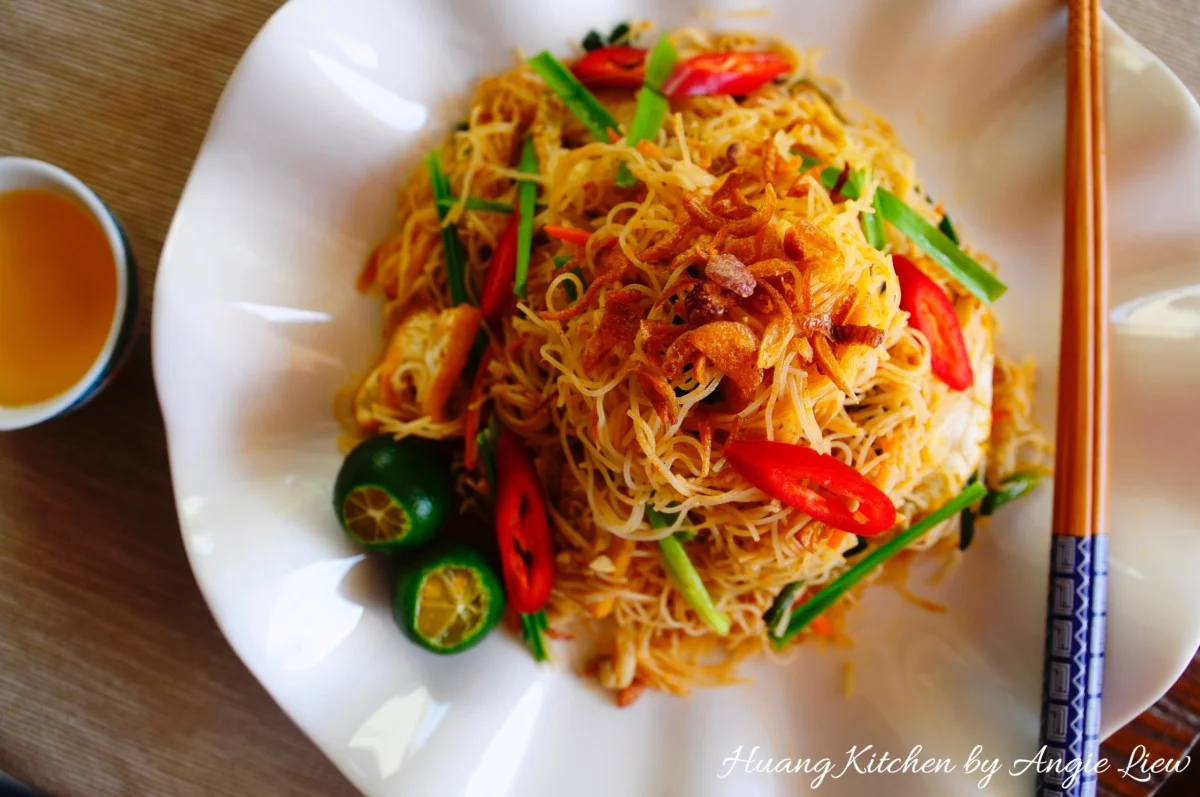
Tom yam fried bee hoon is a wok-fried rice vermicelli dish with a bright, savoury, gently sour flavour from tom yam paste and aromatic herbs. It makes a colourful meal with chicken, fish cake, tofu and crisp vegetables all tossed through the noodles.
Ingredients
- 400 g (1 packet)rice vermicelli
- 3 tbspoil
- 5 clovesgarlic, chopped
- 5shallots, chopped
- 1 tbsptauco (brown bean paste)
- 2 tbsptom yam paste
- 3 tbspdried shrimp
- 100 gchicken fillet, marinated in some soy sauce
- 1 piecefish cake
- 1firm beancurd
- 100 gbean sprouts
- 100 gchives
- 1 smallcarrot
- 5kaffir lime leaves
- 2 stickslemongrass
- 1bunga kantan (torch ginger flower)
- 480 ml (2 cups)hot water
- 5calamansi limes (optional)
- 1 tspsalt
- 1 tspsugar
- 1 tspchicken stock granules
Instructions
- 1
Soak the noodles
Soak the rice vermicelli for about 30 minutes, or until soft, then drain well.
- 2
Prepare the vegetables
Rinse and drain the bean sprouts and chives, then cut the chives into sections.
- 3
Slice the chicken
Thinly slice the chicken fillet.
- 4
Slice the fish cake
Cut the fish cake into thin slices.
- 5
Cut the carrot
Cut the carrot into thin strips.
- 6
Prepare the beancurd
Deep-fry the beancurd, then slice it thinly.
- 7
Shred the aromatics
Shred the lemongrass, kaffir lime leaves and bunga kantan into thin pieces.
- 8
Chop the shrimp
Coarsely chop the dried shrimp and set it aside.
- 9
Chop garlic and shallots
Chop the garlic and shallots.
- 10
Fry the aromatics
Heat the oil in a wok and fry the garlic and shallots until fragrant.
- 11
Cook chicken and fish cake
Add the chicken and fish cake and stir-fry.
- 12
Add fresh herbs
Add the sliced lemongrass, kaffir lime leaves and bunga kantan. Fry until just cooked.
- 13
Set aside mixture
Remove the chicken, fish cake and herb mixture from the wok and set it aside.
- 14
Fry dried shrimp
Reheat the wok over medium heat, add some more oil and stir-fry the chopped dried shrimp until golden brown.
- 15
Cook the pastes
Add the tauco and tom yam paste. Stir-fry until aromatic, taking care not to let them burn.
- 16
Boil the sauce
Quickly add enough hot water to the paste mixture and bring it to a boil. Add the sugar, salt and chicken stock granules to taste.
- 17
Mix in noodles
Add the vermicelli and use long chopsticks to loosen it and mix it thoroughly into the sauce.
- 18
Cook sprouts and carrot
Push the vermicelli to one side of the wok and add the bean sprouts and carrot. Scoop the noodles over them and cook for 1 minute, then toss everything together.
- 19
Add the chives
Push the noodles to one side again and add the chives. Cover them with noodles for about 1 minute, then toss to combine.
- 20
Return chicken mixture
Add the fried chicken and fish cake mixture back to the wok and stir everything together.
- 21
Finish and season
Toss in the sliced beancurd. Taste and adjust the seasoning if needed.
- 22
Garnish and serve
Garnish with fried crispy onions and calamansi, then serve.
What is tom yam fried bee hoon?
Bee hoon, also called mee hoon, is thin rice vermicelli used in many Southeast Asian noodle dishes. This version brings in tom yam paste and aromatic herbs for a Thai-inspired sweet, savoury and sourish flavour.
The method builds flavour in stages: the chicken and herbs are fried first, while the paste and dried shrimp form the base for the noodles. Vegetables, fish cake and beancurd round it out with colour and varied textures.
Nutrition and macros by portion
The nutrition label shows one serving as written: 430 calories, 18g protein, 67g carbs, 13g fat.
| Portion | Adjustment | kcal | Protein | Carbs | Fat |
|---|---|---|---|---|---|
| Lighter | Use less oil | 301 kcal | 13g | 47g | 9g |
| This serving | As written | 430 kcal | 18g | 67g | 13g |
| Hungry | Add more vermicelli | 645 kcal | 27g | 101g | 20g |
Most of the carbohydrates come from the rice vermicelli, while the cooking oil and fried beancurd contribute much of the fat. Chicken, dried shrimp, fish cake and beancurd provide the protein, with pastes, stock granules and seasoning adding sodium. Serve with extra fresh vegetables or a simple vegetable side to balance the plate.
Choose and prepare the noodles
Soaking time: leave the vermicelli in water for about 30 minutes, or until it is soft, then drain it well. If it is still firm, give it more soaking time before it goes into the wok.
Drain well: excess water can thin the sauce and make it harder for the noodles to take on the seasoning. Long chopsticks help separate the strands as you toss them.
Build the aromatic base
Tom yam and tauco: frying the pastes with the chopped dried shrimp releases their aroma before the hot water is added. Keep stirring so the pastes do not catch or burn.
Fresh herbs: lemongrass, kaffir lime leaves and bunga kantan are briefly fried with the chicken and fish cake. This keeps their fragrance in the dish without leaving them to cook through the entire noodle stir-fry.
Keep the vegetables lively
Bean sprouts and carrot: add these after the noodles have been coated in sauce, and cook them for 1 minute beneath the noodles before tossing. That short cook helps them stay distinct from the softer vermicelli.
Chives: add them last among the vegetables and cover them with the noodles for about 1 minute. They need only a brief cook before being mixed through.
Get the seasoning right
Saltiness: tauco, tom yam paste, chicken stock granules and the soy sauce used to marinate the chicken all contribute seasoning. Taste after mixing in the noodles before adding more salt.
Balance: the sugar is added with the salt and stock granules, while calamansi is served as an optional garnish. A squeeze at the table brings a fresh citrus note.
Serve it as a complete meal
The noodles already include chicken, fish cake, beancurd and vegetables, so they can be served straight from the wok. Crispy fried onions add a crunchy finish, and calamansi is a good option for those who want extra citrus.
For a fuller spread, offer a simple side of fresh vegetables or a light soup. Serve promptly so the noodles and bean sprouts do not lose their texture.
Recipe notes & tips
- Drain the soaked vermicelli thoroughly before adding it to the wok.
- Have the sliced ingredients ready before you start stir-frying, as the cooking stages follow one another quickly.
- Stir the tom yam paste and tauco continuously so they do not burn.
- Use long chopsticks to loosen the noodles and coat them evenly in the sauce.
- Taste the noodles before adding extra salt, since several ingredients are already seasoned.
- Add the calamansi at the table for a fresh citrus finish.
Variations
- More vegetables: increase the bean sprouts or chives while keeping the same cooking order.
- Extra citrus: serve with additional calamansi for a brighter, sharper finish.
- No chicken: leave out the chicken and retain the fish cake and beancurd.
- More heat: add extra tom yam paste to taste, taking care to stir it well into the sauce.
- Crispy topping: finish with fried crispy onions as suggested for serving.
Common mistakes to avoid
- Wet noodles: drain the vermicelli well so excess soaking water does not dilute the sauce.
- Burnt paste: keep the tom yam paste and tauco moving in the wok and add the hot water promptly.
- Clumped vermicelli: loosen the strands with long chopsticks as they are mixed into the sauce.
- Overcooked vegetables: follow the brief cooking times for the bean sprouts, carrot and chives.
- Over-seasoning: taste before adding more salt because the pastes and stock granules are already savoury.
How to store
Refrigerate leftovers in a covered container and use within 2 days. Reheat in a wok or frying pan until piping hot, adding a small splash of water if the noodles seem dry.
Frequently asked questions
How long should I soak the rice vermicelli?
Soak it for about 30 minutes, or until soft, then drain it well. If it is not soft after that time, continue soaking until it is ready.
Can I prepare the ingredients ahead?
Yes. Slice the chicken, fish cake, carrot and herbs, and chop the garlic, shallots and dried shrimp ahead of cooking. Keep them covered and refrigerated until needed.
What is tauco?
Tauco is a fermented brown bean paste used here alongside tom yam paste. The two pastes provide the savoury, aromatic base for the noodles.
Can I leave out the calamansi?
Yes. The calamansi is optional and is used as a garnish, so the noodles can be served without it.
How can I tell when the noodles are ready?
They should be soft and coated with the sauce, with the vegetables and other ingredients mixed through. Follow the brief 1-minute cooking periods for the bean sprouts and chives.
Cook it from the original
This recipe comes from huangkitchen.com. Their page has the author’s own photos, notes and tips — the best place to cook it from.
Open the recipe on huangkitchen.com