
Okra Stew (Middle Eastern Bamya Recipe)
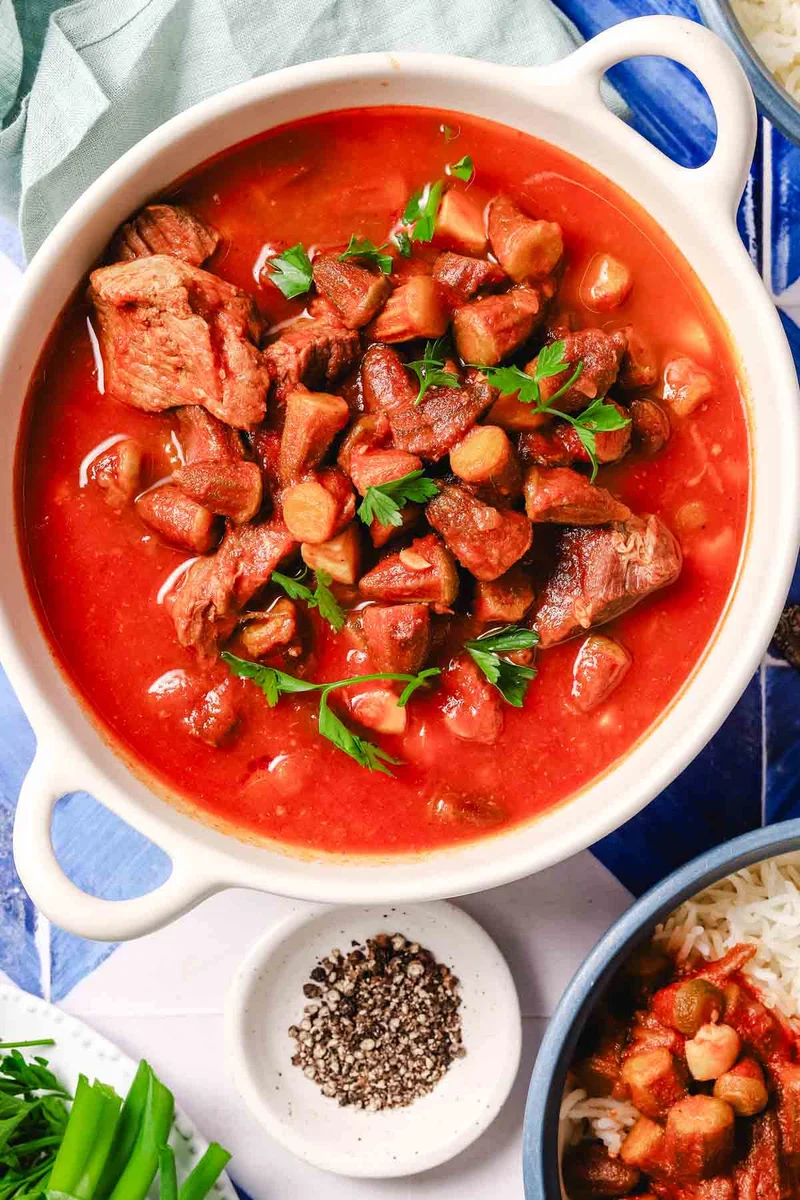
Bamya is a comforting Middle Eastern stew of okra simmered with tender veal, tomato, garlic and pomegranate molasses. This version builds flavour in stages and is traditionally served with rice.
Ingredients
- 500 gveal, cut into medium pieces (or lamb or stewing beef)
- 800 gsmall frozen okra (or fresh okra)
- 1onion, finely diced
- 45 ml (3 tablespoons)vegetable oil
- 90 ml (6 tablespoons)tomato paste
- 8 clovesgarlic, roughly chopped
- 22.5 ml (1.5 tablespoons)pomegranate molasses
- 1.5 teaspoons, divided, plus more to tastesalt
- 0.5 teaspoonblack pepper
- About 1.4–1.9 L (6–8 cups), added in stageswater
Instructions
- 1
Soften the onion
Finely dice the onion and add it to a stock pot with the vegetable oil and 0.5 teaspoon of salt. Cook for 2–3 minutes, until soft and translucent.
- 2
Season the veal
Season the veal pieces with 0.5 teaspoon of salt and 0.5 teaspoon of black pepper.
- 3
Brown the meat
Add the veal to the pot with the onion and brown it on all sides for about 5 minutes.
- 4
Simmer the veal
Pour in about 950 ml (4 cups) of water, enough to cover the veal, and bring to the boil. Cover the pot and boil for 30–40 minutes, until the meat is almost very tender. Alternatively, pressure cook the veal for 15 minutes.
- 5
Add the okra
Once the veal is a little over halfway cooked, add the frozen okra, tomato paste, chopped garlic, pomegranate molasses and remaining 0.5 teaspoon of salt.
- 6
Boil the stew
Add about 710–950 ml (3–4 cups) of water and mix everything well. Bring to a rolling boil over medium heat and cook for roughly 30–40 minutes.
- 7
Check tenderness
After 30 minutes, check the okra and meat. If both are still slightly firm, add roughly 475–710 ml (2–3 cups) more water and boil for another 20 minutes.
- 8
Adjust and serve
Check that the meat and okra are soft, then taste and adjust the salt and pepper as needed. When both are tender, turn off the heat and serve.
What is bamya?
Bamya is the Arabic name for okra and for the stew made with it in many parts of the Middle East. It is commonly cooked with meat and tomato, then served with rice.
This version uses veal, garlic and pomegranate molasses. The meat simmers first so it has a head start before the okra joins the pot.
Nutrition and macros by portion
The nutrition label shows one serving as written: 261 calories, 20g protein, 18g carbs, 13g fat.
| Portion | Adjustment | kcal | Protein | Carbs | Fat |
|---|---|---|---|---|---|
| Lighter | More okra, less veal | 183 kcal | 14g | 13g | 9g |
| This serving | As written | 261 kcal | 20g | 18g | 13g |
| Hungry | Serve with extra rice | 392 kcal | 30g | 27g | 20g |
The veal supplies most of the protein, while the okra and tomato paste contribute carbohydrates and fibre. Veal and vegetable oil contribute much of the fat; serve with a moderate portion of rice and add salad or other vegetables to round out the plate.
The meat and its head start
Veal: medium pieces brown quickly and become tender as they simmer. Lamb or stewing beef can be used instead, but the cooking time may vary, so rely on tenderness rather than the clock alone.
Early simmer: cooking the meat in water before adding the okra helps bring the two main ingredients to a similar level of doneness.
Building the tomato base
Tomato paste: it gives the broth a concentrated savoury flavour and colour. Stir it in well when adding the okra so it disperses through the liquid.
Pomegranate molasses: its tart, fruity note balances the richness of the meat and tomato. Add it with the garlic, as directed, so its flavour simmers into the stew.
Handling the okra
Frozen okra: add it straight to the pot as instructed; there is no need to thaw it first. Small pods suit a stew because they can cook through without being cut into pieces.
Gentle mixing: once the okra is in the pot, stir enough to combine the ingredients without repeatedly breaking up the pods.
Reading the doneness cues
Tender meat: test a piece with a fork; it should be soft rather than chewy. If it is still firm, continue simmering and check again.
Soft okra: the pods should be cooked through but still hold their shape. The recipe includes extra simmering time if either ingredient needs it.
Timing and liquid
The method cooks the veal first, then simmers the stew with the okra. The time needed can vary with the cut of meat and the size of the pieces, so the tenderness checks are more useful than a strict finish time.
Water is added in stages, and the recipe allows for more if the stew needs extra cooking. Add it as directed, then taste and adjust the seasoning at the end.
Serving the stew
Serve bamya hot with rice, a classic accompaniment that goes well with the tomato-rich broth. Spoon some of the liquid over the rice so it can soak up the stew's flavour.
A simple fresh salad can add a crisp contrast to the soft okra and tender meat.
Recipe notes & tips
- Cut the veal into similarly sized pieces so they cook at a more even pace.
- Brown the meat on all sides before adding water to develop flavour in the pot.
- Keep the pot covered while the veal simmers to limit evaporation.
- Check both the okra and meat before deciding whether the stew needs more cooking.
- Taste near the end before adding extra salt, as the broth reduces during simmering.
Variations
- Use lamb: swap it for the veal and simmer until the pieces are tender.
- Use stewing beef: substitute it for the veal and allow for a longer simmer if needed.
- Try fresh okra: use it in place of frozen and check its tenderness as it cooks.
- Omit the molasses: leave out the pomegranate molasses if you cannot find it.
- Serve with rice: spoon the stew and its broth over cooked rice.
Common mistakes to avoid
- Adding okra too early: give the veal its initial simmer first so the okra does not have to cook through the entire meat-cooking time.
- Rushing the meat: continue simmering if a piece is still firm, rather than relying only on the stated time.
- Skipping the tenderness check: test both the okra and veal before turning off the heat.
- Adding all the water at once: follow the staged additions so you can judge whether more liquid is needed.
- Over-salting early: taste the finished broth before adding extra salt.
How to store
Refrigerate leftovers in a covered container and use within 3 days. Reheat gently in a saucepan until piping hot, adding a little water if the stew has thickened.
Frequently asked questions
Can I use fresh okra instead of frozen?
Yes. Fresh okra can replace the frozen okra; check the pods during cooking and simmer until they are tender.
Can I replace veal with another meat?
Yes, lamb or stewing beef can be used. Cooking time may differ, so simmer until the meat is tender.
Do I need to thaw the frozen okra first?
No. The method adds the frozen okra directly to the pot.
What can I use instead of pomegranate molasses?
The recipe says you can leave it out if it is unavailable. The stew will still work, though it will lack that ingredient's tart, fruity flavour.
How do I know when the stew is ready?
The meat should be soft and the okra tender. If either is still firm, continue cooking and check again.
What should I serve with bamya?
Rice is the traditional pairing described for this stew. A fresh salad is another useful accompaniment.
Cook it from the original
This recipe comes from hungrypaprikas.com. Their page has the author’s own photos, notes and tips — the best place to cook it from.
Open the recipe on hungrypaprikas.com