
Pandan Pavlova
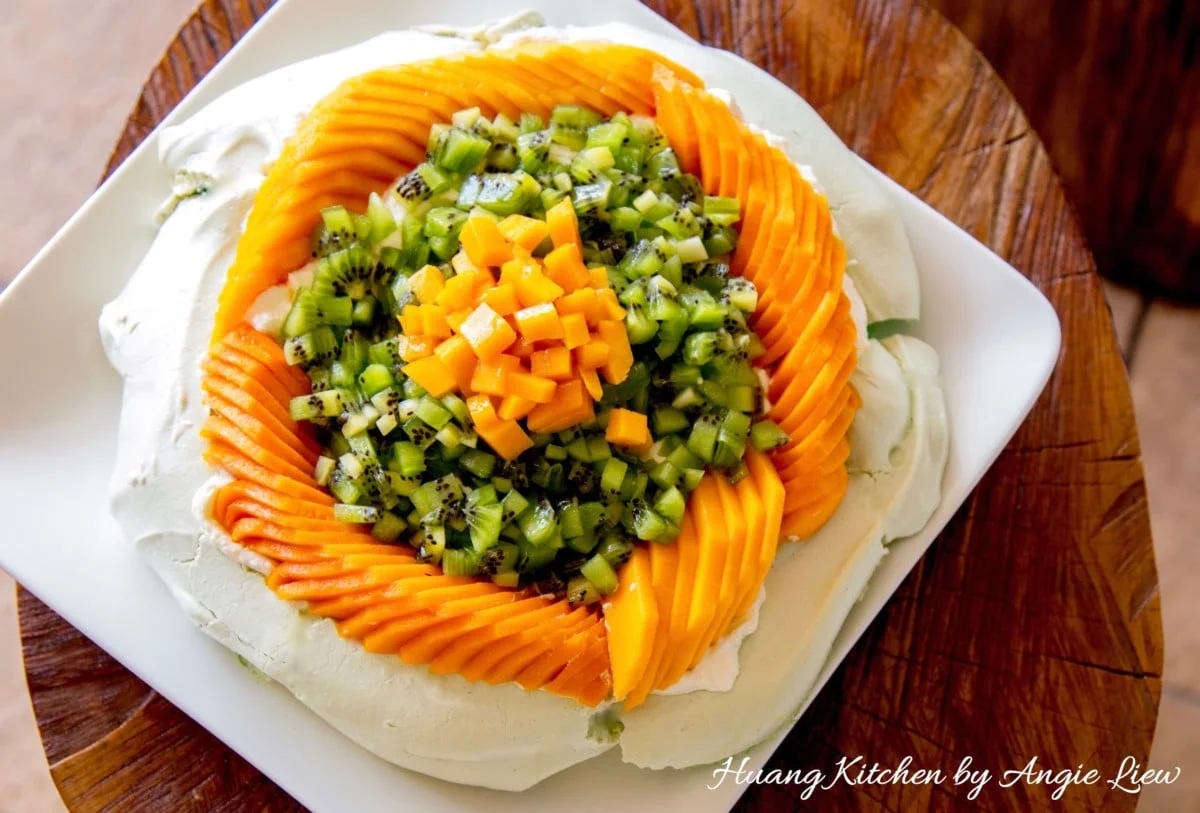
Pandan pavlova pairs a crisp, delicate meringue with whipped cream, mango and kiwi. Pandan adds a fragrant, pine-like note and a soft green tint, making this fruit-topped dessert a distinctive centrepiece.
Ingredients
- 6, separated; use the whiteseggs
- 340 gcaster sugar
- 1 tspcornflour
- 1 tspwhite vinegar
- 1 tsppandan extract
- 300 mldouble cream, whipped until stiff
- 2mangoes, sliced
- 3kiwi fruit, cut into cubes
Instructions
- 1
Heat the oven
Heat the oven to 120°C (250°F) and position a rack in the centre.
- 2
Line the tray
Cover a baking sheet with parchment paper.
- 3
Separate the eggs
Separate the eggs and put the whites in a bowl.
- 4
Whisk the whites
Using an electric mixer, whisk the egg whites until they are light and form soft peaks.
- 5
Add the ingredients
Gradually add the sugar, cornflour, vinegar and pandan extract.
- 6
Finish the meringue
Keep whisking until the meringue is thick, smooth and fairly firm. It should stay in the bowl when you carefully turn it upside down.
- 7
Shape the base
Spoon the meringue onto the lined baking sheet. Smooth the edges so they sit slightly higher than the centre, leaving a shallow dip for the cream and fruit.
- 8
Bake the meringue
Bake in the preheated oven for 1½ to 2 hours, until dry and firm to the touch but not browned.
- 9
Cool it slowly
Turn off the oven, leave the door slightly ajar and let the meringue cool completely inside. Transfer it to a serving plate once cool.
- 10
Prepare the fruit
Peel the mangoes and cut them into thick slices. Peel the kiwi fruit and cut it into cubes.
- 11
Whip the cream
Whip the cream with an electric mixer until it forms firm peaks.
- 12
Add the topping
Spread a generous layer of whipped cream over the cooled pavlova.
- 13
Finish with fruit
Arrange the mango slices and kiwi cubes on top, then serve immediately.
What is pandan pavlova?
Pavlova is a meringue dessert traditionally associated with Australia and New Zealand; its precise origin is disputed. It is usually served with cream and fruit, with a crisp shell and a softer centre.
This version brings an Asian-inspired flavour through pandan extract, which lends the meringue a fragrant, pine-like aroma and pale green colour. Mango and kiwi add juicy, tangy contrast to the sweet base.
Nutrition and macros by portion
The nutrition label shows one serving as written: 350 calories, 4g protein, 55g carbs, 13g fat.
| Portion | Adjustment | kcal | Protein | Carbs | Fat |
|---|---|---|---|---|---|
| Lighter | Less cream, more fruit | 245 kcal | 3g | 39g | 9g |
| This serving | As written | 350 kcal | 4g | 55g | 13g |
| Hungry | Larger slice | 525 kcal | 6g | 83g | 20g |
Most of the carbohydrates come from the caster sugar, with additional sugars and fibre from the mango and kiwi; the cream supplies most of the fat, while the egg whites provide some protein. For a more balanced plate, serve a smaller slice alongside extra fresh fruit.
Building a stable meringue
Clean separation: Keep yolk out of the whites, as even a little can make them harder to whip. Use a clean bowl and beaters for the best chance of reaching soft peaks.
Gradual additions: Add the sugar, cornflour, vinegar and pandan extract little by little as directed. The finished mixture should look thick and silky, with enough firmness to hold its shape.
Shaping the pavlova
Raised edge: Shape the meringue with the sides slightly higher than the middle. That shallow centre makes room for the cream and fruit after baking.
Gentle handling: Smooth the surface and edges without pressing the mixture flat. A light touch helps preserve the volume built up during whisking.
Baking and cooling
Low heat: Bake at 120°C for 1½ to 2 hours, aiming for a dry, firm surface without browning. The recipe gives touch and colour as the main cues for doneness.
Slow cooling: Leave the pavlova in the switched-off oven with the door slightly ajar until fully cool. Add the topping only after cooling, as the cream belongs on the finished base.
The cream and fruit topping
Firm cream: Whip the cream until it forms firm peaks, then spread it over the cooled meringue. The slight dip in the base helps keep the topping in place.
Fresh fruit: Slice the mangoes and cube the kiwi before assembling. Their juicy texture and bright flavours balance the sweet meringue.
Serving and timing
Assemble shortly before serving, since the cream and fruit soften the meringue over time. The recipe recommends serving it immediately and notes that it does not hold for more than a few hours.
Serve it as a centrepiece dessert after a meal, or alongside tea or coffee. Cut gently with a sharp knife, as the crisp shell may crack.
Recipe notes & tips
- Separate each egg over a small bowl before adding its white to the mixing bowl, so a broken yolk does not affect the rest.
- Add the sugar gradually rather than tipping it in all at once.
- Use the bowl-inversion check carefully, over a clear work surface, to assess whether the meringue is firm.
- Keep the centre slightly lower than the sides to make space for the topping.
- Let the meringue cool completely before adding the cream and fruit.
- Assemble close to serving time to keep the meringue from softening.
Variations
- Berry topping: Replace some or all of the mango and kiwi with fresh berries.
- Citrus lift: Add finely grated lime zest to the whipped cream for a sharper flavour.
- Tropical mix: Use sliced pineapple alongside the mango and kiwi.
- Pandan accent: Add a little extra pandan extract for a stronger flavour, keeping in mind it will also deepen the colour.
- Individual nests: Shape the meringue into smaller portions, leaving a shallow dip in each for the cream and fruit.
Common mistakes to avoid
- Yolk in the whites: Separate the eggs carefully and keep the mixing bowl free from yolk or grease.
- Adding sugar too quickly: Sprinkle it in gradually while whisking so the mixture has time to become smooth and firm.
- Flattening the centre: Keep the edges slightly higher so the finished pavlova can hold its topping.
- Browning the meringue: Bake at 120°C and check that it is dry and firm without taking on colour.
- Topping while warm: Cool the base completely before spreading on the whipped cream.
- Assembling too early: Add the topping shortly before serving to limit softening.
How to store
The assembled pavlova is best served immediately and, according to the recipe, does not keep for more than a few hours. The recipe advises against refrigerating it because the meringue will soften.
Frequently asked questions
Can I make the meringue base ahead?
The recipe specifies cooling it completely before transferring it to a serving plate, but does not give a make-ahead storage time. For the best texture, add the cream and fruit close to serving.
How do I know when the meringue is ready?
It should be dry and firm to the touch without browning. The recipe gives a baking time of 1½ to 2 hours.
Why cool the pavlova in the oven?
The method calls for switching off the oven, leaving the door slightly ajar and letting the meringue cool completely inside. Follow that gradual cooling step before adding the topping.
Can I use another fruit topping?
Yes. The recipe's topping is mango and kiwi, but other fresh fruit can be used if you like; cut it into pieces that are easy to arrange over the cream.
Can I refrigerate the finished pavlova?
The recipe advises against refrigerating it because the meringue will soften. Assemble it just before serving instead.
Cook it from the original
This recipe comes from huangkitchen.com. Their page has the author’s own photos, notes and tips — the best place to cook it from.
Open the recipe on huangkitchen.com