
Creme Caramel Recipe with Condensed Milk
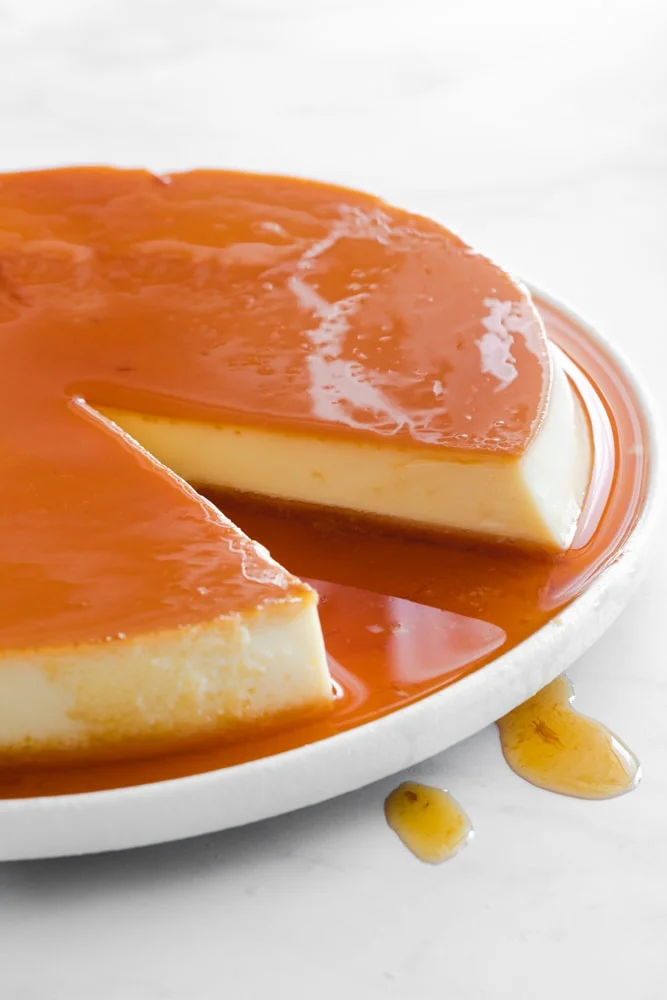
This French-style crème caramel pairs a smooth, sweetened condensed milk custard with a layer of amber caramel. Blending the custard makes preparation straightforward, while baking it in a water bath helps it set gently.
Ingredients
- 300 g (1½ cups)granulated sugar
- 120 ml (½ cup)water
- 8eggs
- 600 ml (2 × 300 ml cans)sweetened condensed milk
- 600 ml (fill the same condensed milk cans)whole milk
- 5 ml (1 tsp)vanilla extract
Instructions
- 1
Preheat the oven
Heat the oven to 163°C (325°F).
- 2
Start the caramel
Put the sugar in a saucepan without letting it touch the sides, then pour in the water. Do not stir or move the pan; stay close to watch it.
- 3
Cook until amber
Bring the mixture to a boil over medium-high heat. Watch as it changes from yellow to amber and then deep orange; this should take about 20–30 minutes. Once deep orange, swirl the pan to disperse bubbles and check the colour.
- 4
Coat the pan
Take the caramel off the heat and pour it into a cake pan. Carefully tilt the hot pan to cover the base; the caramel will set within seconds.
- 5
Blend the custard
Blend the eggs, condensed milk and whole milk until combined, just for a few seconds. If your blender is small, blend in two batches using half the ingredients for each. A little foam or some bubbles on top is fine.
- 6
Fill the pan
Pour the custard over the set caramel, filling the cake pan to the top.
- 7
Prepare the water bath
Set the cake pan inside a larger baking dish and pour in boiling water until it comes halfway up the side of the pan.
- 8
Bake until set
Bake for 45–50 minutes. At about 45 minutes, gently jiggle the pan: the custard should wobble like set jelly, not ripple like water. You can also insert a knife into the centre; it should come out mostly clean, with a few streaks but no small clumps. If needed, continue baking and check every 5 minutes.
- 9
Cool in the bath
Remove the pan from the oven and leave it in the water bath at room temperature for at least 1 hour. The custard will keep cooking in the residual heat.
- 10
Chill thoroughly
Refrigerate the crème caramel for at least 4 hours or overnight.
- 11
Loosen the edges
When ready to serve, run a knife around the edge, pressing it against the pan so you do not cut into the custard. If needed, run warm water over the sides and base of the pan to help release it.
- 12
Turn out to serve
Place a plate with a raised edge over the pan, then carefully flip the pan and plate together.
What is crème caramel?
Crème caramel is a French baked custard served turned out, with a soft layer of caramel sauce running over its surface. It is related to other custard desserts, but the caramel is cooked in the mould before the custard is added.
Condensed milk gives this version a rich, sweet base, while blending makes it easy to combine the ingredients. A water bath and a thorough chill help the custard set while keeping its texture tender.
Nutrition and macros by portion
The nutrition label shows one serving as written: 453 calories, 13g protein, 75g carbs, 12g fat.
| Portion | Adjustment | kcal | Protein | Carbs | Fat |
|---|---|---|---|---|---|
| Lighter | Smaller slice, fresh fruit | 317 kcal | 9g | 53g | 8g |
| This serving | As written | 453 kcal | 13g | 75g | 12g |
| Hungry | Larger slice | 680 kcal | 20g | 113g | 18g |
The eggs and milk provide most of the protein, while the sugar and sweetened condensed milk contribute much of the carbohydrate. The condensed milk, whole milk and eggs also supply the fat. Serve a slice with fresh fruit if you would like to balance the rich custard with something lighter.
The caramel comes first
Sugar and water: let them boil without stirring or moving the saucepan, as directed. Keep watch as the colour deepens, since the change from amber to deep orange is the cue to take it off the heat.
Hot caramel: pour it into the cake pan promptly and tilt the pan to coat the base. It sets quickly, so take care when handling the hot pan.
Blend just to combine
Custard ingredients: blend the eggs, condensed milk and whole milk only until the mixture is homogeneous. A few seconds is enough; the method does not call for prolonged blending.
Small blender: divide the ingredients into two equal batches if needed. Some bubbles or foam on the surface are expected and do not need to be removed.
Use the water bath
Water level: set the cake pan in a larger baking dish and add boiling water until it reaches halfway up the pan's side. Take care when pouring the water around the filled pan.
Gentle baking: the water bath surrounds the custard with heat as it bakes. Leave the pan in the bath while it cools at room temperature for at least an hour.
Check the set
Jiggle test: begin checking at about 45 minutes. The custard should move with a set-jelly wobble rather than a watery ripple.
Knife test: a knife inserted in the centre should come out mostly clean, with a few streaks but no little clumps. If it needs longer, bake in 5-minute intervals and check again.
Chill before turning out
Chilling time: refrigerate for at least 4 hours or overnight before unmoulding. This gives the custard time to cool and firm up after its time in the oven and water bath.
Release: run a knife around the edge while keeping it against the pan, rather than cutting into the custard. Warm water on the sides and base can help loosen the caramel if the dessert sticks.
Serving ideas
Serve the crème caramel chilled, allowing the caramel sauce to flow over each slice as it is turned out. A plate with a raised edge helps catch the sauce.
For a balanced dessert plate, pair a modest slice with fresh fruit. The custard is already sweet and rich, so keep any additional toppings simple.
Recipe notes & tips
- Stay beside the saucepan as the caramel cooks and watch its colour closely.
- Tilt the cake pan carefully as soon as you pour in the caramel, before it sets.
- Use two batches if your blender cannot comfortably hold the custard ingredients.
- Add boiling water to the outer dish until it reaches halfway up the cake pan.
- Start checking the custard at about 45 minutes, then use 5-minute intervals if it needs longer.
- Chill the dessert for at least 4 hours before trying to turn it out.
Variations
- Vanilla-forward: add more vanilla extract if you want a stronger vanilla flavour.
- Citrus note: add finely grated citrus zest to the custard before blending.
- Individual portions: divide the caramel and custard among smaller oven-safe moulds, checking for doneness as they bake.
- Coffee flavour: blend a little cooled coffee into the custard mixture.
- Spiced custard: add a small pinch of cinnamon to the custard before blending.
Common mistakes to avoid
- Stirring the caramel: leave it untouched while it boils, then swirl the pan only after it reaches deep orange.
- Letting the caramel darken too far: watch closely and remove it from the heat at deep orange.
- Overblending the custard: blend only until homogeneous, for a few seconds.
- Using too little water: fill the outer dish until the water comes halfway up the cake pan.
- Rushing the bake: look for a set-jelly wobble and check again in 5-minute intervals if needed.
- Turning it out too soon: chill for at least 4 hours or overnight before unmoulding.
How to store
Cover and refrigerate leftovers for up to 3 days. Serve chilled; reheating is not needed.
Frequently asked questions
How do I know when the custard is ready?
At about 45 minutes, gently jiggle the pan. The custard should wobble like set jelly rather than ripple like water; a knife inserted in the centre should come out mostly clean, with a few streaks but no clumps.
Can I make crème caramel ahead?
Yes. The recipe calls for at least 4 hours of chilling, and it can be refrigerated overnight before serving.
Why did the caramel set hard in the pan?
It is normal for the caramel to solidify within seconds after it meets the pan. It will form the sauce as the chilled custard is turned out.
What if my blender is too small?
Blend the custard in two batches, using half the ingredients for each batch. Blend each one only for a few seconds, until combined.
How can I loosen the crème caramel from its pan?
Run a knife around the edge, keeping it against the pan so you do not cut the custard. If needed, run warm water over the sides and base of the pan.
Can I bake it without a water bath?
The method uses a water bath: place the cake pan in a larger baking dish and add boiling water halfway up its side. Follow this setup for the recipe.
Cook it from the original
This recipe comes from hungrypaprikas.com. Their page has the author’s own photos, notes and tips — the best place to cook it from.
Open the recipe on hungrypaprikas.com