
Thai Crab Curry Recipe (Poo Pad Pong Curry)
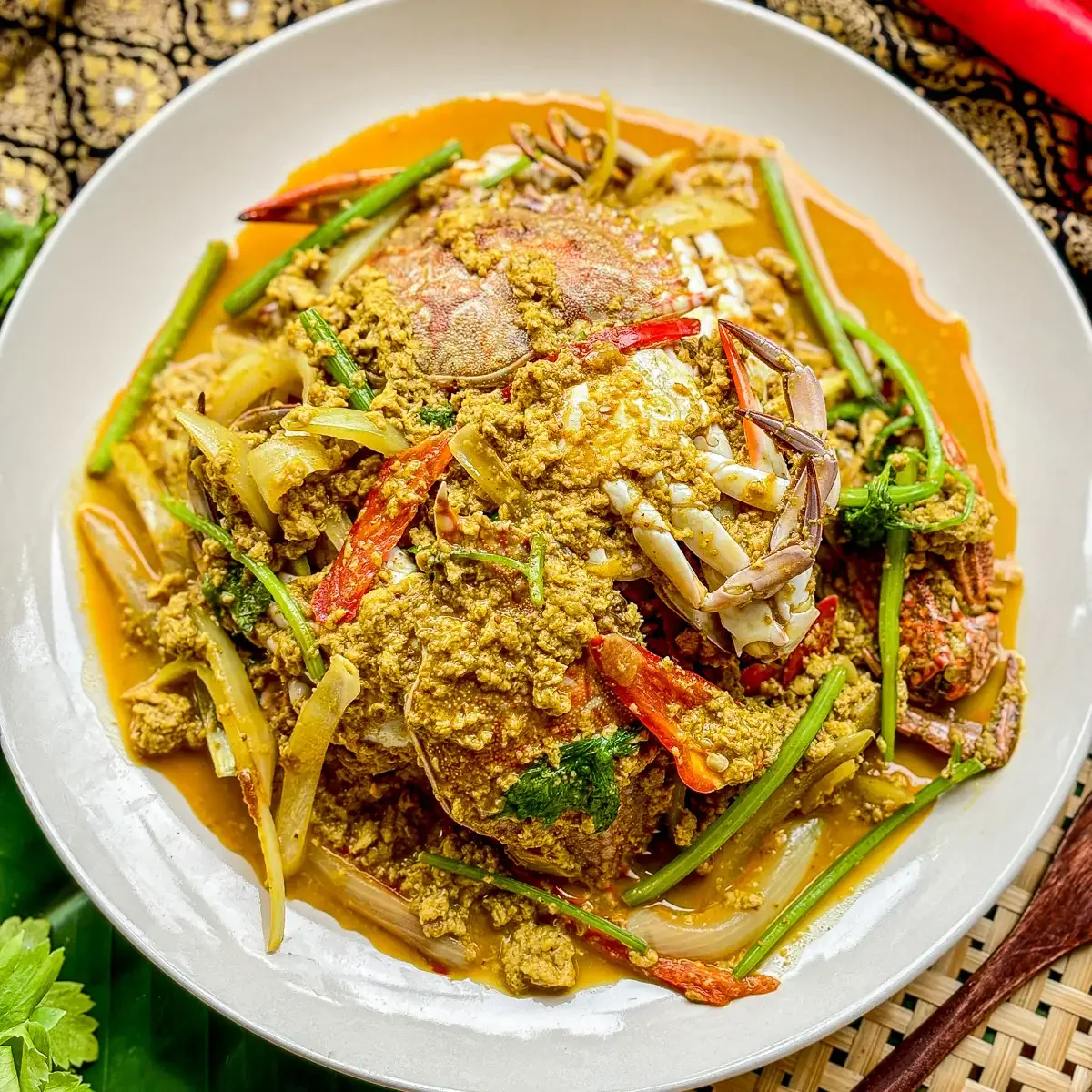
Poo pad pong curry is a Thai crab stir-fry coated in a rich, gently spiced sauce of egg, coconut milk and yellow curry. It comes together quickly, making it a good choice when you want a savoury seafood meal without a long simmer.
Ingredients
- 300 gcrab
- 2 largeeggs
- 10 gyellow curry powder
- 100 mlcoconut milk
- 6 gwhite sugar
- 15 gThai chilli paste
- 30 mloyster sauce
- 15 mllight soy sauce
- 2 clovesgarlic, minced
- 20 gChinese celery, chopped
- 1/2onion, sliced
- 1 largechilli (such as Thai prik chi fa)
- 50 mlwater
- 30 mloil
Instructions
- 1
Mix the sauce
Whisk the eggs, coconut milk, sugar, Thai chilli paste, oyster sauce and light soy sauce in a bowl until smooth.
- 2
Fry the aromatics
Set a wok over low heat and add the oil. When it is warm, add the minced garlic and yellow curry paste, then stir-fry for about 10 seconds until fragrant.
- 3
Add crab and onion
Add the crab pieces and sliced onion, and toss to coat them with the yellow curry powder.
- 4
Simmer the crab
Cover the wok and lower the heat to low-medium. Simmer for about 3 minutes, or until the crab is cooked through.
- 5
Finish the curry
Remove the lid and pour in the prepared sauce. Toss to coat everything evenly and cook until the eggs have set. Stir in the chopped chilli and Chinese celery, then take the wok off the heat straight away. Transfer to a serving plate and serve hot.
What is poo pad pong curry?
Poo pad pong curry is a Thai crab dish, often called crab curry stir-fry in English. Its defining feature is a soft, savoury egg sauce flavoured with curry and served with crab.
This version combines coconut milk, Thai chilli paste and yellow curry powder for a quick sauce that clings to the crab. The egg is cooked in the wok at the end, so the dish is ready in around 25 minutes.
Nutrition and macros by portion
The nutrition label shows one serving as written: 351 calories, 15g protein, 10g carbs, 29g fat.
| Portion | Adjustment | kcal | Protein | Carbs | Fat |
|---|---|---|---|---|---|
| Lighter | Use less oil | 246 kcal | 11g | 7g | 20g |
| This serving | As written | 351 kcal | 15g | 10g | 29g |
| Hungry | Add a larger rice portion | 527 kcal | 23g | 15g | 44g |
The rice-free curry's fat mainly comes from the oil, coconut milk and egg yolks; crab and eggs contribute protein, while the sugar and sauces provide some of the carbohydrates. Serve it with a measured portion of rice and a generous side of vegetables for a more balanced plate.
The curry and aromatics
Curry powder: the recipe lists yellow curry powder, though its method calls the ingredient curry paste. Use the listed powder and make sure it is stirred briefly in the warm oil with the garlic, just until fragrant.
Garlic: keep the heat low while frying it. A short, gentle fry builds aroma without letting the garlic scorch.
Build the sauce first
Egg mixture: whisk the eggs with coconut milk, sugar, chilli paste, oyster sauce and soy sauce before starting the wok. This makes it easier to add the sauce evenly and helps the egg cook consistently.
Seasoning: oyster sauce and soy sauce bring savoury saltiness, while sugar rounds it out. The chilli paste adds heat and flavour, so the finished balance will depend on the paste you use.
Keep an eye on the crab
Simmer: cover the wok and cook the crab with the onion for about 3 minutes on low-medium heat, until cooked through. The stated time is a guide; crab pieces can vary in size and whether they are already cooked.
Sauce: once added, stir and toss until the egg has set. Take the wok off the heat as soon as the egg is cooked to avoid drying out the sauce.
Finish with fresh flavour
Chilli: the large chilli goes in at the end, keeping its fresh character. Slice it before cooking if you want it distributed through the dish.
Chinese celery: stir it in just before serving so it retains some freshness and fragrance. The recipe calls for chopped celery, which is easy to toss through the sauce.
What to serve with it
Rice: serve the curry hot with steamed rice to soak up the egg and coconut sauce. Keep the rice plain so it does not compete with the dish's savoury seasoning.
On the side: a simple vegetable dish or crisp salad can add contrast to the rich sauce. Serve accompaniments separately so each person can choose their portion.
Recipe notes & tips
- Whisk the sauce until smooth before heating the wok.
- Keep the wok at low heat when frying the garlic so it does not burn.
- Have the crab, onion and sauce ready before you begin cooking.
- Use a lid for the brief crab simmer, then uncover to add the egg mixture.
- Remove the wok from the heat as soon as the egg has set.
Variations
- Adjust the heat: use less Thai chilli paste or omit the fresh chilli for a milder curry.
- Add vegetables: toss in sliced peppers with the onion for extra colour and crunch.
- Use another seafood: substitute prawns for crab and cook them until just done.
- Choose your crab: use fresh or prepared crab meat, adjusting the cooking time until it is heated through.
- Serve with rice: add steamed rice alongside to make the sauce go further.
Common mistakes to avoid
- Scorching the garlic: fry it over low heat and stir for only about 10 seconds.
- Adding the sauce too early: simmer the crab and onion first, then pour in the egg mixture.
- Overcooking the egg: stir until it sets, then take the wok off the heat immediately.
- Skipping the lid: cover the wok during the 3-minute simmer so the crab cooks through.
- Confusing powder and paste: the ingredient list specifies yellow curry powder, so follow that quantity rather than assuming a paste.
How to store
Refrigerate leftovers promptly in a covered container and eat within 1–2 days. Reheat gently in a pan until piping hot, stirring carefully so the crab does not break up.
Frequently asked questions
Can I use cooked crab?
Yes. Add it with the onion and warm it through during the covered simmer, taking care not to overcook it.
Is this curry very hot?
Its heat depends on the Thai chilli paste and the large chilli you use. Reduce or leave out the fresh chilli for a milder result.
Why does the method mention curry paste?
The ingredient list gives yellow curry powder, while the method refers to yellow curry paste. This recipe keeps the listed ingredient and quantity: 10 g yellow curry powder.
How do I know when the sauce is ready?
Cook until the egg has set through the sauce. Remove the wok from the heat as soon as that happens.
Can I prepare the sauce ahead?
You can whisk the sauce shortly before cooking and keep it chilled until needed. Give it another quick whisk before pouring it into the wok.
Cook it from the original
This recipe comes from hungryinthailand.com. Their page has the author’s own photos, notes and tips — the best place to cook it from.
Open the recipe on hungryinthailand.com