
Gaeng Panang Gai (Thai Panang Chicken Curry)
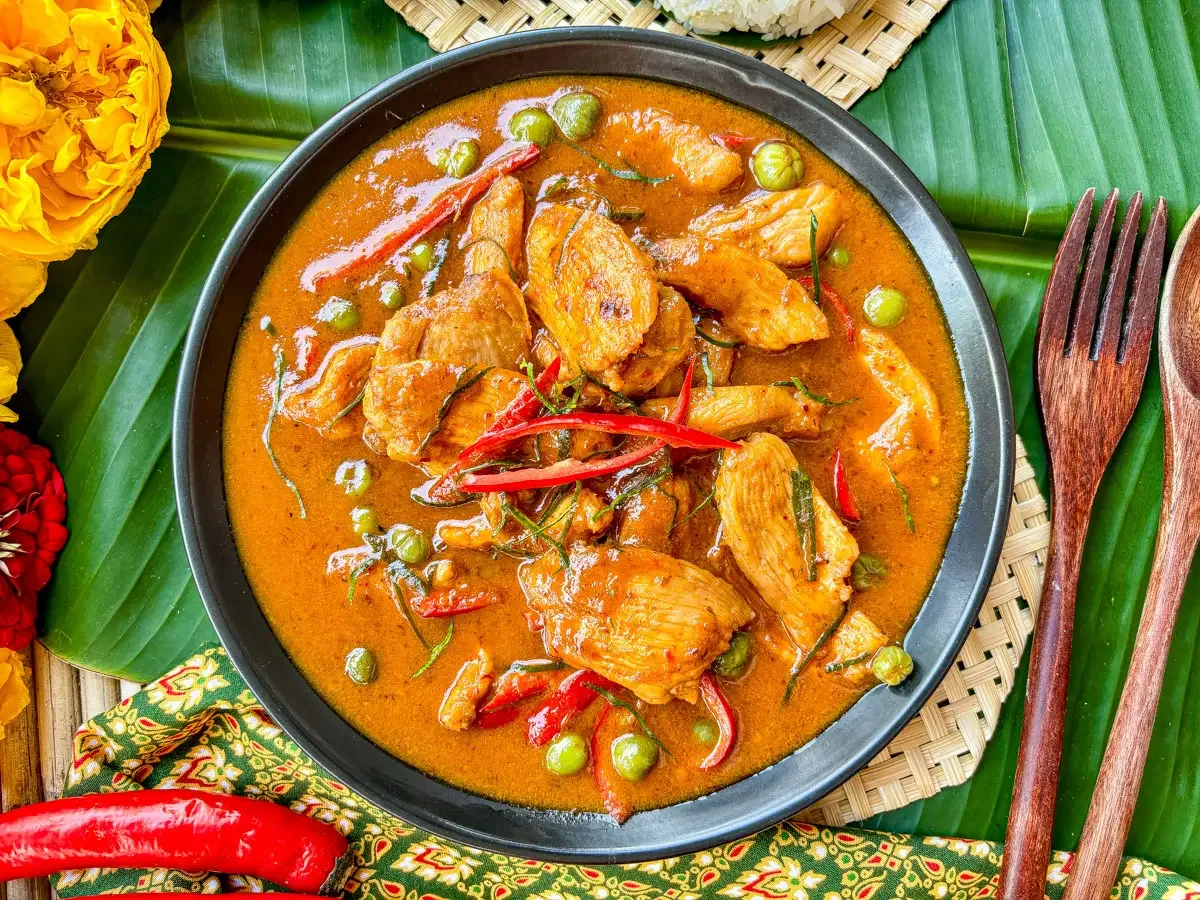
Gaeng panang gai is a creamy Thai chicken curry with a rich coconut base, fragrant panang paste and fresh lime leaves. It is a quick way to make a boldly flavoured curry, ready in about 25 minutes.
Ingredients
- 510 ml (2 cups + 2 tbsp)coconut milk
- 30 ml (2 tbsp)panang curry paste (see notes)
- 284 g (1 1/4 cups or 10 oz)chicken, thinly sliced (see notes)
- 50 g (1/3 cup)pea eggplants (optional)
- 25 g (2 tbsp)palm sugar
- 15 ml (1 tbsp)fish sauce
- 2.5 ml (1/2 tsp)salt
- 2chillies, adjusted to taste (see notes)
- 3kaffir lime leaves, cut into thin strips
Instructions
- 1
Reduce the coconut milk
Pour half of the coconut milk into a wok or pot and heat over medium heat until thickened and the oil begins to separate.
- 2
Stir in the paste
Add the panang curry paste and stir until its spices are well mixed through the coconut milk.
- 3
Simmer the curry
Add the remaining coconut milk, chicken and pea eggplants, if using. Stir in the palm sugar, fish sauce and salt, then simmer for 3–5 minutes, until the chicken is cooked through.
- 4
Finish and serve
Turn off the heat and add the strips of kaffir lime leaves and sliced chillies. Serve straight away with rice.
What is gaeng panang gai?
Gaeng panang gai is the Thai name for Panang chicken curry: gaeng means curry, and gai means chicken. Panang curry is part of Thailand’s wider curry tradition and is known for a thick, coconut-rich sauce flavoured with a distinctive curry paste.
This version keeps the cooking simple and quick. Reducing some of the coconut milk before adding the paste helps create a concentrated base, while lime leaves and chillies bring a fragrant finish.
Nutrition and macros by portion
The nutrition label shows one serving as written: 766 calories, 25g protein, 20g carbs, 69g fat.
| Portion | Adjustment | kcal | Protein | Carbs | Fat |
|---|---|---|---|---|---|
| Lighter | Use less coconut milk | 536 kcal | 18g | 14g | 48g |
| This serving | As written | 766 kcal | 25g | 20g | 69g |
| Hungry | Serve with extra rice | 1149 kcal | 38g | 30g | 104g |
The coconut milk is the main source of fat, while the chicken contributes protein and the palm sugar adds carbohydrates. Serve with rice and consider adding a vegetable side to make the plate more varied.
Build the curry base
Coconut milk: begin with half in the wok or pot and let it thicken until oil starts to separate. This is the visual cue to add the paste, rather than relying on a fixed time.
Panang paste: stir it thoroughly into the thickened coconut milk so its spices are dispersed before the rest of the liquid goes in.
Choose and prepare the chicken
Thin slices: cutting the chicken evenly helps it cook quickly during the short simmer. Keep the pieces similar in thickness so they finish at about the same time.
Pea eggplants: these are optional, so the curry can be made without them. If using them, add them with the chicken as directed.
Balance the seasoning
Palm sugar and fish sauce: these season the coconut and curry paste with sweetness and savoury depth. Stir them in with the remaining coconut milk so they can dissolve and distribute evenly.
Salt and chillies: the recipe includes both salt and chillies, with the chillies adjustable to taste. Add the chillies at the end to preserve their fresh, bright flavour.
Know when it is ready
Simmer: cook the curry for 3–5 minutes after adding the chicken. The chicken should be cooked through; if the slices are thicker than expected, check the largest piece before serving.
Finish: switch off the heat before adding the lime leaves and chillies. This keeps their aromas lively rather than cooking them down in the sauce.
Serve it while hot
Rice: serve the curry immediately with rice, which provides a mild, starchy contrast to the rich and well-seasoned sauce. Spoon plenty of the coconut curry over the rice.
Fresh finish: keep the lime leaves and chillies for the final addition, just before serving, so their fragrance is most noticeable at the table.
Recipe notes & tips
- Use a wok or pot wide enough to stir the paste into the coconut milk easily.
- Slice the chicken thinly and evenly so it cooks within the short simmer.
- Watch for thickening and oil separation rather than timing the first reduction by minutes.
- Taste the curry paste before cooking to judge how much chilli heat you want.
- Switch off the heat before adding the lime leaves and chillies.
- Serve immediately, while the sauce is hot and aromatic.
Variations
- Skip the pea eggplants: leave them out for a simpler curry.
- Adjust the heat: use fewer chillies for a milder finish.
- Add more chilli: increase the chillies to taste for extra heat.
- Change the protein: use thinly sliced chicken thigh instead of breast, keeping the pieces evenly cut.
- Make it meat-free: replace the chicken with firm tofu and check the curry paste and fish sauce ingredients.
Common mistakes to avoid
- Adding the paste too soon: wait until the coconut milk thickens and oil begins to separate.
- Leaving the paste in clumps: stir it well into the coconut milk before adding the rest.
- Using thick chicken pieces: slice the chicken thinly so it can cook in the short simmer.
- Overcooking the chicken: check it after 3 minutes and stop cooking once it is cooked through.
- Boiling the lime leaves: add them after turning off the heat to retain their fragrance.
How to store
Refrigerate leftovers in a covered container and use within 2 days. Reheat gently in a pan until steaming hot, stirring occasionally; add a small splash of water if the sauce has thickened.
Frequently asked questions
Can I make this curry without pea eggplants?
Yes. They are optional, and the curry can be made without them.
How can I adjust the spice level?
Use fewer chillies for a milder curry or add more to taste. The heat of the curry paste can also vary by brand.
How do I know when the chicken is cooked?
The recipe gives a simmering time of 3–5 minutes. Check that the thickest chicken slice is cooked through before serving.
What should I serve with Panang chicken curry?
Serve it immediately with rice, as suggested in the method.
Can I prepare it ahead?
It is best served as soon as it is made. You can refrigerate leftovers in a covered container for up to 2 days and reheat them gently.
Cook it from the original
This recipe comes from hungryinthailand.com. Their page has the author’s own photos, notes and tips — the best place to cook it from.
Open the recipe on hungryinthailand.com