
Sai Krok Isan (Thai Sausage Recipe)
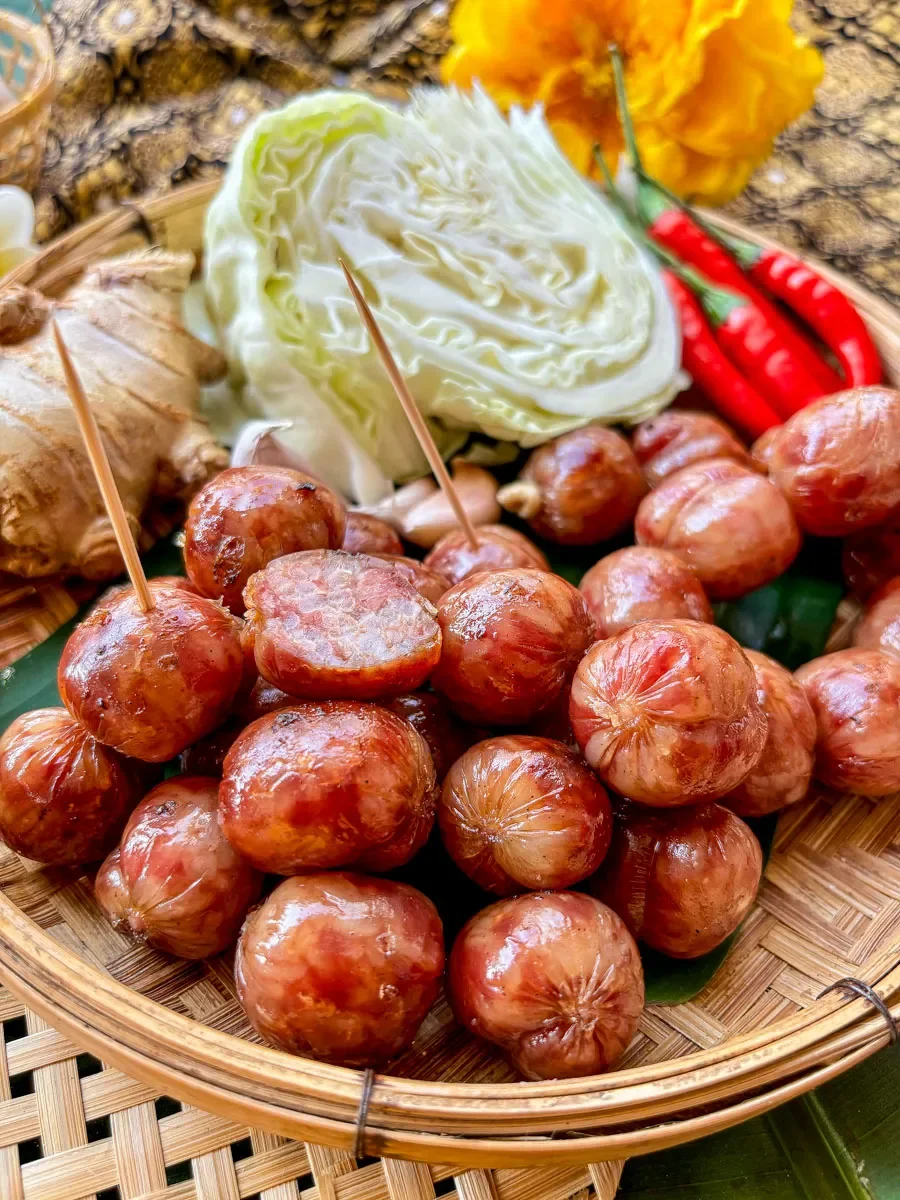
Sai krok Isan is a Thai-style grilled sausage mixed with rice, garlic and coriander root, giving it a savoury flavour and a pleasantly tangy character. This home version is shaped in casings and grilled, with optional glass noodles for extra texture.
Ingredients
- 499 g (1.1 lb)ground pork
- 305 cm (120 inches)sausage casing
- 10 clovesgarlic
- 2coriander roots
- 1 tspwhite pepper
- 1½ tbspGolden Mountain sauce
- just under 370 ml (2 cups)steamed jasmine rice
- 1½ tbspoyster sauce
- 1 tbspwhite sugar
- 1½ tspsalt
- 57 g (2 oz), optionalglass noodles, soaked and cut
Instructions
- 1
Prepare the casing
Cover the sausage casing with water and leave it for 30 minutes to soften. Rinse both the inside and outside under running water.
- 2
Crush aromatics
Pound the garlic and coriander roots together in a mortar.
- 3
Mix the filling
Combine the ground pork, steamed rice, crushed garlic and coriander roots, white pepper, Golden Mountain sauce, oyster sauce, sugar and salt. Add the soaked, cut glass noodles now if using them.
- 4
Fill the casing
Tie a secure knot at one end of the casing. Load the meat mixture into a sausage stuffer, removing air pockets, and fit the open casing end over the nozzle. Press the mixture through gently, taking care not to overfill the casing. Continue until filled, then tie the sausage at intervals of 2.5–5 cm (1–2 inches), or as preferred, pulling each tie snugly.
- 5
Develop the flavour
The source method calls for leaving the sausages in a sunny spot or outdoors for 6 hours to develop tang, or 1 hour for a milder flavour, with another day suggested for extra sourness. Raw pork should not be left unrefrigerated like this: keep the sausages chilled and do not attempt an uncontrolled room-temperature cure.
- 6
Grill and serve
Grill the sausages over charcoal until cooked through. Serve immediately with sticky rice.
What is sai krok Isan?
Sai krok Isan is a sausage associated with Thailand’s north-eastern Isan region. Its characteristic combination of pork, cooked rice and aromatics is often fermented to create a tangy flavour.
Rice in the filling helps distinguish it from many other sausages, while garlic, coriander root and pepper bring savoury depth. This version includes sauces for seasoning and offers glass noodles as an optional addition.
Nutrition and macros by portion
The nutrition label shows one serving as written: 706 calories, 32g protein, 61g carbs, 36g fat.
| Portion | Adjustment | kcal | Protein | Carbs | Fat |
|---|---|---|---|---|---|
| Lighter | Smaller sausage portion | 494 kcal | 22g | 43g | 25g |
| This serving | As written | 706 kcal | 32g | 61g | 36g |
| Hungry | Larger sausage portion | 1059 kcal | 48g | 92g | 54g |
The pork contributes much of the protein and fat, while the jasmine rice in the filling supplies most of the carbohydrates. To balance the plate, serve the sausage with a generous portion of fresh vegetables alongside the sticky rice.
The pork and rice filling
Pork: Ground pork gives the sausage its richness and supplies most of the protein and fat. Mix it thoroughly with the seasonings so the flavours are distributed evenly.
Rice: Use steamed jasmine rice, cooled enough to handle, and break up any large clumps as you mix. It adds body and the soft, cohesive texture typical of this style.
Noodles: Soaked, cut glass noodles are optional; stir them in with the rest of the filling if you want more variation in texture.
Build flavour with aromatics
Garlic and coriander root: Crushing them together releases their aroma and helps them blend into the pork. If your coriander roots are particularly gritty, rinse them before crushing.
Sauces and seasoning: Golden Mountain sauce and oyster sauce contribute savoury seasoning, with sugar and salt rounding out the mixture. Taste a small cooked sample of the filling before stuffing if you want to check the balance.
Stuff without air pockets
Casing: Soaking for 30 minutes makes the casing easier to handle, and rinsing its interior helps clear it before filling. Fit it over the stuffer nozzle without stretching it too tightly.
Filling: Feed the mixture through steadily and avoid packing the casing too firmly, since a tightly filled sausage is more likely to split. Tie portions at 2.5–5 cm intervals, or use the spacing you prefer.
Handle the tangy stage safely
The recipe describes leaving the stuffed sausages outdoors to become sour, but raw pork held at room temperature or in the sun can become unsafe. Do not use the suggested six-hour, one-hour or extra-day outdoor timings as a safe fermentation process.
Keep the sausages refrigerated until cooking. For a properly tangy fermented version, use a tested process with appropriate temperature and food-safety controls rather than relying on outdoor exposure.
Grill for an even finish
Heat: Grill over charcoal and turn the sausages as needed so they cook evenly rather than scorching in one spot. Avoid flames licking directly at the casing.
Doneness: Cook until the centre reaches 71°C, checked with a food thermometer, and the filling is no longer raw. Serve hot with sticky rice.
What to serve alongside
Sticky rice is the suggested accompaniment and makes a filling pairing with the savoury pork. Fresh vegetables or herbs can add a crisp contrast to the grilled sausage.
The sausage is rich and rice is already mixed into the filling, so a simple, fresh side works well. Serve condiments separately so everyone can adjust their own plate.
Recipe notes & tips
- Soak the casing for the full 30 minutes so it is easier to fit over the stuffer nozzle.
- Mix the filling until the rice and seasonings are spread throughout the pork.
- Keep the sausages chilled until you are ready to grill them.
- Fill the casing gently and leave enough room for the mixture to cook without bursting.
- Turn the sausages during grilling to help them brown evenly.
- Check the centre with a food thermometer and cook it to 71°C.
Variations
- Add glass noodles: Soak, cut and mix them into the filling for extra texture.
- Milder tang: Skip any room-temperature souring and grill the chilled sausages fresh.
- More garlic: Increase the garlic if you prefer a stronger savoury aroma.
- Serve with herbs: Add fresh herbs and vegetables at the table for a crisp contrast.
Common mistakes to avoid
- Leaving pork outdoors: Uncontrolled room-temperature curing can be unsafe; keep the sausages refrigerated until cooking.
- Overfilling the casing: It can split during grilling; feed the filling through gently and avoid packing it tightly.
- Leaving air pockets: They make the sausage uneven; remove trapped air as you load the stuffer.
- Grilling over fierce flames: The casing can scorch before the centre cooks; use steady charcoal heat and turn the sausages.
- Guessing doneness: Colour alone is not a reliable check; use a thermometer to confirm 71°C in the centre.
How to store
Keep uncooked sausages refrigerated and cook them promptly; do not store them at room temperature to sour. Refrigerate cooked leftovers in a covered container for up to 3 days, then reheat until piping hot throughout.
Frequently asked questions
Can I make sai krok Isan without a sausage stuffer?
A stuffer makes it easier to fill the casing evenly. If you do not have one, you can cook the seasoned pork mixture without casings, though it will not have the same sausage shape.
Do I have to use glass noodles?
No. They are optional; leave them out and follow the rest of the method as written.
Can I leave the sausages in the sun to make them sour?
No. Leaving raw pork outdoors at uncontrolled temperatures risks unsafe bacterial growth. Keep it chilled, and only ferment sausage using a tested process with appropriate controls.
How do I know when the sausages are cooked?
Check the centre with a food thermometer and cook until it reaches 71°C. Do not rely on browning on the outside alone.
What can I serve with sai krok Isan?
Sticky rice is the suggested accompaniment. Fresh vegetables or herbs make a useful crisp contrast to the rich sausage.
Cook it from the original
This recipe comes from hungryinthailand.com. Their page has the author’s own photos, notes and tips — the best place to cook it from.
Open the recipe on hungryinthailand.com