
Gaeng Daeng Recipe (Thai Red Curry With Chicken)
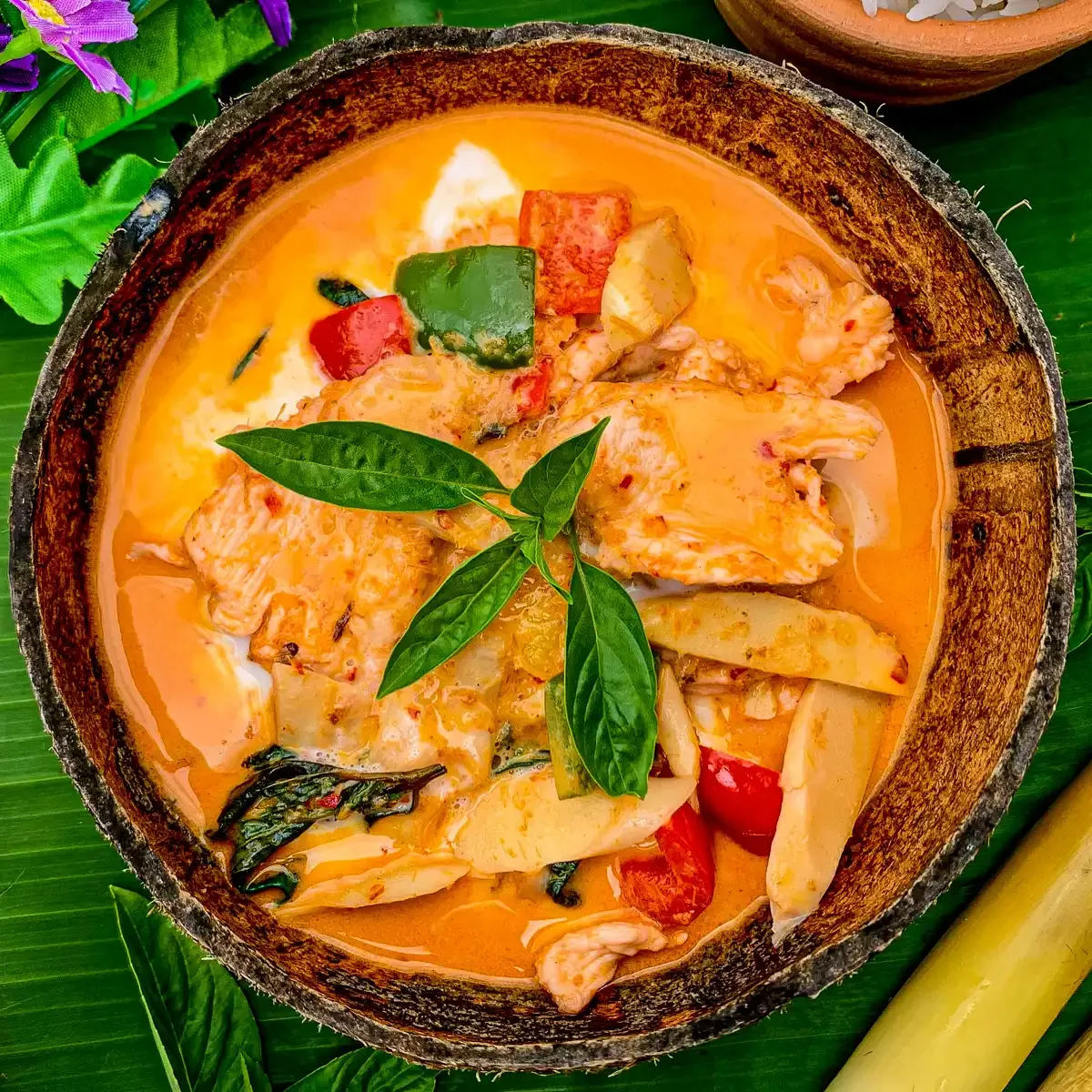
Gaeng daeng is a Thai red curry with chicken, coconut milk, vegetables and fragrant Thai basil. This quick version comes together in about 30 minutes, with a rich sauce balanced by sweet peppers and bamboo shoots.
Ingredients
- 225 g (8 oz) or 1 cupchicken, cut into bite-sized pieces
- 150 g (1 cup)bell peppers, cut into bite-sized pieces
- 115 g (¾ cup)bamboo shoots
- 1 handfulThai sweet basil
- 30 ml (2 tbsp)red curry paste
- 415 ml (1¾ cups)coconut milk
- 15 ml (1 tbsp)sugar
- 7.5 ml (½ tbsp)Rosdee seasoning powder
- 5 ml (1 tsp)salt
Instructions
- 1
Bloom the curry paste
Set a pot or large wok over medium heat. Add about one-third of the coconut milk and cook until its oil begins to separate. Stir in the red curry paste, then pour in the remaining coconut milk.
- 2
Cook the chicken
Add the chicken pieces, sugar, Rosdee seasoning powder and salt. Cook, stirring, until the chicken is cooked through.
- 3
Add the vegetables
Stir in the bell peppers and bamboo shoots. Cook until they reach the tenderness you prefer.
- 4
Finish with basil
Turn off the heat and stir in the Thai basil. Serve immediately.
What is gaeng daeng?
Gaeng daeng is a Thai red curry, typically made with red curry paste and coconut milk. Chicken and vegetables make this version a quick, substantial meal.
The curry paste brings aromatic heat, while coconut milk rounds it into a creamy sauce. Sweet basil stirred in at the end adds a fresh, fragrant finish.
Nutrition and macros by portion
The nutrition label shows one serving as written: 622 calories, 20g protein, 18g carbs, 56g fat.
| Portion | Adjustment | kcal | Protein | Carbs | Fat |
|---|---|---|---|---|---|
| Lighter | Use less coconut milk | 435 kcal | 14g | 13g | 39g |
| This serving | As written | 622 kcal | 20g | 18g | 56g |
| Hungry | Serve with extra rice | 933 kcal | 30g | 27g | 84g |
The coconut milk contributes most of the fat, while the chicken provides protein and the sugar, peppers and bamboo shoots contribute carbohydrates. Serve the curry with a portion of rice and add extra vegetables alongside if you would like a more balanced plate.
Build the sauce
Coconut milk first: heating part of it before adding the paste helps the flavours mingle. Watch for the oil to begin separating, as directed in the method.
Curry paste next: stir it into the hot coconut milk before adding the rest. This spreads the paste through the sauce rather than leaving it in clumps.
Cook the chicken through
Chicken pieces: keep them bite-sized so they cook in the time allowed. Stir them in the coconut curry sauce until there are no raw-looking centres.
Choose your vegetable texture
Bell peppers: add them with the bamboo shoots, after the chicken is cooked. Give them less time for a firmer bite or longer if you prefer them softer.
Bamboo shoots: these are ready to warm through in the curry, so use tenderness as your cue rather than cooking them until they lose all their texture.
Finish with Thai basil
Fresh basil: turn off the heat before adding it, as the recipe directs. The residual warmth softens the leaves while keeping their aroma noticeable.
Serve promptly so the basil stays fragrant and the vegetables retain the texture you chose.
Make it a meal
Rice: steamed jasmine rice is a natural partner for the coconut curry sauce. Serve it alongside or spoon the curry over the top.
For another simple accompaniment, offer plain rice and let the curry's sauce provide the seasoning. Serve immediately after the basil goes in.
Recipe notes & tips
- Cut the chicken into evenly sized pieces so it cooks at a similar rate.
- Measure out the curry paste and seasonings before heating the pan.
- Keep the heat at medium while the coconut milk and paste come together.
- Add the peppers and bamboo shoots only after the chicken is cooked.
- Turn off the heat before stirring in the Thai basil.
- Serve the curry as soon as it is finished.
Variations
- Adjust the heat: use less red curry paste for a milder curry.
- Add green beans: cut them into short lengths and cook them with the peppers.
- Change the protein: use bite-sized pieces of firm tofu instead of chicken.
- Use another basil: Thai basil is best, but sweet basil can stand in if needed.
- Serve with rice: add steamed jasmine rice to make the curry a fuller meal.
Common mistakes to avoid
- Adding all the coconut milk at once: reserve about one-third to heat with the curry paste first.
- Cooking the chicken in large pieces: cut it into bite-sized pieces so it cooks through evenly.
- Overcooking the peppers: check their tenderness as they cook and stop when they suit your preference.
- Adding basil too early: stir it in after turning off the heat to preserve its fresh aroma.
- Leaving the curry paste unstirred: mix it into the coconut milk before adding the remaining milk.
How to store
Refrigerate leftovers in a sealed container within two hours and eat within 3 days. Reheat gently in a pan until piping hot, stirring occasionally; add a splash of water if the sauce has thickened.
Frequently asked questions
How spicy is this red curry?
The heat depends on the red curry paste you use. For a milder curry, start with less paste and adjust to taste.
Can I use a different kind of chicken?
Yes. Cut boneless chicken breast or thigh into bite-sized pieces and cook until cooked through.
Can I use bamboo shoots from a tin?
Yes. Drain them before adding, then cook them with the peppers until warmed through and as tender as you like.
What can I use instead of Rosdee seasoning powder?
You can leave it out or season to taste with a suitable savoury seasoning. The flavour will differ from the version made with Rosdee.
What should I serve with gaeng daeng?
Steamed jasmine rice is a straightforward accompaniment that works well with the coconut curry sauce.
Can I make the curry ahead?
You can cook it ahead and refrigerate it, but add fresh basil just before serving if possible. Reheat the curry gently until piping hot.
Cook it from the original
This recipe comes from hungryinthailand.com. Their page has the author’s own photos, notes and tips — the best place to cook it from.
Open the recipe on hungryinthailand.com