
Thai Coconut Rice
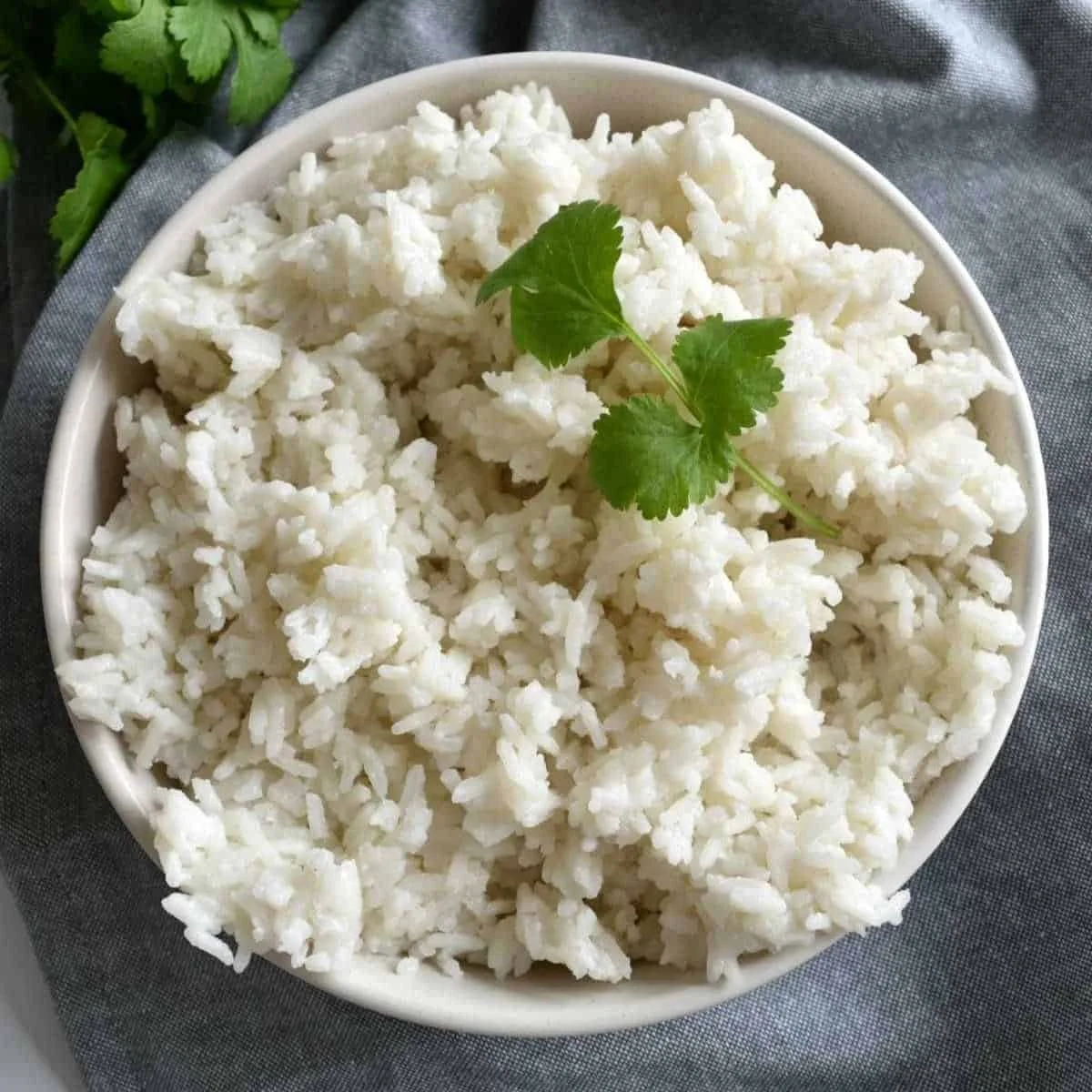
Thai coconut rice is jasmine rice gently simmered with coconut milk and water until tender and fluffy. It makes a fragrant, creamy side for Thai curries and other boldly flavoured dishes.
Ingredients
- 350 g (1½ cups)jasmine rice
- 400 ml (1½ cups)coconut milk
- 400 ml (1½ cups)water
Instructions
- 1
Bring to a boil
Put the rice, water and coconut milk in a small pot or saucepan over medium-high heat. Bring the mixture to a boil, then as soon as it bubbles, turn the heat down to medium-low and let it simmer gently.
- 2
Simmer uncovered
Leave the pot uncovered while the rice cooks. A lid traps steam and can make the rice sticky and soggy.
- 3
Stir and rest
Stir occasionally to stop the rice catching on the bottom of the pot. Simmer until all the liquid has been absorbed, then take the pot off the heat and cover it to keep the rice warm until serving.
What is Thai coconut rice?
Coconut rice is a fragrant rice side found in cuisines across South and Southeast Asia; this version pairs jasmine rice with coconut milk. The combination gives the grains a gentle coconut aroma and a richer finish than rice cooked in water alone.
Jasmine rice: its natural fragrance complements coconut milk and makes this an easy match for Thai-style meals. Cooking the rice uncovered, then covering it only after it has absorbed the liquid, helps avoid a wet, sticky result.
Nutrition and macros by portion
The nutrition label shows one serving as written: 280 calories, 4g protein, 39g carbs, 12g fat.
| Portion | Adjustment | kcal | Protein | Carbs | Fat |
|---|---|---|---|---|---|
| Lighter | Smaller rice portion | 196 kcal | 3g | 27g | 8g |
| This serving | As written | 280 kcal | 4g | 39g | 12g |
| Hungry | Larger rice portion | 420 kcal | 6g | 59g | 18g |
Most of the carbohydrates in a serving come from the jasmine rice, while the coconut milk provides much of the fat; the rice contributes a little protein. Serve it with vegetables and a protein-rich main such as tofu, fish or chicken to balance the plate.
Choosing the ingredients
Rice: jasmine rice is the variety specified here, and its aromatic grains suit the coconut flavour. Measure it carefully so the liquid ratio stays consistent.
Coconut milk: shake or stir the tin before measuring so the thicker cream and thinner liquid are evenly combined. Use coconut milk rather than coconut cream, which is more concentrated.
Why the pot stays uncovered
Uncovered simmering lets the liquid reduce as the rice cooks. Putting the lid on too early traps steam and can leave the grains overly soft and soggy.
Gentle heat: once the pot reaches a boil, reduce the temperature promptly. A quiet simmer gives the rice time to absorb the coconut mixture without scorching the bottom.
How to tell when it is ready
Liquid: the rice is ready to come off the heat when the cooking liquid has been absorbed. Stir occasionally during cooking, especially across the bottom of the pot, to prevent sticking.
Texture: the rice should be tender rather than swimming in liquid. Once it is off the heat, cover the pot to keep it warm until you serve it.
Timing and serving
The listed total time is 25 minutes. Keep an eye on the pot as it simmers, since the method uses the absorption of the liquid as its doneness cue rather than a separate timed step.
Serve the rice alongside Thai curries, stir-fries or grilled vegetables. Its mild coconut flavour works well with dishes that bring more heat, acidity or savoury seasoning to the plate.
Balancing the plate
This rice brings most of its carbohydrate from the rice, while the coconut milk contributes much of the fat. The rice itself also provides a small amount of protein.
Pair a serving with vegetables and a protein-rich main, such as tofu, fish or chicken, for a more varied meal. Keep the rice portion alongside the main rather than letting it take up the whole plate.
Recipe notes & tips
- Shake or stir the coconut milk before measuring to combine its thick and thin parts.
- Use a small, heavy-based saucepan to help the rice cook evenly.
- Lower the heat as soon as the mixture boils so it simmers gently.
- Stir occasionally, making sure to scrape the bottom of the pan.
- Keep the pot uncovered until the liquid has been absorbed.
- Cover the rice only after taking it off the heat to keep it warm for serving.
Variations
- Add pandan: simmer a knotted pandan leaf with the rice for a different fragrant note, then remove it before serving.
- Use brown jasmine rice: expect a longer cooking time and check the packet guidance for the liquid needed.
- Add salt: season lightly to bring out the coconut flavour.
- Finish with lime: serve with a little lime zest for a fresh contrast.
- Add toasted coconut: scatter toasted coconut over the rice just before serving for extra texture.
Common mistakes to avoid
- Lidding it too soon: trapped steam can make the rice soggy, so leave the pot uncovered while it simmers.
- Boiling hard: high heat can catch the rice on the bottom, so reduce the heat as soon as it bubbles.
- Skipping the stirring: rice can scorch at the base, so stir occasionally and scrape the bottom.
- Stopping too early: remaining liquid leaves the rice wet, so simmer until it has been absorbed.
- Using coconut cream: it is more concentrated than coconut milk, so use coconut milk as specified.
How to store
Cool leftovers promptly, transfer them to an airtight container and refrigerate for up to 3 days. Reheat until steaming hot throughout, adding a splash of water if the rice has dried out.
Frequently asked questions
Should I rinse the jasmine rice first?
The method does not specify rinsing. If you choose to rinse it, drain it thoroughly before adding it to the pot.
Why is the rice cooked without a lid?
The recipe keeps the pot uncovered so steam can escape and the rice does not become overly sticky or soggy. Cover it only after cooking, to keep it warm.
Can I use light coconut milk?
Yes, but the rice will have a less rich coconut flavour. Use the same measured amount and simmer until the liquid has been absorbed.
How do I know when the rice is done?
The recipe's cue is that all the cooking liquid has been absorbed. The rice should be tender, with no pool of liquid remaining in the pot.
What should I serve with Thai coconut rice?
Serve it with Thai curries, stir-fries or grilled vegetables. A protein-rich main and vegetables make it a more complete plate.
Can I make it ahead?
It can be cooked ahead and refrigerated once cooled. Reheat it until steaming hot throughout, with a splash of water if needed.
Cook it from the original
This recipe comes from hintofhealthy.com. Their page has the author’s own photos, notes and tips — the best place to cook it from.
Open the recipe on hintofhealthy.com