
Banana Hazelnut Cake
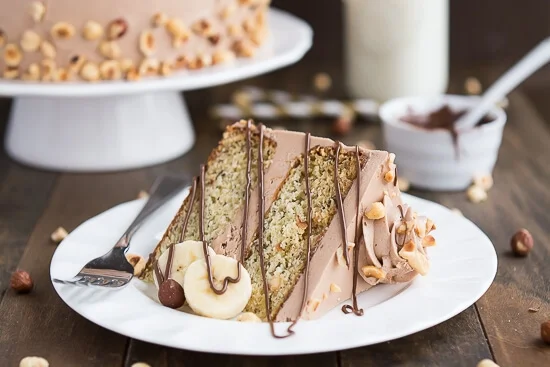
This American-style banana cake layers soft, banana-rich sponge with chopped hazelnuts and a fluffy hazelnut-spread frosting. Make it for a celebration or whenever you want a generously frosted cake with a little crunch in every slice.
Ingredients
- 254 gplain flour
- 25 gcornflour
- 2 teaspoonsbaking powder
- 1 teaspoonbicarbonate of soda
- 1/4 teaspoonfine sea salt
- 98 gunsalted butter, softened
- 266 gsugar
- 2 largeeggs
- 1 cup (about 2)mashed bananas
- 120 mlbuttermilk
- 84 gchopped hazelnuts
- 63 gplain flour
- 240 mlmilk
- 120 mlwhipping cream
- 339 gbutter
- 300 ggranulated sugar, not icing sugar
- 2 teaspoonsvanilla
- 98 gNutella or hazelnut spread
- 37 gchopped hazelnuts
Instructions
- 1
Prepare the pans
Heat the oven to 190°C (375°F), or 175°C (350°F) if using dark cake pans. Grease and flour two 23 cm (9-inch) cake pans.
- 2
Mix dry ingredients
In a large bowl, combine the 254 g flour, cornflour, baking powder, bicarbonate of soda and salt. Set aside.
- 3
Make the batter
In a medium bowl, cream the softened butter and sugar together. Beat in the eggs until smooth, then mix in the mashed bananas and buttermilk until combined. Stir in the flour mixture just until incorporated, then fold in 84 g chopped hazelnuts. Divide the batter evenly between the pans.
- 4
Bake the cakes
Bake for 22–25 minutes, until a toothpick inserted into a cake comes out clean. Leave the cakes in their pans on a cooling rack for 5 minutes, then turn them out onto the rack and cool completely.
- 5
Cook frosting base
In a small saucepan, whisk the cream and 63 g flour together. Add the milk and cook over medium-high heat, whisking constantly, until thick like pudding. Take the pan off the heat and transfer the mixture to a shallow container. Chill it in the fridge or freezer, stirring every 5 minutes, until it is at least room temperature.
- 6
Whip the frosting
Using the whisk attachment of a stand mixer, beat the butter and granulated sugar for 2 minutes or until fluffy. Add the cooled milk mixture, hazelnut spread and vanilla, then beat for 6–10 minutes until fluffy and combined. If the frosting is too airy, change to the paddle attachment and beat on low for 2–4 minutes.
- 7
Stack the layers
Set one cake layer on a cake stand and spread one quarter of the frosting over it. Place the second cake layer on top, upside-down.
- 8
Crumb-coat and chill
Spread a thin layer of frosting over the top and sides of the cake to make a crumb coat. Refrigerate for 30–60 minutes.
- 9
Finish the cake
Frost the top and sides of the chilled cake. Pipe on any extra decorations, sprinkle the top with chopped hazelnuts and press more hazelnuts into the sides.
What is banana hazelnut cake?
Banana cake is a familiar American-style bake that uses mashed banana to flavour and soften a sponge. This version pairs it with chopped hazelnuts in the layers and hazelnut spread in the frosting.
The two cake layers are finished with a butter-based frosting made with a cooked milk-and-flour mixture. That gives the cake a soft, celebratory finish without losing the banana and nut flavours.
Nutrition and macros by portion
The nutrition label shows one serving as written: 870 calories, 10g protein, 100g carbs, 49g fat.
| Portion | Adjustment | kcal | Protein | Carbs | Fat |
|---|---|---|---|---|---|
| Lighter | Smaller cake slice | 609 kcal | 7g | 70g | 34g |
| This serving | As written | 870 kcal | 10g | 100g | 49g |
| Hungry | Larger cake slice | 1305 kcal | 15g | 150g | 74g |
The flour, sugar and bananas provide much of the carbohydrate, while the butter, cream and hazelnut spread contribute most of the fat. Eggs, milk and hazelnuts add some protein. Serve a slice with fresh fruit to add a lighter, fresh contrast to the rich cake.
The ingredients that matter
Ripe bananas: mash them well so they mix evenly into the batter and lend it their sweetness and aroma.
Hazelnuts: the larger portion goes into the sponge, while the smaller amount decorates the finished cake. Chopping them gives the layers and coating a more even crunch.
Cornflour: combined with plain flour, it helps make the cake layers tender. Keep the separate 63 g of flour for the frosting base.
Mix the batter gently
Cream the butter and sugar until they are well combined, then beat in the eggs before adding the banana and buttermilk. Once the dry mixture goes in, stir only until it disappears into the wet ingredients.
Overmixing after adding flour can make the sponge tougher. Fold the hazelnuts through at the end so they stay distributed rather than sinking into a heavily worked batter.
Cook the frosting base patiently
Whisk the cream and flour smooth before adding the milk, then keep whisking over the heat. The mixture needs to thicken to a pudding-like consistency before it comes off the hob.
Cool it to at least room temperature before beating it with the butter and sugar. Stirring as it chills helps it cool more evenly and makes it easier to incorporate smoothly.
Check the cakes for doneness
Start checking at 22 minutes: a toothpick inserted into the centre should come out clean. If it does not, continue baking within the stated 22–25 minute range.
Let the layers sit in their pans for 5 minutes before turning them out. They must cool completely before frosting, or the butter-based frosting can soften as you spread it.
Assemble in stages
First spread one quarter of the frosting between the layers, with the second cake placed upside-down on top. A thin coating over the outside catches loose crumbs.
Chill the crumb-coated cake for 30–60 minutes before adding the final layer of frosting. Finish with piped decorations if desired, then add hazelnuts to the top and sides.
Serving and pairing
Cut the fully chilled cake with a sharp knife, wiping the blade between slices for neater edges. Let slices sit briefly at room temperature if you prefer the frosting softer.
The cake is rich, so it pairs well with unsweetened tea or coffee. For a dessert plate, add fresh fruit alongside a slice rather than more frosting or sweet toppings.
Recipe notes & tips
- Bring the softened butter and eggs to room temperature before mixing for a smoother batter.
- Use a scale for the flour and sugar quantities to keep the cake and frosting proportions consistent.
- Line the bottoms of the cake pans with baking paper after greasing and flouring them for easier release.
- Check that the frosting base has cooled completely before adding it to the whipped butter and sugar.
- Chop the hazelnuts fairly evenly so they are easier to fold through the batter and press onto the sides.
- Chill the crumb-coated cake for the full time needed to firm the coating before finishing it.
Variations
- Extra banana: use very ripe bananas for a more pronounced banana flavour.
- Toast the hazelnuts: lightly toast them and cool completely before adding them for a deeper nut flavour.
- Chocolate finish: add chocolate shavings on top alongside the chopped hazelnuts.
- Simple finish: skip piping and spread the frosting in an even layer over the cake.
- Mini portions: bake the batter in smaller cake pans, checking for doneness earlier than the stated time.
Common mistakes to avoid
- Overmixing the batter: stop as soon as the flour is incorporated to help keep the sponge tender.
- Warm frosting base: cool it to at least room temperature before beating it with the butter.
- Hot cake layers: wait until they are completely cool before frosting so the coating does not soften.
- Skipping the crumb coat: spread on a thin first layer and chill it for 30–60 minutes to hold crumbs in place.
- Dark pans at the hotter setting: use 175°C (350°F) for dark pans, as directed, rather than 190°C (375°F).
- Powdered sugar in the frosting: use granulated sugar as specified, not icing sugar.
How to store
Cover and refrigerate leftover cake, where it will keep for up to 4 days. Bring slices towards room temperature before serving; avoid warming the whole cake, as the frosting can soften.
Frequently asked questions
Can I make the cake layers ahead?
Yes. Let them cool completely, then wrap and refrigerate until ready to assemble. Make sure they are cool before adding the frosting.
How do I know when the cakes are baked?
Insert a toothpick into the centre; it should come out clean. The recipe gives a baking time of 22–25 minutes.
Why does the frosting need a cooked flour mixture?
The flour, cream and milk are cooked together into a thick base, then cooled before being beaten with the butter, sugar, hazelnut spread and vanilla.
Can I use dark cake pans?
Yes. Reduce the oven setting to 175°C (350°F) for dark pans, rather than 190°C (375°F).
Can I leave out the hazelnuts?
You can omit them if needed, though the cake will lose the nutty crunch in the sponge and the decoration on the outside.
Cook it from the original
This recipe comes from handletheheat.com. Their page has the author’s own photos, notes and tips — the best place to cook it from.
Open the recipe on handletheheat.com