
Easy Vegan Wonton Soup for Colds
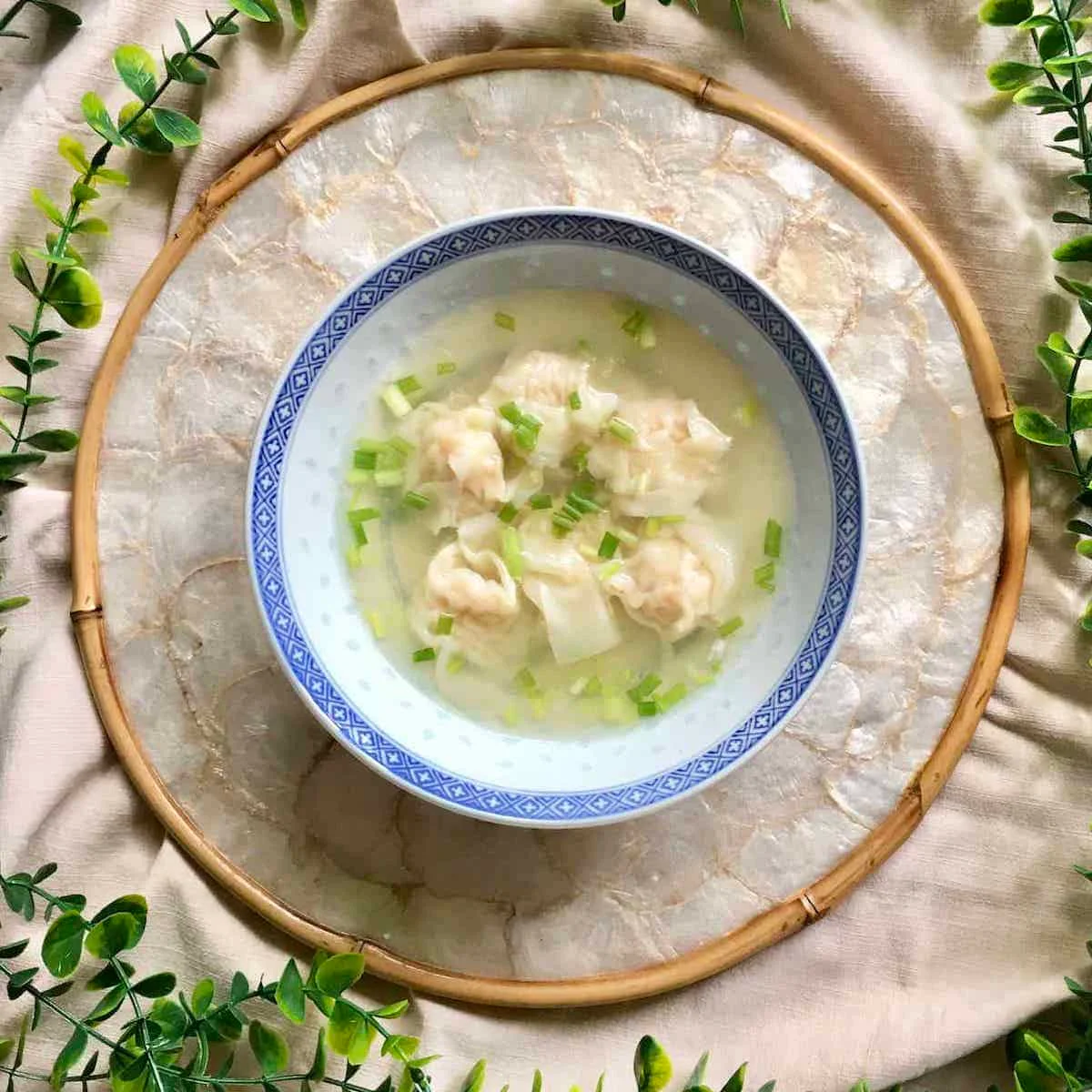
This quick Cantonese-inspired vegan soup pairs rice noodles and bright bok choy with a ginger, garlic and kombu broth. It comes together in about 20 minutes without shop-bought stock, and you can add tofu or vegan dumplings if you like.
Ingredients
- 60 g (2.1 oz)onion, minced
- 1–3 tbspvegetable oil
- 4 clovesgarlic, minced
- 1 thumb-sized pieceginger, minced (about 6 slices)
- 1.2 litres (5 cups)water
- 1 large sheet, soaked in 240 ml (1 cup) room-temperature waterkombu or kelp
- 2 tsp, or to tastevegan white sugar
- 1½ tsp, or to tastesalt
- 1 tbspsake (or Shaoxing wine if you are not eating gluten-free)
- 1 tsptamari (or light soy sauce if you are not eating gluten-free)
- 2–3 tbspnutritional yeast
- 2 tbspsesame oil
- Optionalspring onion, sliced, for garnish
- Optionalvegan chilli crisp, to drizzle
- 100 g (3.5 oz)dried thin white rice noodles
- 4 bunchesbaby bok choy (or regular bok choy)
- Optionaltofu
Instructions
- 1
Soak the noodles
Blanch the thin white rice vermicelli in hot water for 5–15 minutes, until pliable. Use thin noodles rather than thick rice noodles; if using glass, brown rice or shirataki konjac noodles, follow the packet instructions.
- 2
Soak the kombu
At the same time, soak the kombu or kelp in 240 ml (1 cup) of room-temperature water.
- 3
Blanch the bok choy
Bring a pot of water to the boil and briefly blanch the bok choy. Keep it bright green and remove it before it becomes limp.
- 4
Reserve the water
Plate the bok choy. Take the pot off the heat, leaving the water in it, then add the kombu and its soaking water. Set this liquid aside for the soup.
- 5
Cook the onion
Heat 1–3 tablespoons of vegetable oil in a pot over medium to medium-high heat. When hot, add the minced onion and sauté for about 3 minutes, until translucent and fragrant.
- 6
Add aromatics
Stir in the garlic for 30 seconds, then add the ginger and stir for another 30 seconds.
- 7
Bring to the boil
Pour in 2.4 litres (10 cups) of water, including the water used to cook the bok choy. Add regular water if needed to make up the amount, then bring to the boil over high heat. Cover the pot to speed this up if you wish.
- 8
Simmer the broth
Add the kombu to the pot and lower the heat to a simmer, uncovered. Simmer for 10 minutes.
- 9
Season and finish
One minute before turning off the heat, add boiled wontons, vegetable balls, dumplings or tofu, if using, and stir. Season with the salt, sugar, sake, nutritional yeast and tamari, starting with the stated quantities and adjusting to taste. Just before turning off the heat, add the bok choy to warm through.
- 10
Serve the soup
Sprinkle over the spring onion, if using, and drizzle with sesame oil. Stir, then portion the soup over the noodles, making sure each bowl gets some of the chosen wontons, dumplings, vegetable balls or tofu, as well as bok choy.
What is vegan wonton soup?
Wonton soup is a Chinese soup commonly served with wontons in a savoury broth. This Cantonese-inspired vegan version builds its broth from aromatics and kombu rather than commercially bought stock.
The listed ingredients do not include wontons, though the method suggests adding boiled wontons, dumplings, vegetable balls or tofu. Rice noodles and bok choy make the soup a meal even when served without those additions.
Nutrition and macros by portion
The nutrition label shows one serving as written: 438 calories, 7g protein, 54g carbs, 21g fat.
| Portion | Adjustment | kcal | Protein | Carbs | Fat |
|---|---|---|---|---|---|
| Lighter | Use less cooking oil | 307 kcal | 5g | 38g | 15g |
| This serving | As written | 438 kcal | 7g | 54g | 21g |
| Hungry | Add tofu and noodles | 657 kcal | 11g | 81g | 32g |
The rice noodles provide most of the carbohydrates, while the vegetable oil and sesame oil contribute much of the fat. The listed ingredients offer little protein unless you include the optional tofu or suggested dumplings; serve with tofu or another protein source to make the bowl more balanced.
Build flavour without stock
Onion: cooking it until translucent gives the broth a gentle savoury base. Keep the heat moderate enough that it softens without browning too quickly.
Ginger and garlic: add them after the onion and stir briefly, as directed, so their aromas infuse the oil before the liquid goes in.
Kombu: soaking it first provides both the seaweed and its soaking water for the soup. Keep the sheet in the broth for the simmer, then season to taste.
Keep the greens bright
Bok choy: blanch it briefly and lift it out while it is still green and crisp-tender. The method uses the same pot water as part of the soup liquid, so keep it aside rather than pouring it away.
Finish: return the bok choy to the broth only at the end, just long enough to warm it. This helps avoid the limp texture the recipe cautions against.
Get the noodle texture right
Thin rice vermicelli: soak or blanch it in hot water for 5–15 minutes, checking for pliability. The timing varies with the noodle, so use its texture as your cue.
Other noodles: glass, brown rice and shirataki konjac noodles may need different treatment. Follow their packet directions rather than applying the vermicelli timing.
Balance the broth
Seasoning: add the stated salt, sugar, sake, nutritional yeast and tamari, then taste. The recipe allows the salt and sugar to be adjusted to your preference.
Sesame oil: drizzle it over the finished soup as directed; it adds a distinct toasted aroma and richness. Spring onion and chilli crisp are optional garnishes.
Make it a satisfying bowl
Serve the soup with the noodles divided between bowls, then ladle over the broth and bok choy. Add boiled tofu, wontons, dumplings or vegetable balls if you want one of the suggested additions.
For a fuller meal, serve with extra greens or another vegetable side. Keep the noodles and broth separate until serving if you want the noodles to hold their texture.
Recipe notes & tips
- Use thin rice vermicelli and check it during soaking so it does not turn too soft.
- Choose baby bok choy for a sweeter, more tender result, or use regular bok choy as the recipe allows.
- Keep the bok choy cooking water for the broth, as directed.
- Taste the broth after adding the seasonings and adjust the salt and sugar to your liking.
- Add chilli crisp at the table so each person can choose their own level of heat.
Variations
- Add tofu: warm it in the broth during the final minute, as the method suggests.
- Use wontons: add boiled vegan wontons during the final minute of simmering.
- Try dumplings: stir in boiled vegan dumplings near the end so they heat through.
- Change the noodles: use glass, brown rice or shirataki konjac noodles according to their packet instructions.
- Add chilli: finish with vegan chilli crisp for a spicy bowl.
Common mistakes to avoid
- Overcooking the bok choy: blanch it briefly and return it to the soup only at the end.
- Using thick rice noodles: choose thin vermicelli for the stated 5–15-minute blanching method.
- Guessing the noodle timing: check for pliability and follow the packet directions for other noodle types.
- Discarding the bok choy water: keep it to use as part of the soup liquid.
- Adding the aromatics all at once: give the onion about 3 minutes, then stir in garlic and ginger for 30 seconds each.
How to store
Refrigerate leftover broth and vegetables in a covered container for up to 3 days. Store cooked noodles separately where possible, then reheat the broth until piping hot and add the noodles to warm through.
Frequently asked questions
Are wontons included in the ingredients?
No wontons are listed in the ingredients, although the method suggests adding boiled wontons, vegetable balls, dumplings or tofu. Choose one of those additions if you want it in the soup.
Can I use regular bok choy?
Yes. The recipe says regular bok choy works, though baby bok choy is preferred for its sweeter, more tender texture.
Can I use soy sauce instead of tamari?
The recipe suggests light soy sauce if you are not eating gluten-free. Use tamari as listed if you need the gluten-free option.
How do I know when the rice noodles are ready?
They should be pliable after 5–15 minutes in hot water. Check them as they soak, since the time depends on the noodles.
Can I leave out the kombu?
Kombu or kelp is part of the broth method and provides flavour without prepared stock. The recipe does not give a substitute for it.
Is the chilli crisp essential?
No, it is an optional garnish. Leave it out for a milder soup or drizzle it over individual bowls.
Cook it from the original
This recipe comes from greedygirlgourmet.com. Their page has the author’s own photos, notes and tips — the best place to cook it from.
Open the recipe on greedygirlgourmet.com