
Chicken Sambal (One Pot, with Coconut)
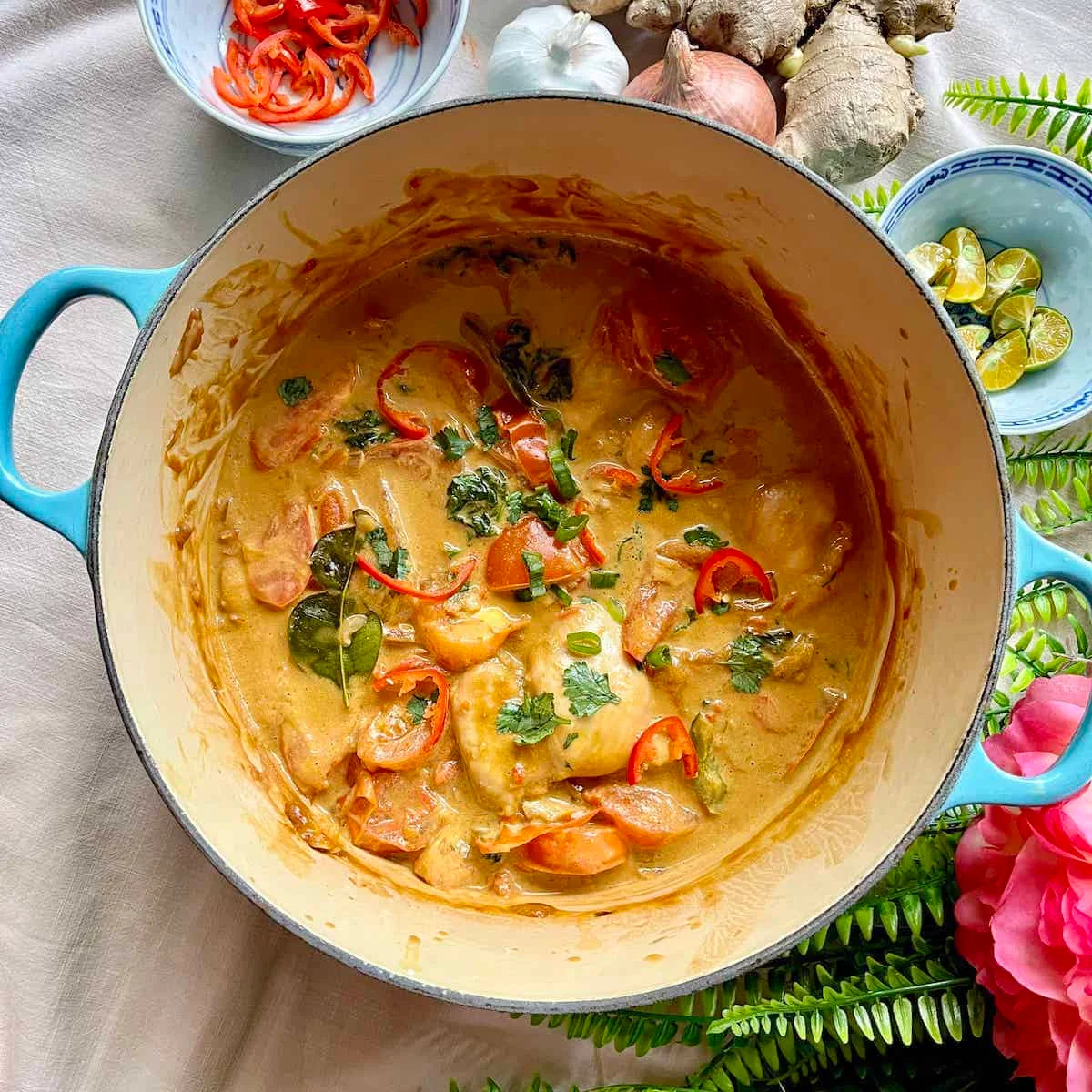
Chicken Sambal is a one-pot dish of chicken simmered in a spicy, tangy coconut sauce with garlic, ginger and lime leaves. Add the vegetables near the end for a quick meal with a choice of softer or firmer vegetables.
Ingredients
- 30 ml (2 tablespoons)cooking oil
- 5 clovesfresh garlic, peeled and smashed
- 2.5 cm (1 inch)fresh ginger, sliced
- 3shallots (or ½ red onion)
- 45 ml (3 tablespoons)sugar
- 30 ml (2 tablespoons)fish sauce (or light soy sauce)
- 15 ml (1 tablespoon)white rice vinegar (or white wine vinegar)
- 7.5 ml (½ tablespoon)light soy sauce
- 2kaffir lime leaves, crushed
- 45–75 ml (3–5 tablespoons)sambal oelek
- 454 g (1 lb)chicken
- 240 ml (1 cup)coconut milk
- 60 ml (4 tablespoons)water (or chicken broth)
- 5 ml (1 teaspoon)turmeric powder
- 3tomatoes, cut into wedges
- ¼bell pepper, sliced
- 1 small bunchkale
- 3limes, halved
- To tastecoriander (optional)
- To tastegreen onions, sliced (optional)
Instructions
- 1
Mix the sauces
In a small bowl, combine the fish sauce, soy sauce, sugar and vinegar.
- 2
Sauté the aromatics
Set a pan over medium-high heat and sauté the shallots until fragrant. Add the ginger, then the garlic, taking care not to let the garlic burn. If using skin-on chicken, brown its skin first, remove the chicken, then sauté the shallots, ginger and garlic in the rendered fat; the recipe skips browning when using skinless chicken.
- 3
Add coconut mixture
Reduce the heat to medium. Add the coconut milk, sauce mixture, sambal and crushed kaffir lime leaves.
- 4
Add the chicken
Add the chicken and turmeric, then mix well.
- 5
Control the simmer
Adjust the heat so the sauce does not reach a rolling boil. If it becomes too thick, add a cup of water or chicken broth; if you do, cook off the extra liquid or add more seasoning.
- 6
Cook the chicken
Simmer for 15–30 minutes, depending on the chicken pieces' size and the heat. Check that the thickest part reaches 74°C (165°F), preferably with an instant-read thermometer.
- 7
Add the vegetables
Add the tomatoes and pepper now for softer vegetables, or later if you prefer them firmer. Add the kale 5 minutes before turning off the heat.
- 8
Serve with rice
Serve with plain white rice, brown rice or pandan jasmine rice.
What is chicken sambal?
Sambal is a chilli-based condiment used across Southeast Asian cooking, with many regional styles. This version turns sambal oelek into a one-pot sauce with coconut milk, fish sauce, aromatics and lime leaves.
Coconut softens the chilli's heat, while vinegar and lime bring a tart edge. The recipe's flexible vegetable timing lets you choose a softer, more melded finish or vegetables with more bite.
Nutrition and macros by portion
The nutrition label shows one serving as written: 1736 calories, 6g protein, 36g carbs, 178g fat.
| Portion | Adjustment | kcal | Protein | Carbs | Fat |
|---|---|---|---|---|---|
| Lighter | More vegetables, less rice | 1215 kcal | 4g | 25g | 125g |
| This serving | As written | 1736 kcal | 6g | 36g | 178g |
| Hungry | Add extra rice | 2604 kcal | 9g | 54g | 267g |
The chicken provides most of the protein, while the sugar and rice served alongside supply much of the carbohydrate. Coconut milk and cooking oil contribute most of the fat. For a more balanced plate, serve a moderate portion of rice with extra vegetables.
The sauce ingredients
Sambal oelek: The amount ranges from 3 to 5 tablespoons, so choose a level that suits your preference for heat.
Coconut milk: It gives the sauce body and a creamy texture. Use coconut milk rather than coconut cream if you want to avoid an especially thick sauce.
Fish sauce and soy: Fish sauce adds savoury depth, while light soy sauce brings seasoning. Dark, sweet or thick soy sauce is not recommended here.
Build the flavour gently
Shallots: Give them time to turn fragrant in the oil before adding the other aromatics.
Ginger and garlic: Add ginger first, then garlic, which can scorch quickly. Keep the pan moving and lower the heat if the garlic starts colouring too fast.
Lime leaves: Crush them before adding so their fragrance can infuse the coconut sauce; they do not need to be sliced.
Keep the sauce at a simmer
A steady, gentle simmer cooks the chicken without driving the sauce into a rolling boil. The recipe gives a 15–30 minute range because pieces and heat levels vary.
If the sauce thickens too much, loosen it with water or chicken broth. Since extra liquid can dilute the seasoning, cook some off or adjust the seasoning afterwards.
Check the chicken and vegetables
Chicken: Check the thickest part with an instant-read thermometer; the recipe specifies 74°C (165°F). Larger pieces may take longer than smaller ones.
Vegetables: Tomatoes and pepper can go in earlier for a softer result or later to stay firmer. The kale needs only the final 5 minutes of cooking.
Serve it with rice
Plain white rice, brown rice and pandan jasmine rice are all suggested accompaniments. Rice is useful for soaking up the coconut sambal sauce.
Squeeze the halved limes over the finished dish for a bright, citrusy contrast. Coriander and sliced green onions are optional finishing touches.
Recipe notes & tips
- Start with 3 tablespoons of sambal oelek and add more if you want a hotter sauce.
- Crush the kaffir lime leaves before adding them, but leave them whole.
- Add the garlic after the ginger and watch it closely so it does not burn.
- Use similarly sized chicken pieces so they cook at a more even rate.
- Add the tomatoes and pepper later if you prefer them firmer.
- Keep the sauce below a rolling boil and check the chicken at its thickest point.
Variations
- Use brown sugar: Swap it for the listed sugar if you prefer its deeper flavour.
- Swap the fish sauce: Use light soy sauce instead, as suggested in the recipe.
- Choose your chilli level: Use 3 tablespoons of sambal for less heat or up to 5 for more.
- Change the vegetables: Add bell pepper, tomatoes and kale as listed, adjusting when they go in for your preferred texture.
- Brown skin-on chicken: Brown the skin first, then sauté the aromatics in the rendered chicken fat.
Common mistakes to avoid
- Burning the garlic: Add it after the ginger and keep a close eye on the pan.
- Boiling the sauce hard: Lower the heat to keep it at a gentle simmer.
- Over-thickening the sauce: Add water or chicken broth a little at a time, then correct the seasoning if needed.
- Guessing the chicken is done: Check the thickest part with an instant-read thermometer for 74°C (165°F).
- Adding vegetables too early: Put in tomatoes and pepper later if you want them firmer, and keep kale to the final 5 minutes.
How to store
Refrigerate leftovers in a covered container and use within 3 days. Reheat gently in a pan until piping hot throughout, adding a splash of water if the sauce has thickened.
Frequently asked questions
Can I use chicken with bones?
Yes. The recipe allows for different chicken cuts, but cooking time will change. Check the thickest part of the meat and allow more time if needed.
How spicy is this dish?
The heat depends on the sambal oelek and how much you use. The recipe calls for 3–5 tablespoons, so begin at the lower amount if you are unsure.
Can I use coconut cream?
The recipe notes that coconut cream may make the sauce too thick. If that happens, loosen it with water or chicken broth and adjust the seasoning as needed.
When should I add the tomatoes and pepper?
Add them earlier if you like them soft, or later for a firmer texture. Add the kale 5 minutes before turning off the heat.
Can I leave out the lime?
The recipe says not to omit it. Halve the limes and use them to add a fresh, tart finish when serving.
What should I serve with chicken sambal?
The suggested options are plain white rice, brown rice or pandan jasmine rice.
Cook it from the original
This recipe comes from greedygirlgourmet.com. Their page has the author’s own photos, notes and tips — the best place to cook it from.
Open the recipe on greedygirlgourmet.com