
Traditional Ratatouille Recipe
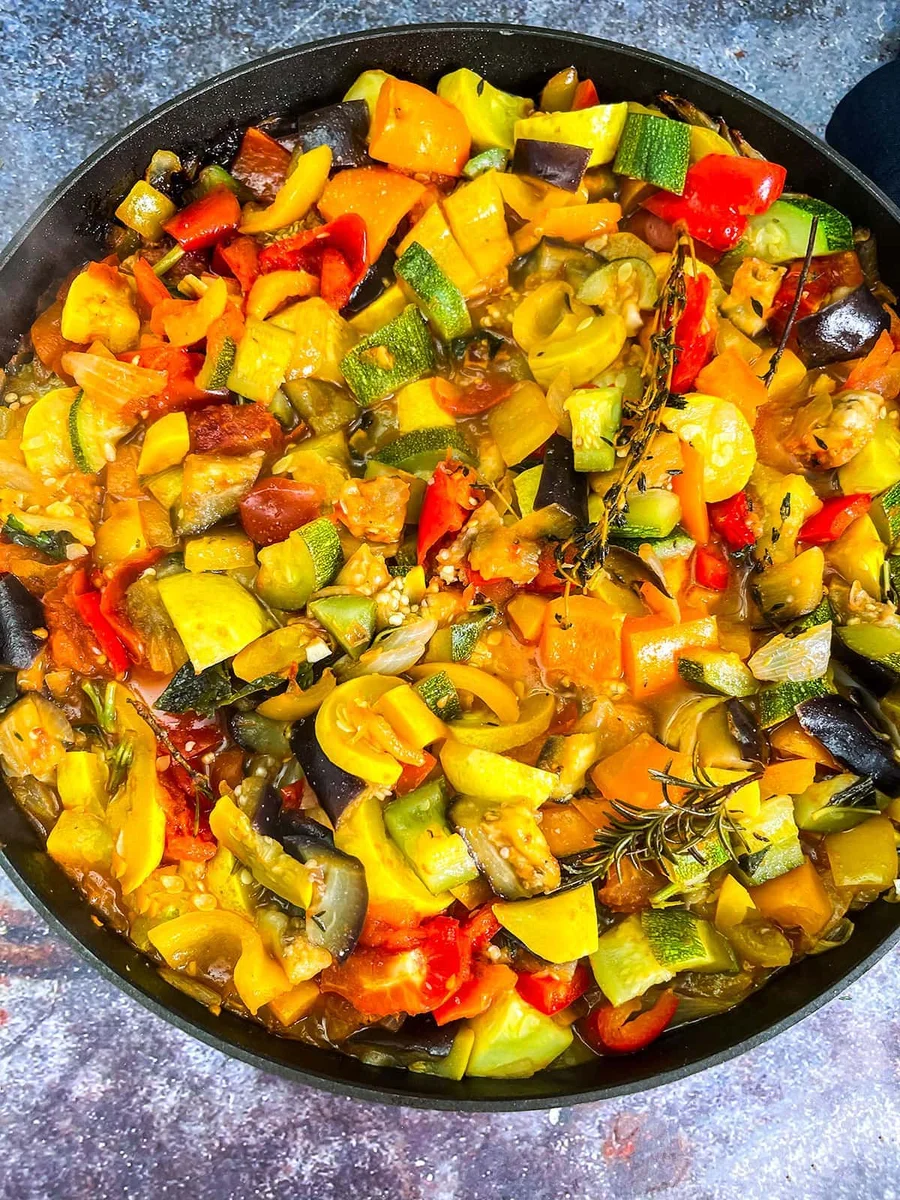
This French vegetable stew brings aubergine, courgettes, squash, peppers and tomatoes together with garlic and herbs. It is a colourful way to use summer produce, and the one-pan method makes a generous batch for sharing.
Ingredients
- 60 ml (¼ cup)olive oil
- 1 large, dicedaubergine
- 1 medium, choppedonion
- 5 cloves, mincedgarlic
- ½ medium, dicedred pepper
- ½ medium, dicedorange pepper
- 3 medium, choppedtomatoes
- 2 medium, trimmed and choppedcourgettes
- 1 medium, trimmed and choppedyellow squash
- 30 ml, chopped (2 tablespoons)fresh basil leaves
- 2 sprigs, or 5 ml dried (1 teaspoon)fresh thyme
- 1 sprigfresh oregano
- 1 sprigfresh rosemary
- 15 ml (1 tablespoon)tomato purée
- 120 ml (½ cup)vegetable stock
- 7.5 ml (1½ teaspoons), to tastesalt
Instructions
- 1
Salt the aubergine
Sprinkle the aubergine with sea salt in a colander and leave it for about 20 minutes so excess water can drain away.
- 2
Heat the oil
Set a saucepan over a medium heat and add the olive oil.
- 3
Soften the onion
Add the chopped onion and sauté for 2–3 minutes, until translucent.
- 4
Add the garlic
Stir in the garlic and cook for 1 minute.
- 5
Cook the peppers
Add the red and orange peppers and cook for 2–3 minutes.
- 6
Add vegetables and herbs
Add the tomatoes, yellow squash, courgettes, aubergine, thyme, basil, oregano, tomato purée, rosemary and vegetable stock. Cook for 10 minutes, until the vegetables begin releasing their liquid.
- 7
Simmer until tender
Cover the saucepan and cook over a low heat for about 10 more minutes, until the vegetables are tender.
- 8
Season to taste
Season with salt.
What is ratatouille?
Ratatouille is a French vegetable dish associated with Provence, in the south of the country. It traditionally combines summer vegetables with olive oil and herbs.
This version cooks the vegetables together in a saucepan rather than arranging them in layers. The result is a rustic stew with soft vegetables and a savoury, tomato-rich cooking liquid.
Nutrition and macros by portion
The nutrition label shows one serving as written: 105 calories, 2g protein, 10g carbs, 7g fat.
| Portion | Adjustment | kcal | Protein | Carbs | Fat |
|---|---|---|---|---|---|
| Lighter | Use less olive oil | 74 kcal | 1g | 7g | 5g |
| This serving | As written | 105 kcal | 2g | 10g | 7g |
| Hungry | Serve with extra bread | 158 kcal | 3g | 15g | 11g |
The vegetables and stock provide most of the carbohydrates, while olive oil is the main source of fat; this dish contains little protein. Serve it with a protein-rich food or a portion of beans, and add bread or potatoes if you want a more filling plate.
The vegetables and herbs
Aubergine: salting it in a colander is intended to draw away excess moisture before it goes into the pan. Give it time to drain, then add it with the other vegetables.
Summer vegetables: courgette, yellow squash, peppers and tomatoes bring different textures and sweetness. Chop them into reasonably even pieces so they cook at a similar pace.
Fresh herbs: basil, thyme, oregano and rosemary give the stew its fragrant character. The recipe adds them during cooking, so their flavour has time to mingle with the vegetables.
Build flavour in the pan
Onion first: cooking it in olive oil until translucent gives the dish a soft, savoury base. Keep the heat at medium and stir occasionally.
Garlic next: it needs only a minute before the peppers are added. This brief cooking helps flavour the oil without leaving the garlic in the pan for too long on its own.
Watch the cooking liquid
The tomatoes and other vegetables release liquid as they cook, while the stock adds moisture from the start. After the first 10 minutes, the vegetables should be beginning to soften and produce their own juices.
Covering the pan for the final 10 minutes helps the vegetables become tender. Keep the heat low and check that the mixture is gently cooking rather than sticking.
Check for tenderness
The vegetables are ready when a fork passes through the aubergine and squash easily, while the pieces still hold their shape. If they need longer, continue cooking gently and check them again.
Taste before adding the final salt, since some salt was used on the aubergine. The exact amount absorbed and drained can vary.
Serving ideas
Serve ratatouille warm as a main course or alongside bread, rice or potatoes. Those additions make it easier to turn the vegetable stew into a more substantial plate.
It also works as a side for a meal with a protein of your choice. Spoon some of the cooking liquid over the vegetables when serving.
Recipe notes & tips
- Cut the vegetables into similar-sized pieces for more even cooking.
- Use a colander when salting the aubergine so the drained liquid can escape.
- Keep the heat moderate while softening the onion and garlic.
- Stir gently once the vegetables are in the pan to help them keep their shape.
- Taste the stew before adding the final salt, as the aubergine was salted earlier.
Variations
- Use dried thyme: replace the fresh sprigs with 5 ml dried thyme, as listed in the ingredients.
- Add extra basil: scatter more chopped fresh basil over the dish just before serving.
- Choose one pepper: use a whole red or orange pepper instead of half of each.
- Make it chunkier: cut the vegetables into larger pieces and check their tenderness before serving.
- Serve with grains: spoon the stew over cooked rice or another grain for a heartier meal.
Common mistakes to avoid
- Skipping the draining step: the aubergine may add more moisture, so leave it in the salted colander for about 20 minutes.
- Cooking the garlic too long: it can catch before the vegetables go in, so add the peppers after the stated minute.
- Using high heat for the covered simmer: the vegetables may stick, so keep the pan on low.
- Expecting the vegetables to stay firm: cook only until tender and check them during the final simmer.
- Adding all the salt without tasting: some was used on the aubergine, so adjust the finished dish to taste.
How to store
Cool leftovers and refrigerate them in a covered container for up to 3 days. Reheat gently in a saucepan until hot throughout, adding a small splash of water or stock if needed.
Frequently asked questions
Can I make ratatouille ahead?
Yes. Cook it, cool it, and refrigerate it in a covered container for up to 3 days. Reheat gently before serving.
How do I know when the vegetables are done?
They should be tender when tested with a fork but still hold their shape. The recipe allows about 10 minutes uncovered and 10 minutes covered on low.
Can I use dried thyme?
Yes. The ingredient list gives 5 ml, or 1 teaspoon, dried thyme as an alternative to 2 fresh sprigs.
Why salt the aubergine first?
The recipe uses this step to draw off excess water. Leave the salted aubergine in a colander for about 20 minutes before cooking.
What can I serve with ratatouille?
Try it with bread, rice or potatoes. For a more substantial meal, pair it with a protein-rich food.
Can I freeze the leftovers?
The recipe does not specify freezing. For best texture, refrigerate leftovers and use them within 3 days.
Cook it from the original
This recipe comes from healthiersteps.com. Their page has the author’s own photos, notes and tips — the best place to cook it from.
Open the recipe on healthiersteps.com