
Venezuelan Arepas
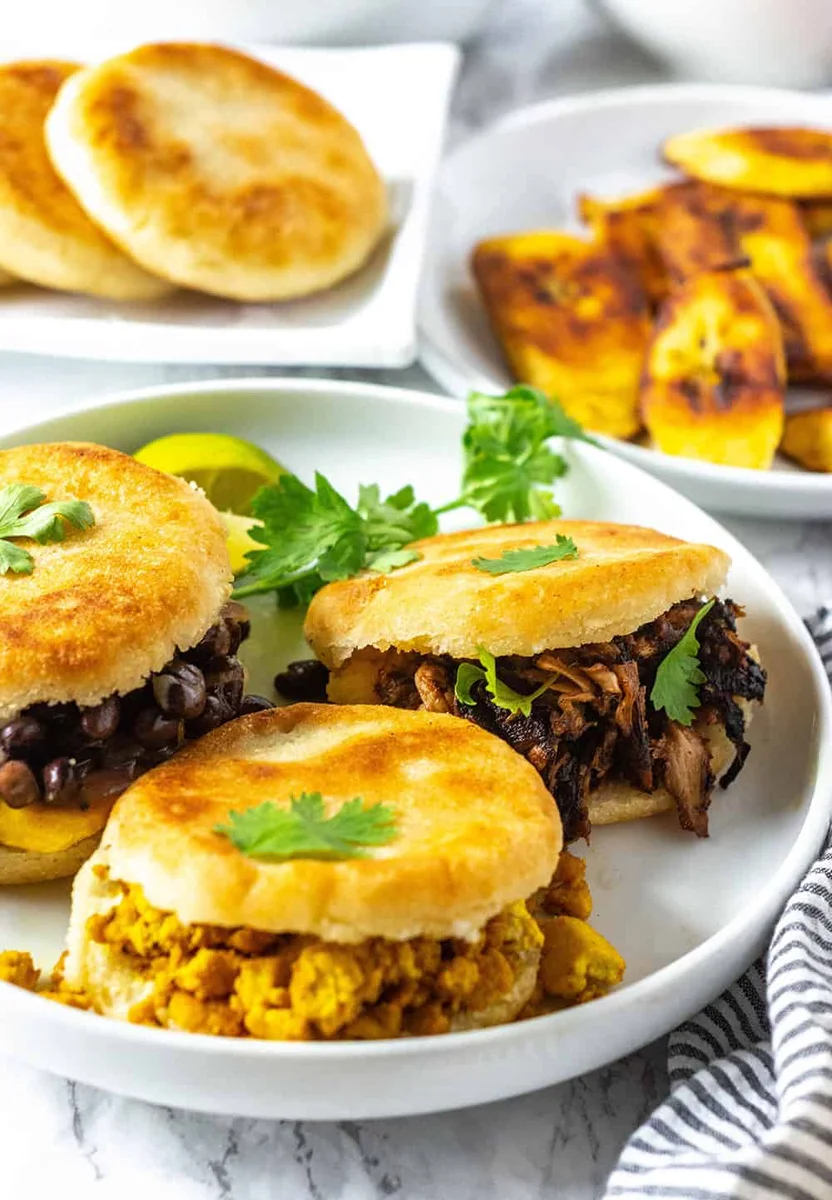
Venezuelan arepas are crisp-edged cornmeal cakes with a soft centre, split open and filled with savoury favourites. This straightforward version uses pre-cooked arepa flour and cooks on a griddle, making it easy to serve at breakfast, lunch or dinner.
Ingredients
- 300 g (2 cups)pre-cooked arepa flour
- 7.5 ml (1½ teaspoons)salt
- 530 ml (2¼ cups)warm water
- for fryingcoconut oil
Instructions
- 1
Mix the dough
Combine the arepa flour and salt. Add the warm water gradually, kneading until you have a dough ball, then leave it to rest for about 5 minutes.
- 2
Shape the arepas
Divide the dough into 6–8 pieces and roll each one into a ball between your palms. Flatten each ball into a disk about 1.3 cm (½ inch) thick.
- 3
Cook until golden
Heat a griddle or cast-iron skillet with coconut oil over medium-high heat. Cook the arepas for about 5 minutes on each side, until golden brown.
- 4
Fill and serve
Use a knife to cut each arepa down the centre, leaving the back edge attached. Fill with black beans, plantains, guacamole, jackfruit carnitas, scrambled tofu or another favourite filling, and serve immediately.
What are Venezuelan arepas?
Arepas are round corn cakes associated with Venezuelan and Colombian cooking, made from pre-cooked maize flour rather than ordinary cornmeal. They are cooked until the outside is browned and the inside can be split to hold a filling.
This version keeps the dough simple: flour, salt and warm water. The griddle gives the cakes their colour while leaving them soft enough to open and stuff.
Nutrition and macros by portion
The nutrition label shows one serving as written: 153 calories, 4g protein, 29g carbs, 2g fat.
| Portion | Adjustment | kcal | Protein | Carbs | Fat |
|---|---|---|---|---|---|
| Lighter | Use less coconut oil | 107 kcal | 3g | 20g | 1g |
| This serving | As written | 153 kcal | 4g | 29g | 2g |
| Hungry | Add a larger filling | 230 kcal | 6g | 44g | 3g |
The corn flour supplies most of the carbohydrates, while the coconut oil contributes fat and the flour provides a little protein. Pair an arepa with a protein-rich filling such as black beans or scrambled tofu, plus vegetables, for a more varied plate.
Choosing the flour
Pre-cooked flour: use flour specifically labelled for arepas, often called masarepa. It is not the same as masa harina or standard cornmeal, so substituting those may give a different dough and texture.
Water: add it gradually so you can feel when the dough comes together. The finished dough should be soft and workable rather than crumbly or runny.
Resting and shaping the dough
Rest: give the dough about 5 minutes after mixing. This short pause helps the flour absorb the water before you shape the cakes.
Disks: roll the portions smoothly, then flatten them to an even thickness of about 1.3 cm. Even disks are easier to cook consistently and split for filling.
Getting a golden crust
Pan heat: warm the griddle or cast-iron skillet over medium-high heat with coconut oil. The arepas should sizzle gently when they meet the surface, rather than scorching immediately.
Turning: cook for about 5 minutes per side and look for a golden-brown exterior. If they brown too quickly, lower the heat so the centres have time to cook through.
Opening and filling
Cutting: slice through the centre while keeping one edge attached, making a pocket rather than two separate halves. A small, sharp knife helps you control the cut.
Fillings: black beans, fried plantains, guacamole, jackfruit carnitas and scrambled tofu are suggested options. Fill the arepas just before serving so the warm crust stays pleasant to eat.
Serving the arepas
Serve them straight from the pan while warm, alongside a filling or a mix of fillings. A fresh salad or sliced vegetables can add a crisp, light contrast to the soft corn and hearty stuffing.
Recipe notes & tips
- Measure the flour and water carefully, then add the water gradually as you knead.
- If the dough cracks while shaping, work it briefly with damp hands.
- Keep the disks close to the same thickness so they cook at a similar rate.
- Use enough coconut oil to coat the cooking surface without pooling heavily.
- Prepare fillings before the arepas finish cooking so you can serve them warm.
Variations
- Black beans: spoon in warm black beans for a hearty, savoury filling.
- Fried plantains: add slices of fried plantain for a sweet contrast.
- Guacamole: tuck in guacamole just before serving for a creamy filling.
- Jackfruit carnitas: use seasoned jackfruit carnitas for a plant-based, pulled-style option.
- Scrambled tofu: fill with scrambled tofu for a savoury breakfast-style arepa.
Common mistakes to avoid
- Using the wrong flour: standard cornmeal may not bind like pre-cooked arepa flour, so check the label.
- Adding all the water at once: the dough can become difficult to judge, so pour it in gradually.
- Shaping uneven disks: thick and thin areas cook differently, so aim for an even 1.3 cm thickness.
- Cooking over excessive heat: the outside may darken before the centre cooks, so reduce the heat if they brown too fast.
- Cutting all the way through: the filling can fall out, so leave the back edge attached.
How to store
Keep cooled, unfilled arepas in an airtight container in the fridge for up to 3 days. Reheat them in a lightly oiled skillet over medium heat until warmed through, then cut and fill; store fillings separately where possible.
Frequently asked questions
Can I use ordinary cornmeal instead of arepa flour?
The recipe calls for pre-cooked arepa flour, which is designed to form a workable dough. Ordinary cornmeal is not a direct substitute and may not produce the same texture.
How many arepas does this recipe make?
The dough is divided into 6–8 pieces. The recipe serves 8, so make 8 smaller arepas if you want one per serving.
How do I know the arepas are cooked?
The recipe calls for about 5 minutes on each side, until golden brown. If the outside is colouring too quickly, turn the heat down to give the centres more time.
Can I make the dough ahead?
The method specifies a 5-minute rest, then shaping and cooking. For best results, shape and cook the arepas shortly after that rest.
What can I put inside an arepa?
The suggested fillings include black beans, plantains, guacamole, jackfruit carnitas and scrambled tofu. You can also use another filling you enjoy.
Cook it from the original
This recipe comes from healthiersteps.com. Their page has the author’s own photos, notes and tips — the best place to cook it from.
Open the recipe on healthiersteps.com