
Mashed Ripe Plantain
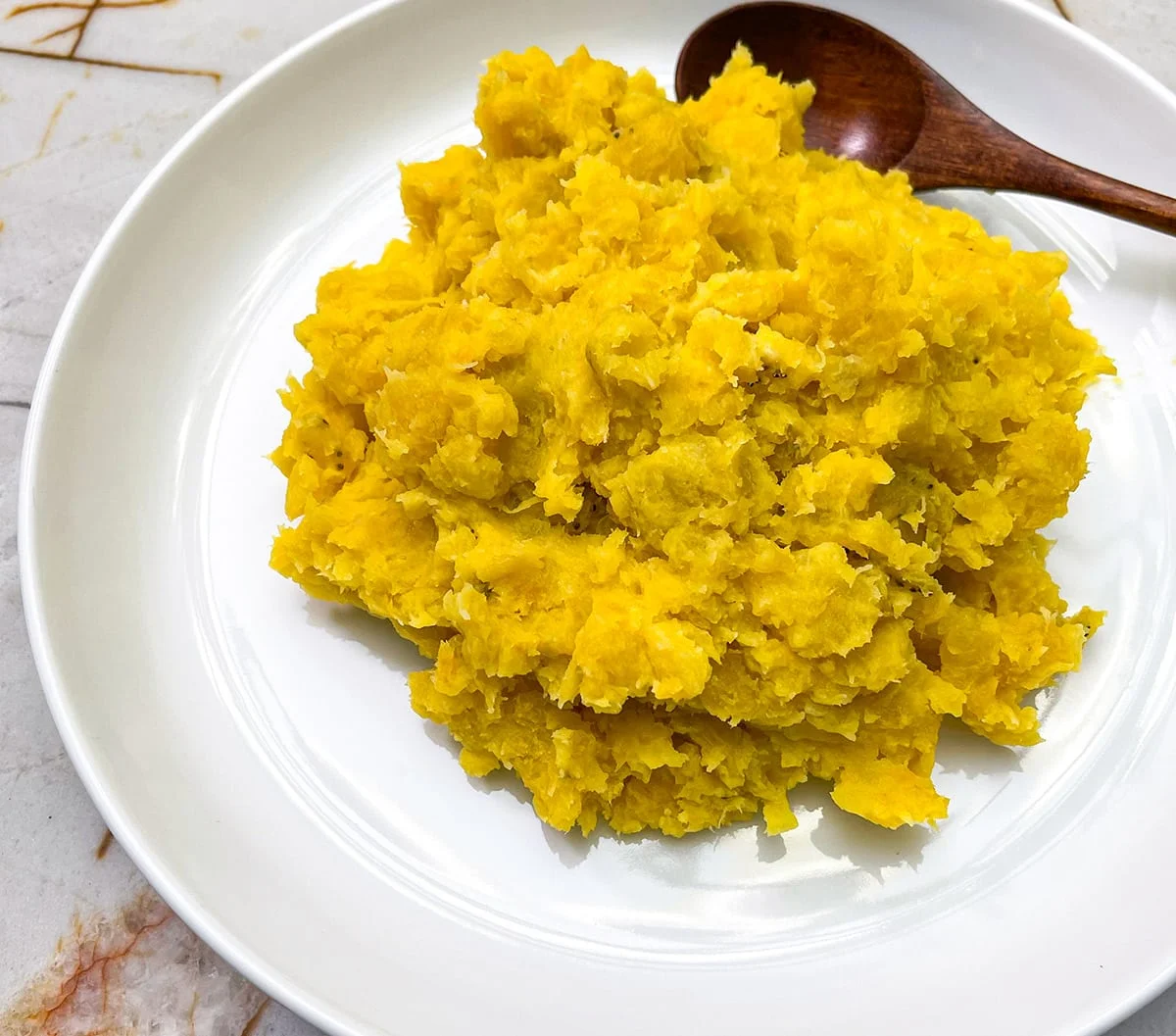
Mashed ripe plantain is a soft, gently sweet Caribbean side dish seasoned here with coconut milk, cinnamon, agave and optional cayenne. It is a straightforward way to turn ripe plantains into a comforting accompaniment for a meal.
Ingredients
- 3 mediumripe plantains
- 60 ml (¼ cup)coconut milk
- 15 ml (1 tablespoon)agave nectar (or sweetener of choice)
- 1.25 ml (¼ teaspoon)cinnamon
- 5 ml (1 teaspoon)salt
- A pinchcayenne pepper (optional)
Instructions
- 1
Boil the water
Fill a large saucepan or pot about three-quarters full with water and bring it to the boil.
- 2
Peel the plantains
Cut off both ends of each plantain and cut it in half. Make a lengthwise slit in the peel where it meets the flesh, then remove the peel. Repeat with the remaining plantains.
- 3
Simmer until tender
Carefully add the peeled plantain pieces to the hot water. Reduce the heat to low or medium and simmer until the plantains are tender.
- 4
Check for softness
Prick a piece with a fork to check that it is soft to the touch and has a bright yellow colour.
- 5
Drain and cool
Drain the excess water, transfer the plantains to a medium-sized bowl and leave them to cool before mashing.
- 6
Mash the plantains
Mash with a potato masher or fork. If the plantains are firm, add some of the coconut milk to help mash them.
- 7
Season to taste
Once mashed, add the agave, cayenne pepper, ground cinnamon and salt, adjusting the seasoning to your taste.
What is mashed ripe plantain?
Plantains are a starchy fruit used in many Caribbean and other tropical cuisines, and ripe ones become sweeter and softer as they mature. Mashing them makes a simple side that can sit alongside savoury dishes or be enjoyed on its own.
This version combines ripe plantain with coconut milk for a softer mash, while cinnamon and agave emphasise its sweetness. Cayenne is optional if you want a little warmth.
Nutrition and macros by portion
The nutrition label shows one serving as written: 139 calories, 1g protein, 32g carbs, 2g fat.
| Portion | Adjustment | kcal | Protein | Carbs | Fat |
|---|---|---|---|---|---|
| Lighter | Use less agave | 97 kcal | 1g | 22g | 1g |
| This serving | As written | 139 kcal | 1g | 32g | 2g |
| Hungry | Serve a larger portion | 209 kcal | 2g | 48g | 3g |
The plantains provide most of the carbohydrates, while coconut milk and agave contribute smaller amounts of fat and carbohydrate; the dish itself provides little protein. Pair a serving with a protein-rich main and vegetables to make a more balanced plate.
Choosing and preparing the plantains
Ripe plantains: choose fruit with yellow skin and dark patches, which will generally be softer and sweeter than green plantains. The method calls for removing the peel before simmering.
Peeling: cut the ends off and slit the skin lengthways without cutting deeply into the flesh. This gives you a starting point for removing the peel.
Simmering to tenderness
Gentle heat: once the plantain pieces are in the boiling water, lower the heat to a simmer. The recipe does not specify a cooking time, so use tenderness rather than the clock to judge when they are ready.
Doneness: a fork should pass into the plantain easily, and the flesh should feel soft. Drain well so excess water does not make the mash loose.
Getting the right texture
Mash while manageable: let the drained pieces cool before mashing, as directed, then use a potato masher or fork to break them down. A few small lumps are fine if you prefer a more rustic texture.
Coconut milk: add it as needed if the plantains feel firm during mashing. Add gradually so you can control how creamy the finished dish becomes.
Balancing the seasoning
Sweetness: ripe plantains already bring sweetness, so stir in the agave and taste before deciding whether you want more. The recipe allows another sweetener of your choice.
Spice: cinnamon adds warmth, while a pinch of cayenne gives a gentle contrast. Leave out the cayenne for a milder mash.
How to serve it
Serve the mash as a side with a savoury main, or include it as part of a Caribbean-inspired spread. Its sweetness works well alongside dishes with savoury or spicy flavours.
For a more balanced plate, pair a serving with a protein-rich main and vegetables. Stir the mash briefly before serving if it has been standing.
Recipe notes & tips
- Use ripe plantains for a softer, sweeter result.
- Cut the plantains into similar-sized pieces so they soften at a similar pace.
- Check tenderness with a fork rather than relying on a set simmering time.
- Drain the plantains thoroughly before transferring them to the bowl.
- Add coconut milk a little at a time while mashing to control the texture.
- Taste before adding extra sweetener, as ripe plantains are already sweet.
Variations
- Milder spice: omit the cayenne for a gentle cinnamon flavour.
- Alternative sweetener: use your preferred sweetener instead of agave.
- Less sweet: reduce the agave and let the ripe plantains provide most of the sweetness.
- Creamier mash: add coconut milk gradually until the texture suits you.
- Rustic texture: mash with a fork and leave a few small pieces intact.
Common mistakes to avoid
- Using firm plantains: they may be less sweet and harder to mash; choose ripe fruit.
- Boiling too vigorously: the pieces can break apart; lower the heat to a gentle simmer.
- Guessing doneness by time: plantains vary in size; check that a fork enters easily.
- Leaving excess water: it can loosen the mash; drain the pot thoroughly.
- Adding all the coconut milk at once: the mash may become too loose; add it gradually.
- Over-sweetening: ripe plantains bring their own sweetness; taste before adding more agave.
How to store
Cool the mash, place it in a covered container and refrigerate for up to 3 days. Reheat gently in a saucepan or microwave, stirring; add a small splash of coconut milk if it seems dry.
Frequently asked questions
How ripe should the plantains be?
Use ripe plantains that have yellow skin with dark patches and feel softer than green plantains. They will be sweeter and easier to mash.
How can I tell when the plantains are cooked?
Prick a piece with a fork. It should feel soft and show bright yellow flesh.
Can I make this without a potato masher?
Yes. The recipe also works with a fork; mash until you reach the texture you like.
Can I leave out the cayenne?
Yes. Cayenne is optional, so omit it for a milder, sweeter-tasting mash.
Can I prepare the mash ahead?
Yes. Refrigerate it in a covered container and reheat gently before serving. Stir in a little coconut milk if it has become dry.
Cook it from the original
This recipe comes from healthiersteps.com. Their page has the author’s own photos, notes and tips — the best place to cook it from.
Open the recipe on healthiersteps.com