
Bammy
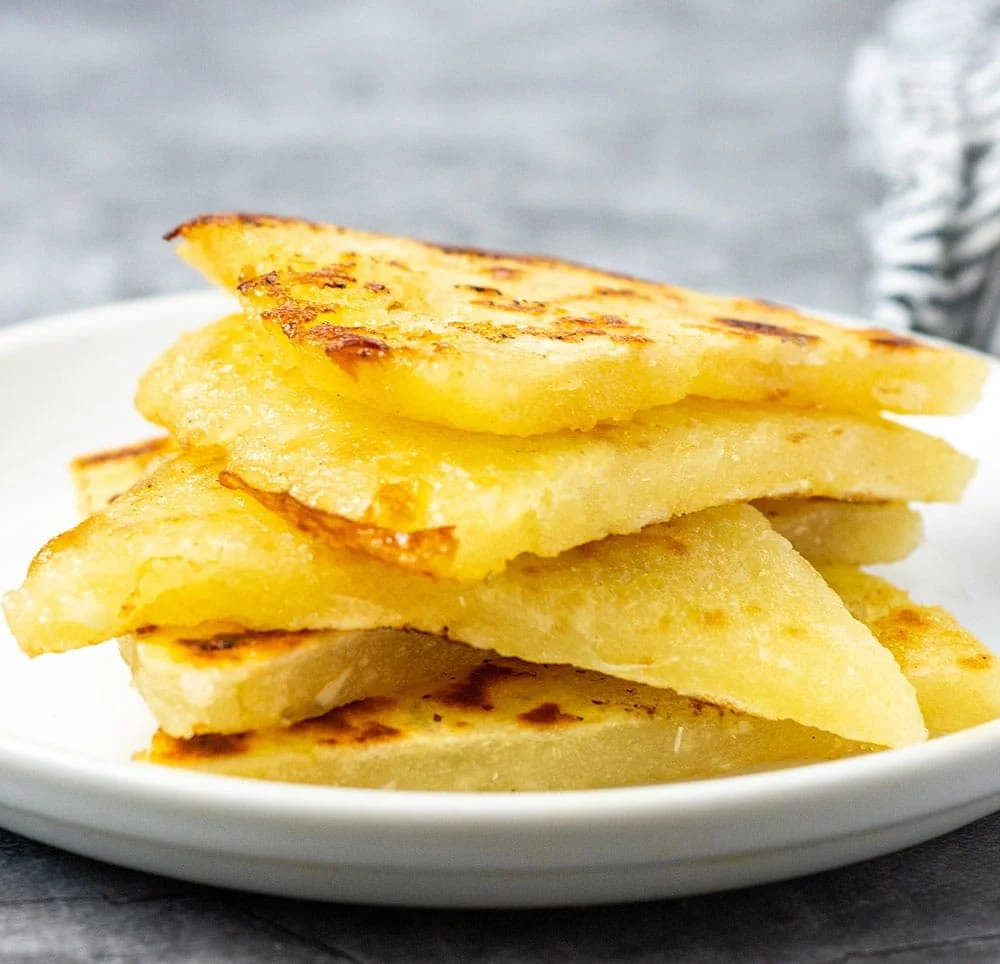
Bammy is a Jamaican cassava flatbread, cooked in a pan, soaked in coconut milk and fried until crisp at the edges. This homemade version uses just cassava, salt, coconut milk and a little oil, making it a satisfying side for a Caribbean-inspired meal.
Ingredients
- 680 g (1½ lb)cassava, peeled and grated
- 1.25 ml (¼ teaspoon)salt
- 120 ml (½ cup)coconut milk, for soaking
- To tasteoil, for frying
Instructions
- 1
Grate the cassava
Use the smallest holes on a box grater to grate the peeled cassava.
- 2
Squeeze it dry
Put the grated cassava in cheesecloth or a nut milk bag. Squeeze out the white liquid and discard it.
- 3
Season the cassava
Transfer the cassava to a bowl, add the salt and mix well.
- 4
Cook the discs
Lightly grease a frying pan and heat it over medium heat. Add 1 cup of dry cassava and press it into a disc about 1.3 cm (½ inch) thick. Cook for about 10 minutes on each side.
- 5
Soak in coconut
Soak the bammy in the coconut milk for 10 minutes.
- 6
Fry until golden
Heat oil in a skillet over medium-high heat. Fry the bammy until golden brown, about 3 minutes on each side.
What is bammy?
Bammy is a Jamaican flatbread made from cassava, a starchy root also known as yuca. Cassava-based breads have a long history in the Caribbean, and bammy is commonly served alongside savoury dishes.
This version first cooks grated cassava into a firm disc, then soaks it in coconut milk and fries it. That two-stage cooking gives the middle moisture while the outside turns crisp.
Nutrition and macros by portion
The nutrition label shows one serving as written: 437 calories, 4g protein, 87g carbs, 9g fat.
| Portion | Adjustment | kcal | Protein | Carbs | Fat |
|---|---|---|---|---|---|
| Lighter | Use less frying oil | 306 kcal | 3g | 61g | 6g |
| This serving | As written | 437 kcal | 4g | 87g | 9g |
| Hungry | Serve a larger disc | 656 kcal | 6g | 131g | 14g |
Most of the carbohydrates come from the cassava, while coconut milk and frying oil provide most of the fat; the dish supplies a modest amount of protein. Serve a piece with beans or another protein-rich dish and vegetables to make a more balanced plate.
Preparing the cassava
Fine grating: use the smallest holes on a box grater so the cassava forms a close, even mixture that holds together when pressed.
Squeezing: remove the white liquid with cheesecloth or a nut milk bag, as the method directs. Squeeze over a bowl or the sink, then discard the liquid before seasoning.
Shaping and cooking
Portioning: the method uses 1 cup of dry cassava for each disc. Press it firmly into an even round about 1.3 cm (½ inch) thick so it cooks at a consistent pace.
First cook: use medium heat and allow about 10 minutes per side. The disc should hold its shape before you move on to soaking; handle it carefully when turning.
Soaking for a tender middle
Coconut milk: soak each cooked bammy for 10 minutes, as specified. This adds moisture and coconut flavour before the final fry.
After soaking: let excess liquid drip away briefly before frying, so the bammy can brown rather than splutter in the hot oil.
Getting a crisp finish
Frying heat: heat the oil over medium-high and fry for about 3 minutes on each side. Look for an evenly golden-brown surface and turn the bammy once the first side is well coloured.
Serving: bammy is best served warm, when its browned exterior contrasts with the softer centre. Pair it with a saucy stew, beans or a vegetable dish.
Planning the cooking time
The recipe takes 55 minutes in total, including the 10-minute coconut-milk soak. Grating and squeezing the cassava, followed by cooking each disc, make up the hands-on work.
Cook the discs in batches if your pan cannot hold them comfortably. Keep finished pieces warm while you soak and fry the remaining ones.
Recipe notes & tips
- Use a nut milk bag or sturdy cheesecloth to squeeze the grated cassava thoroughly.
- Keep the discs an even thickness so they cook consistently.
- Use medium heat for the first pan-cooking stage to give the cassava time to set.
- Soak the cooked discs for the full 10 minutes for a moist centre.
- Fry in batches if needed, leaving space around each disc for even browning.
Variations
- Coconut flavour: use well-stirred coconut milk for an even soak.
- Herb seasoning: mix finely chopped herbs into the cassava with the salt.
- Spiced version: add a little ground pepper or chilli to the cassava mixture.
- Smaller bammies: shape the cassava into smaller discs and watch the cooking time closely.
- Serve savoury: pair the finished bammy with a Jamaican-style stew or beans.
Common mistakes to avoid
- Leaving too much liquid: squeeze the cassava well so the discs are easier to shape.
- Uneven discs: press each portion to a consistent thickness for more even cooking.
- Turning too soon: let the first side cook until the disc holds together before flipping.
- Skipping the soak: give the cooked bammy the full 10 minutes in coconut milk.
- Crowding the skillet: fry in batches so the surfaces can brown rather than steam.
How to store
Refrigerate cooled bammy in an airtight container for up to 3 days. Reheat in a lightly oiled frying pan over medium heat until hot and crisp; the texture is best soon after frying.
Frequently asked questions
Can I use frozen grated cassava?
Yes, thaw it fully first, then squeeze out the liquid as directed. Measure the dry cassava for shaping the discs.
Why does the cassava need to be squeezed?
The method removes the white liquid before salt is added and the cassava is shaped. Use cheesecloth or a nut milk bag to press it out.
How thick should each bammy be?
Press each portion into a disc about 1.3 cm (½ inch) thick. Keeping the thickness even helps it cook consistently.
Can I make the discs ahead?
You can cook the cassava discs ahead and refrigerate them, then soak and fry them when you are ready to serve. Keep them covered while chilled.
How do I know the bammy is ready to serve?
After the final fry, both sides should be golden brown, with a crisp exterior. Serve it warm.
Cook it from the original
This recipe comes from healthiersteps.com. Their page has the author’s own photos, notes and tips — the best place to cook it from.
Open the recipe on healthiersteps.com