
Chocolate Espresso Macarons
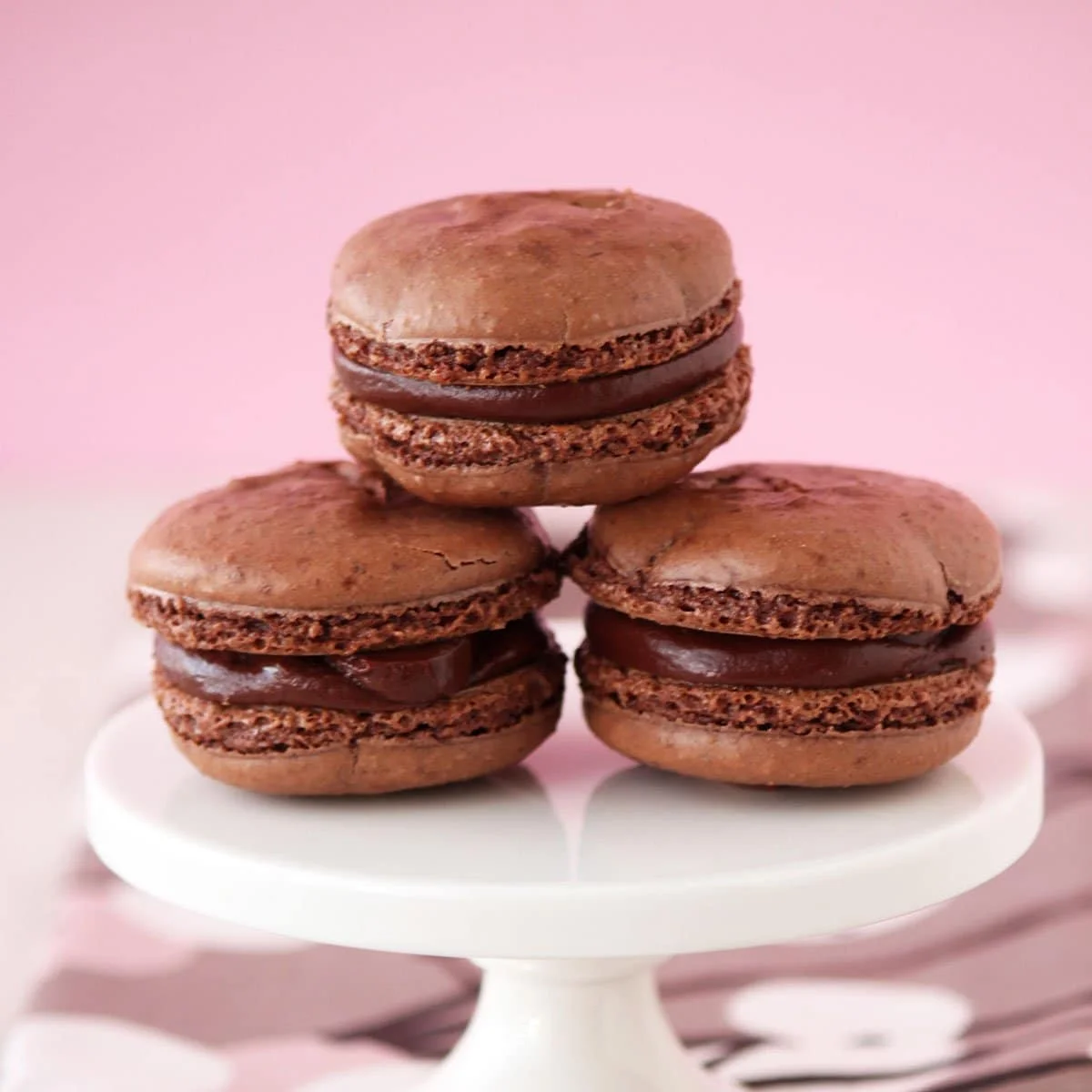
These French-style chocolate espresso macarons pair crisp, delicate shells with a chewy centre and a smooth coffee-scented chocolate ganache. They take patience, but the resting and cooling time helps give the shells their characteristic feet and texture.
Ingredients
- 120 g (1 cup)icing sugar
- 48 g (½ cup)ground almonds
- 15 g (3 tablespoons)unsweetened cocoa powder
- 1.25 g (¼ teaspoon)fine sea salt
- 2 largeegg whites, at room temperature
- 63 g (5 tablespoons)caster sugar
- 113 g (4 ounces)bittersweet chocolate, chopped
- 2 g (1 teaspoon)espresso powder
- 120 ml (½ cup)double cream
- 28 g (2 tablespoons)unsalted butter, at room temperature and cut into chunks
Instructions
- 1
Prepare the tray
Line a baking sheet with good-quality baking parchment or a silicone baking mat. Fit a large piping bag with a plain 1.25 cm (½-inch) nozzle.
- 2
Sift the dry mix
Put the icing sugar, ground almonds, cocoa powder and salt in a food processor. Pulse to combine, then process for about 30 seconds, until very fine. Sift through a fine sieve into a large bowl.
- 3
Whisk the whites
Put the egg whites in the clean bowl of a stand mixer fitted with a whisk. Beat for 1–2 minutes, until fluffy and white. Add the caster sugar gradually and beat for a further 1–2 minutes, until stiff, glossy peaks form; take care not to overwhip.
- 4
Fold the batter
Fold the dry mixture into the egg whites in three additions. Stop as soon as there are no large lumps or white streaks, and avoid overmixing.
- 5
Pipe and rest
Transfer the batter to the piping bag and pipe rounds about 3 cm (1¼ inches) across, roughly 2.5 cm (1 inch) apart. Tap the baking sheet against the worktop until the tops flatten. Leave at room temperature for at least 30 minutes, until the tops form a matte skin and are no longer sticky to the touch. Meanwhile, position a rack in the middle of the oven and preheat it to 175°C (350°F), or 165°C (325°F) if your oven runs hot.
- 6
Bake the shells
Bake for about 14 minutes, rotating the sheet halfway through. The macarons should be smooth, firm and dry, with feet; do not overbake. Move the sheet to a cooling rack and leave the shells to cool completely.
- 7
Make the ganache
Put the chopped chocolate and espresso powder in a large bowl. Heat the cream in a small saucepan over medium heat until it just comes to a boil, then pour it over the chocolate. Leave for 1 minute, add the butter and stir until smooth and melted. Chill for about 30 minutes, until firm but still spreadable.
- 8
Fill the macarons
Pair shells of similar size. Put the ganache in a piping bag fitted with a plain nozzle and pipe about 1 teaspoon into the centre of half the shells. Top with the remaining shells and press gently. Repeat with the rest, then store in an airtight container in the fridge. The macarons taste best the day after baking.
What are chocolate espresso macarons?
Macarons are French confections made from meringue and finely ground almonds, baked as paired shells with a filling between them. Their smooth tops, ruffled feet and tender, chewy centres make them distinctive.
This version adds cocoa to the shells and espresso to a chocolate ganache. The coffee deepens the chocolate flavour, while the crisp shells soften slightly around the filling after resting.
Nutrition and macros by portion
The nutrition label shows one serving as written: 193 calories, 3g protein, 22g carbs, 12g fat.
| Portion | Adjustment | kcal | Protein | Carbs | Fat |
|---|---|---|---|---|---|
| Lighter | Serve fewer macarons | 135 kcal | 2g | 15g | 8g |
| This serving | As written | 193 kcal | 3g | 22g | 12g |
| Hungry | Add another macaron | 290 kcal | 5g | 33g | 18g |
The sugars and almond flour provide most of the carbohydrates, while chocolate, cream and butter contribute much of the fat. Egg whites and almonds provide some protein. Pair a macaron or two with fruit or serve them after a meal with a source of protein to make the overall plate more balanced.
The importance of a fine dry mix
Almonds and icing sugar: Processing and sieving these together helps remove larger particles, which can otherwise leave the shells rough. Keep the cocoa and salt in the mix so they are evenly distributed.
Egg whites: Room-temperature whites are easier to whip to a glossy meringue. Use a clean bowl, since grease can interfere with the foam.
Folding without losing the air
Three additions: Fold the dry ingredients in gradually, turning the mixture gently rather than beating it. Stop when the batter has no large lumps or white streaks, as overmixing can make it too loose.
Piping: Keep the bag upright and aim for even rounds. Tapping the tray helps flatten the tops and release trapped air before the shells rest.
Look for the right shell cues
Before baking: The rested tops should look matte and feel dry rather than tacky. If they are still sticky, leave them to stand longer before putting them in the oven.
After baking: Look for smooth, firm shells with a ruffled foot around the edge. Cool them fully on the tray; warm shells are more fragile when handled.
Getting the ganache consistency right
Hot cream: Pour it over the chocolate and espresso, then give the chocolate a minute to soften before stirring. This helps the mixture turn smooth without needing extra heat.
Chilling: The ganache should hold its shape when piped but remain soft enough to spread between the shells. Check it as it chills so it does not become too firm.
Allow time for resting
The shells need at least 30 minutes to form a dry skin before baking, and they must cool completely before filling. The ganache also needs about 30 minutes to firm up, so plan for pauses as well as hands-on preparation.
Once assembled, the filled macarons are best the following day, when the filling has had time to soften the centres slightly.
Serving and pairing
Serve the macarons chilled or let them stand briefly at room temperature for a softer bite. Their chocolate-and-coffee filling pairs well with unsweetened coffee or tea.
Because they are rich and small, they also work well as part of a dessert selection rather than as a large plated pudding.
Recipe notes & tips
- Measure the ingredients carefully, since small changes can affect the shell batter.
- Make sure the egg whites and mixing bowl are free from traces of yolk or grease.
- Pipe the rounds to a consistent size so they bake at the same rate.
- Rotate the baking sheet halfway through baking as directed.
- Let the shells cool completely before trying to lift or fill them.
- Chill the ganache only until it is firm enough to pipe.
Variations
- Stronger coffee: Add a little more espresso powder to the ganache for a more pronounced coffee note.
- Plain chocolate: Leave the espresso powder out of the filling for a straightforward chocolate ganache.
- Lighter cocoa: Use a little less cocoa in the shells for a milder chocolate flavour.
- Decorative finish: Dust the filled macarons lightly with cocoa powder just before serving.
- Smaller shells: Pipe smaller rounds and begin checking them earlier, as baking time may change.
Common mistakes to avoid
- Coarse dry mix: Process and sieve the ingredients thoroughly so the shells have a smoother finish.
- Overwhipped whites: Stop when the peaks are stiff and glossy; overly beaten meringue can be difficult to fold.
- Overmixed batter: Fold only until the dry ingredients are incorporated and the white streaks have disappeared.
- Skipping the rest: Wait for a matte, non-sticky skin before baking so the shells can form properly.
- Filling warm shells: Cool them completely first to prevent the ganache from softening or melting.
- Overbaking: Check at around 14 minutes and remove the shells when they are firm and dry.
How to store
Store assembled macarons in an airtight container in the fridge. They taste best the day after baking; bring them briefly towards room temperature before serving if you prefer a softer bite.
Frequently asked questions
Why do the shells need to rest before baking?
Resting lets a dry skin form on the surface. The recipe calls for at least 30 minutes, or until the tops look matte and no longer feel sticky.
How do I know when the macarons are baked?
They should look smooth and feel firm and dry, with feet around the edges. The recipe gives about 14 minutes as a guide and calls for rotating the sheet halfway through.
Can I make the ganache ahead?
Yes. Chill it until firm but still spreadable, then let it soften enough to pipe if it becomes too firm.
Can I use baking parchment instead of a silicone mat?
Yes. The method allows either good-quality baking parchment or a silicone baking mat.
Why do the filled macarons taste better the next day?
The shells and ganache have time to settle together, giving the centres a softer, chewier texture. Store them in an airtight container in the fridge.
Cook it from the original
This recipe comes from handletheheat.com. Their page has the author’s own photos, notes and tips — the best place to cook it from.
Open the recipe on handletheheat.com