
Mexican pineapple and coconut empanadas
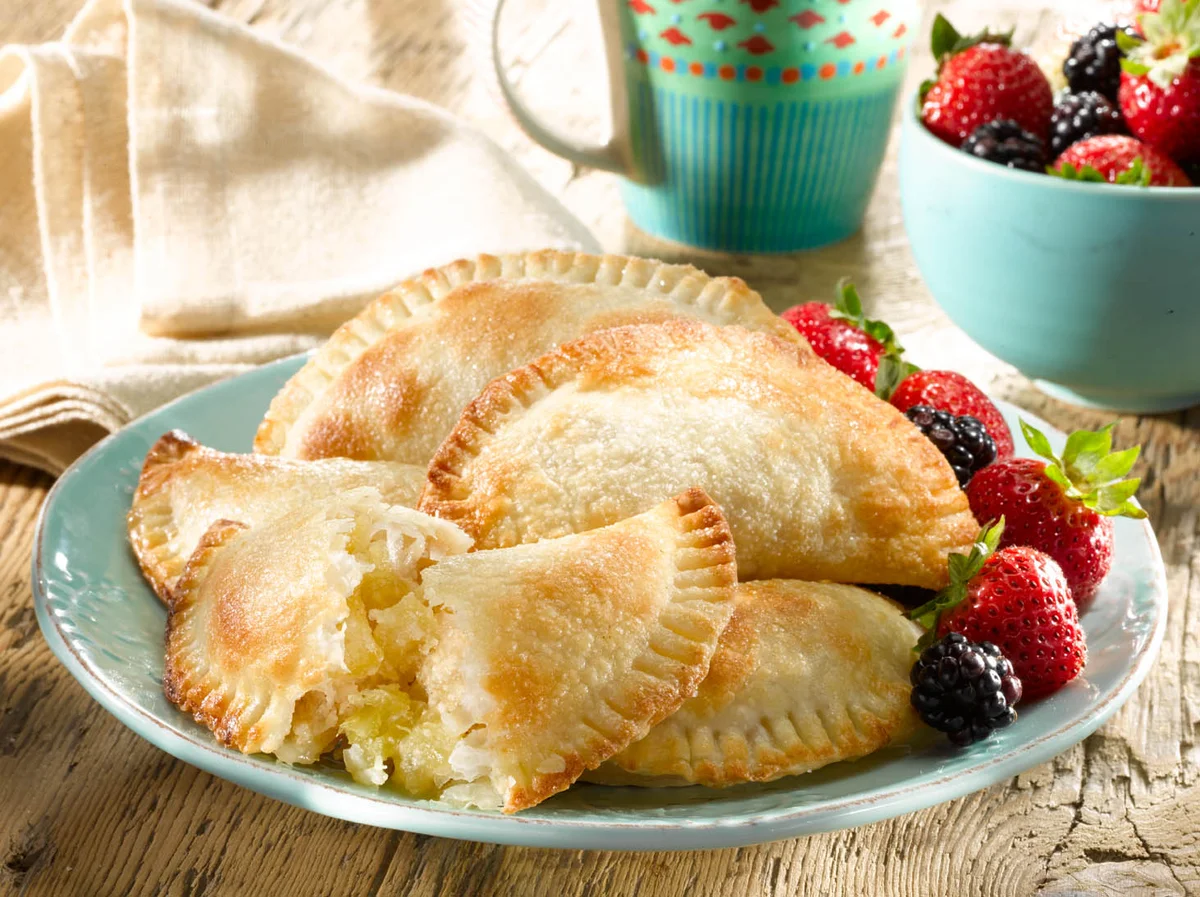
These Mexican-style baked empanadas pair pineapple and sweetened coconut in a cinnamon-and-vanilla filling wrapped in flaky pastry. Make them for a sweet breakfast or an easy snack, served warm or at room temperature.
Ingredients
- 1 canpineapple chunks in syrup, drained and chopped
- 1 cancream of coconut
- 2 tbspsweetened condensed milk
- 160 g (2 cups)sweetened desiccated coconut
- ½ tspvanilla extract
- ¼ tspground cinnamon
- 1 packetpuff pastry empanada discs, thawed
- For rollingplain flour
- 1 egg, lightly beaten with 5 ml (1 tsp) wateregg and water
- To sprinklegranulated sugar
Instructions
- 1
Cook the filling
Put the chopped pineapple in a medium frying pan over medium-high heat. Cook, stirring occasionally, until its liquid has evaporated and the pineapple begins to brown, about 5 minutes. Stir in the cream of coconut and condensed milk and bring to the boil. Lower the heat to medium and simmer, stirring occasionally, until reduced to a thick, light-brown syrup, 7–8 minutes. Mix in the desiccated coconut, vanilla and cinnamon. Transfer the filling to a heatproof bowl, leave until it stops steaming, then refrigerate.
- 2
Fill the pastry
Heat the oven to 220°C (425°F). Lightly flour a work surface and roll out the pastry discs until each is about 1.3 cm (½ inch) wider in diameter. Put 2 tablespoons of chilled filling in the centre of each disc. Brush the edges with beaten egg, fold each disc into a half-moon and press the edges together with a fork. Transfer to a greased baking tray, repeating with the remaining pastry and filling to make 12 empanadas. Brush the tops with beaten egg and sprinkle with sugar.
- 3
Bake until golden
Bake for about 20 minutes, turning the tray after 10 minutes so the empanadas brown evenly. Transfer them to a wire rack and leave to cool until safe to handle. Serve warm or at room temperature.
What are Mexican empanadas?
Empanadas are filled pastries found in many cuisines, and sweet versions are enjoyed in Mexico with fillings such as fruit, pumpkin, cajeta or pastry cream. This version brings together pineapple and coconut, two fruits commonly used in Mexican cooking.
The filling is simmered until thick, then enclosed in flaky puff pastry and baked. Using ready-made pastry discs makes shaping the half-moons more straightforward.
Nutrition and macros by portion
The nutrition label shows one serving as written: 350 calories, 5g protein, 44g carbs, 18g fat.
| Portion | Adjustment | kcal | Protein | Carbs | Fat |
|---|---|---|---|---|---|
| Lighter | Use less filling | 245 kcal | 4g | 31g | 13g |
| This serving | As written | 350 kcal | 5g | 44g | 18g |
| Hungry | Have two empanadas | 525 kcal | 8g | 66g | 27g |
The pastry and sweetened coconut provide much of the carbohydrate and fat, while the pineapple and condensed milk add further sugars. Protein is modest and comes mainly from the pastry and egg wash. Pair an empanada with plain yoghurt or fresh fruit for a more balanced plate.
Build a thick fruit filling
Pineapple: Drain and chop it before cooking so the pieces fit neatly inside the pastry. Browning it after its liquid evaporates concentrates its flavour.
Coconut: Cream of coconut and condensed milk create the sweet syrup, while desiccated coconut gives the finished filling body. Cook the mixture until thick enough to stay in place when spooned.
Cool before assembling
Chilled filling: Let the mixture stop steaming, then refrigerate it before filling the pastry. Warm filling can soften the pastry and make the edges harder to seal.
Even portions: Use 2 tablespoons of filling per disc, keeping it in the centre and clear of the edges. This helps the pastry close without the filling squeezing out.
Seal the pastry well
Egg wash: Brush the edges lightly before folding, then press them firmly with a fork. The fork marks both seal the seam and give the empanadas their familiar edge.
Tray spacing: Arrange the empanadas on a greased baking tray with a little space between them. This lets hot air circulate as the pastry puffs.
Look for puffed, golden pastry
Oven cue: Bake at 220°C (425°F) for about 20 minutes, turning the tray after 10 minutes. The pastry should be puffed and golden when ready.
Cooling: Move the pastries to a wire rack after baking. The filling will be very hot, so give them time to cool before serving.
Serve for breakfast or a snack
These pastries are sweet and rich, so they work well with unsweetened tea or coffee. Fresh fruit on the side adds a refreshing contrast.
Serve them warm for a softer, fragrant filling, or at room temperature when packing them for a snack.
Recipe notes & tips
- Chill the filling thoroughly before shaping the pastries.
- Measure 2 tablespoons of filling for each empanada to help make 12 evenly filled pastries.
- Keep the pastry discs covered while working so they do not dry out.
- Brush the edges with only a little egg so they seal cleanly.
- Turn the tray after 10 minutes to encourage even browning.
- Cool the empanadas on a wire rack to help the pastry stay crisp.
Variations
- Add citrus: Stir a little finely grated orange zest into the cooled filling.
- Use fresh pineapple: Cook chopped fresh pineapple until its released liquid evaporates before adding the coconut ingredients.
- Adjust the spice: Add a small pinch of extra cinnamon for a warmer flavour.
- Make smaller pastries: Use smaller pastry rounds and reduce the filling in each one.
- Serve with yoghurt: Add plain yoghurt on the side for a tangy contrast.
Common mistakes to avoid
- Filling still warm: Chill it first so it does not soften the pastry.
- Too much filling: Stick to 2 tablespoons so the edges can close securely.
- Filling on the edge: Keep the pastry rim clear so the egg wash can help seal it.
- Loose seams: Press all the way around with a fork to reduce leaks during baking.
- Skipping the tray turn: Rotate the tray after 10 minutes for more even browning.
- Serving straight from the oven: Let the pastries cool until safe to handle because the filling retains heat.
How to store
The cooked filling can be kept covered in the refrigerator for up to 1 week. Store baked empanadas in an airtight container in the refrigerator and reheat in an oven until warmed through to help restore the pastry's crispness.
Frequently asked questions
Can I make the filling ahead?
Yes. The filling can be covered and refrigerated for up to 1 week. Chill it before assembling the empanadas.
How do I know when the filling is thick enough?
It should reduce to a thick, light-brown syrup after 7–8 minutes of simmering. It should be spoonable rather than runny.
Can I serve these at room temperature?
Yes. The recipe serves them either warm or at room temperature.
Why is my filling leaking?
The pastry may be overfilled, or the edges may not be firmly sealed. Use 2 tablespoons of filling and press the seam closed with a fork.
Can I use fresh pineapple instead of canned?
Yes. Cook the chopped pineapple until its liquid evaporates and the pieces begin to brown, as directed for the canned fruit.
Cook it from the original
This recipe comes from goya.com. Their page has the author’s own photos, notes and tips — the best place to cook it from.
Open the recipe on goya.com