
Marinated Chicken
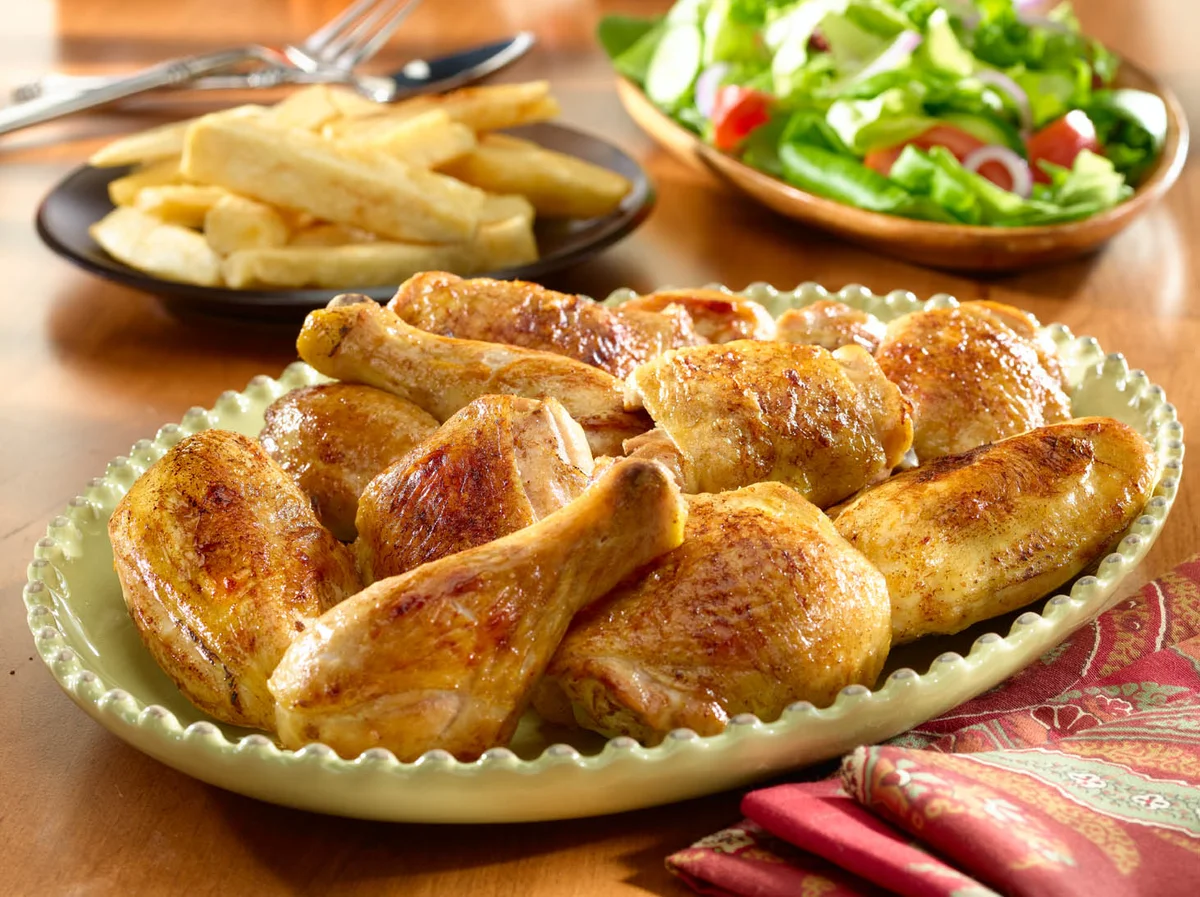
Chicken pieces soak up lemon, olive oil and peppery Adobo before baking until the skin is crisp and the meat is cooked through. The short ingredient list makes this an easy weeknight main that is also well suited to a shared table.
Ingredients
- 8 pieces, about 1.36 kg (3 lb)bone-in, skin-on chicken pieces (breasts, legs and/or thighs)
- 120 ml (½ cup)GOYA® Lemon Juice
- 120 ml (½ cup)GOYA® Extra Virgin Olive Oil
- 2 tspGOYA® Adobo All-Purpose Seasoning with Pepper
Instructions
- 1
Marinate the chicken
In a large lidded container or zip-top bag, combine the chicken, lemon juice, olive oil and Adobo. Toss until the pieces are fully coated, then refrigerate for at least 2 hours or up to 24 hours.
- 2
Bake until crisp
Heat the oven to 204°C (400°F). Strain the chicken and discard the marinade. Arrange the pieces skin-side up on a foil-lined baking sheet and bake for about 25 minutes, until the skin is golden and crisp and the chicken is cooked through; a quick-read thermometer should show 74°C (165°F).
- 3
Rest before serving
Move the chicken to a serving dish and let it rest for 5–10 minutes.
What is marinated chicken?
Marinated chicken is a broad, practical way to season chicken before cooking; this recipe does not specify a particular regional tradition. Its version uses lemon juice, olive oil and Adobo, then oven-bakes bone-in pieces for a crisp-skinned finish.
The combination is simple to prepare ahead: the chicken can marinate for a few hours or overnight, making the final cooking step straightforward.
Nutrition and macros by portion
The nutrition label shows one serving as written: 570 calories, 39g protein, 1g carbs, 45g fat.
| Portion | Adjustment | kcal | Protein | Carbs | Fat |
|---|---|---|---|---|---|
| Lighter | Smaller chicken piece | 399 kcal | 27g | 1g | 31g |
| This serving | As written | 570 kcal | 39g | 1g | 45g |
| Hungry | Add another chicken piece | 855 kcal | 59g | 2g | 68g |
The chicken supplies most of the protein, while the olive oil contributes most of the fat; the lemon juice adds very little carbohydrate. Pair a piece with vegetables and a moderate serving of rice or potatoes to make a balanced plate.
Three ingredients in the marinade
Lemon juice: its acidity gives the marinade a bright flavour. Keep within the stated 2-to-24-hour marinating window.
Olive oil: it helps coat the chicken evenly and carries the seasoning across the surface.
Adobo: the all-purpose seasoning with pepper supplies the recipe's savoury, peppery note, so no extra seasoning is specified.
Marinating safely
Coating: turn or toss the pieces until the marinade reaches all sides, then cover the container or seal the bag. Keep the chicken refrigerated throughout the marinating time.
After marinating: strain the chicken and discard the used marinade as directed. Do not use it as a serving sauce.
Getting crisp skin
Arrange the chicken skin-side up on the foil-lined baking sheet. Leaving the pieces with their skin exposed gives it the best chance to turn golden and crisp in the oven.
Doneness: the recipe gives about 25 minutes as a guide, but check that the thickest part reaches 74°C (165°F) on a quick-read thermometer.
Timing and piece size
The recipe gives a baking time of about 25 minutes, but the pieces may differ in size and type. Use the temperature check rather than relying on time alone.
The hands-on method is short, while marinating takes at least 2 hours. Factor that chilling time into your plan.
What to serve with it
Serve the chicken with a simple vegetable side, such as roasted vegetables or a green salad, for freshness alongside the rich, savoury pieces.
Rice, potatoes or bread can round out the meal and make use of the juices on the serving plate.
Recipe notes & tips
- Use a container large enough to coat all the chicken without packing the pieces tightly.
- Turn the chicken once during marinating if it is not fully covered.
- Line the baking sheet with foil as directed for easier clean-up.
- Place the pieces skin-side up and avoid covering them while baking.
- Check the thickest part of the chicken with a quick-read thermometer.
- Allow the cooked chicken to rest for 5–10 minutes before serving.
Variations
- Choose mixed cuts: Use a combination of breasts, legs and thighs as listed, and check each piece for doneness.
- Use all thighs: Choose bone-in, skin-on thighs for a batch with consistent cuts.
- Use all legs: Bake drumsticks instead, checking their thickest parts for the stated safe temperature.
- Adjust the marinade time: Marinate for at least 2 hours when planning ahead is limited, or up to 24 hours.
- Serve with herbs: Add fresh herbs at the table for a fresh finishing note.
Common mistakes to avoid
- Marinating at room temperature: Keep the chicken refrigerated for the full marinating period.
- Leaving chicken in the marinade too long: Stop at 24 hours, as specified.
- Using the marinade as a sauce: Discard it after straining the chicken.
- Placing the skin down: Set the chicken skin-side up so it can brown and crisp.
- Relying only on the timer: Check for 74°C (165°F) in the thickest part.
- Skipping the rest: Let the chicken stand for 5–10 minutes before serving.
How to store
Refrigerate leftover chicken in a covered container within 2 hours and use within 3–4 days. Reheat until steaming hot throughout; an oven can help restore some crispness to the skin.
Frequently asked questions
How long should I marinate the chicken?
Marinate it in the refrigerator for at least 2 hours and no more than 24 hours.
Can I use different chicken pieces?
Yes. The recipe allows breasts, legs and/or thighs, all bone-in and skin-on. Check each piece for doneness, as sizes and cuts can vary.
What temperature should the chicken reach?
The recipe specifies 74°C (165°F) on a quick-read thermometer. Check the thickest part of the meat.
Can I use the leftover marinade?
No. Strain the chicken and discard the used marinade, as the method directs.
Can I prepare the chicken the night before?
Yes, provided it stays refrigerated and the total marinating time does not exceed 24 hours.
Why is my chicken skin not crisp?
Arrange the pieces skin-side up and leave the skin exposed while baking. The recipe aims for golden, crisp skin, but the exact result can vary with the pieces and oven.
Cook it from the original
This recipe comes from goya.com. Their page has the author’s own photos, notes and tips — the best place to cook it from.
Open the recipe on goya.com