
Island-style fish
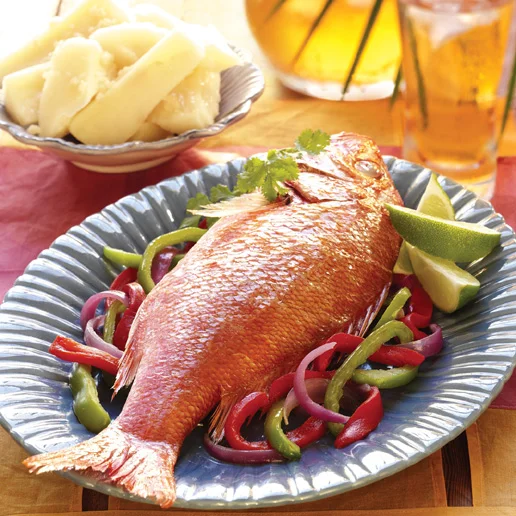
Firm white fish is briefly seared, then gently simmered with peppers, onion, vinegar and tomato. It is a straightforward Caribbean-style supper that lets the mild fish take on the flavour of the seasoned sauce.
Ingredients
- 454 gsnapper fillets, or any other firm white fish fillets
- to tasteAdobo seasoning with pepper
- 30 mlextra-virgin olive oil
- 1 smallred onion, thinly sliced
- 1 smallgreen pepper, thinly sliced
- 1 tspminced garlic
- ½red pepper
- 1 tbspcider vinegar
- ½ tspAdobo seasoning with pepper
- 1 tsptomato purée
- 120 mlwater
Instructions
- 1
Season the fish
Season the fish fillets with Adobo.
- 2
Briefly fry
Heat the oil in a large frying pan over a medium-high heat. Fry the fillets for 1 minute on each side, then transfer them to a plate.
- 3
Cook the vegetables
Add the remaining ingredients to the pan and stir. Cook until the mixture boils, then lower the heat, cover and bring it back to a gentle simmer for 5 minutes.
- 4
Finish the fish
Return the fish to the pan. Cover and simmer until cooked through, about 3–5 minutes.
What is island-style fish?
This is a simple Caribbean-style fish dish, cooked in a pan with onion, peppers, vinegar and tomato. The recipe’s mild white fish provides a clean base for the savoury, tangy sauce.
The method makes the most of a short cook: sear the fish, simmer the vegetables and sauce, then finish the fish gently in the pan. The supplied recipe does not name a more specific regional origin.
Nutrition and macros by portion
The nutrition label shows one serving as written: 220 calories, 25g protein, 6g carbs, 10g fat.
| Portion | Adjustment | kcal | Protein | Carbs | Fat |
|---|---|---|---|---|---|
| Lighter | Use less olive oil | 154 kcal | 18g | 4g | 7g |
| This serving | As written | 220 kcal | 25g | 6g | 10g |
| Hungry | Serve with extra rice | 330 kcal | 38g | 9g | 15g |
The fish supplies most of the protein, while the olive oil contributes most of the fat. The vegetables and water-based sauce provide relatively modest amounts of carbohydrate; serve the fish with rice or another starch if you want a more filling plate, or add extra vegetables for a lighter balance.
Choosing the fish
Firm fillets: Snapper is suggested, but another firm white fish works too. Similar thickness helps the pieces cook at roughly the same rate.
Even portions: If the fillets vary greatly in size, keep an eye on the thinner ones during the final simmer and remove them as soon as they are cooked.
Building the sauce
Aromatics: Red onion, green pepper, red pepper and garlic give the pan sauce its savoury vegetable base. Slice the vegetables thinly so they soften during the short cooking time.
Tang and depth: Cider vinegar brings acidity, while tomato purée adds a rounded savoury note. Water loosens the mixture into a sauce that can simmer around the fish.
Getting the sear right
Hot pan: Heat the oil over medium-high before adding the fish. The brief 1-minute sear on each side adds colour, but the fillets are not meant to cook through at this stage.
Gentle handling: Fish can break apart easily, so turn it carefully and move it to a plate while the vegetables cook.
Knowing when it is done
Sauce first: Once the remaining ingredients boil, lower the heat and simmer them covered for 5 minutes as directed. Keep the heat gentle when the fish goes back into the pan.
Fish cue: The fillets are ready when the centre is opaque and flakes easily. The stated final simmer is about 3–5 minutes, though thickness affects the timing.
Serving the fish
Rice: Serve with rice to catch the tomato-and-vinegar sauce and make the meal more substantial. Spoon plenty of the softened peppers and onion over the fish.
Fresh side: A simple green salad or steamed vegetables can balance the rich, savoury sauce without competing with it.
Recipe notes & tips
- Pat the fish dry before seasoning so it sears rather than releases excess moisture.
- Season the fish with Adobo to taste, since the recipe does not specify an amount for the first seasoning.
- Cut the vegetables to a similar thickness so they soften evenly.
- Keep the pan at a gentle simmer once the fish is added to help the fillets stay intact.
- Check the fish at the lower end of the 3–5-minute cooking range if the fillets are thin.
Variations
- Choose another fish: Use a similarly firm white fish in place of snapper.
- Add heat: Include a little chilli with the peppers for a spicier sauce.
- Use fresh herbs: Finish with chopped coriander or parsley for a fresh accent.
- Serve with rice: Spoon the sauce over plain rice to make a fuller meal.
- Add extra vegetables: Include more sliced pepper or onion while keeping the same simmering method.
Common mistakes to avoid
- Crowding the pan: The fish may sear unevenly; cook in batches if the fillets do not fit comfortably.
- Over-frying the fish: It only needs 1 minute per side at first; it finishes cooking in the sauce.
- Boiling hard: A vigorous boil can break up the fillets; lower the heat for a gentle simmer.
- Skipping the doneness check: Fish thickness varies, so check that the centre is opaque and flakes easily.
- Adding too much seasoning: Adobo can be salty, so season to taste rather than adding it freely.
How to store
Refrigerate leftovers in a covered container for up to 2 days. Reheat gently in a covered pan over low heat until hot throughout, adding a splash of water if the sauce has thickened.
Frequently asked questions
Can I use frozen fish?
Yes, thaw it fully and pat it dry before seasoning and searing. Excess water can prevent the fish from browning.
How can I tell when the fish is cooked?
The centre should look opaque and the flesh should flake easily. Check the thickest part, as cooking time depends on the size of the fillets.
Can I make the sauce ahead?
You can cook the vegetable sauce ahead and refrigerate it, then reheat it and add the fish shortly before serving. The fish is best cooked just until done.
What can I serve with it?
Rice is a natural match for the sauce. Salad or steamed vegetables also work well alongside the fish.
Can I leave out the tomato purée?
You can, although the sauce will have less tomato depth. Keep the other ingredients and cooking method as written.
Cook it from the original
This recipe comes from goya.com. Their page has the author’s own photos, notes and tips — the best place to cook it from.
Open the recipe on goya.com