
Spiced eggplant katsu sandos
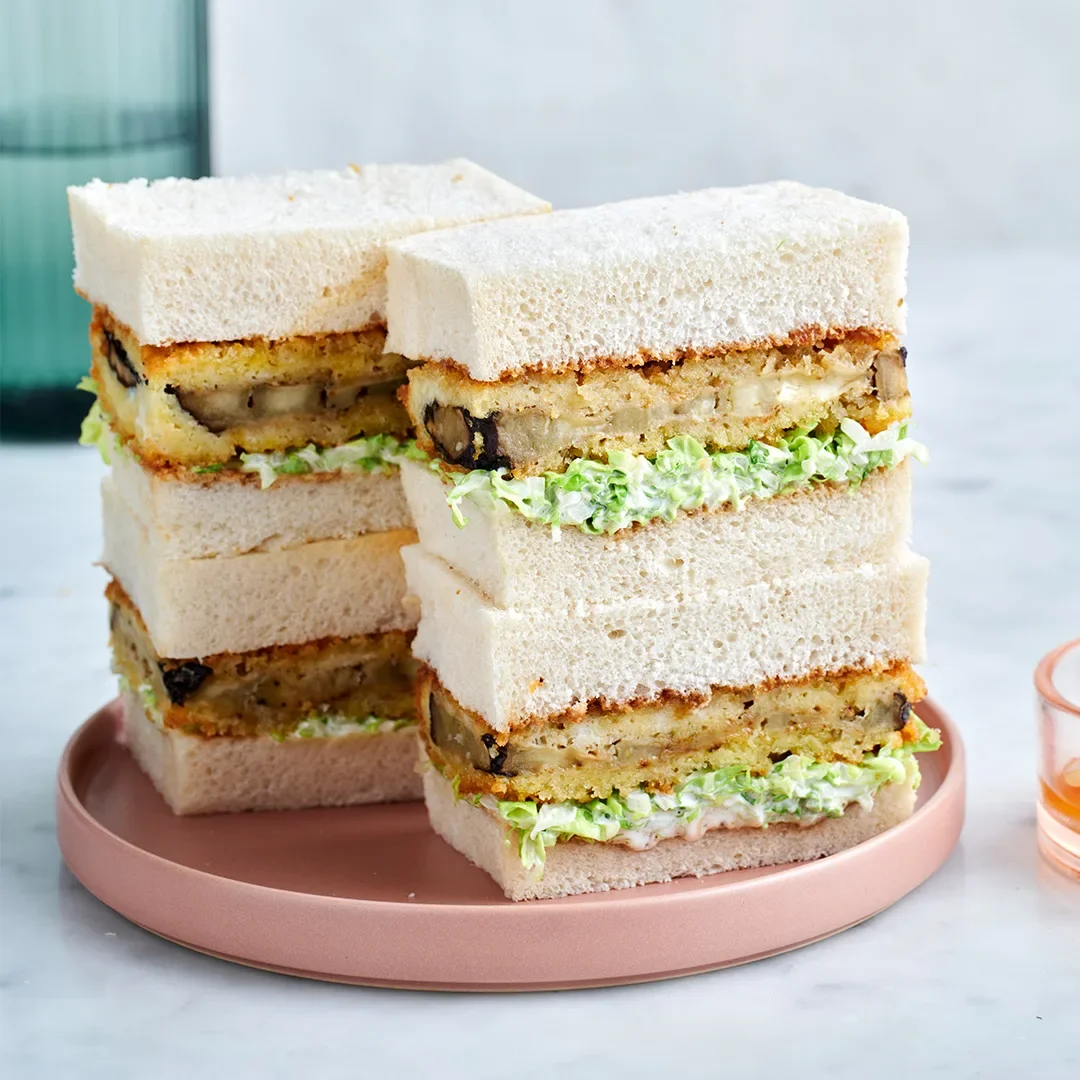
These Japanese-inspired eggplant katsu sandos layer spiced, crisp-coated eggplant with creamy wombok slaw between thick slices of white bread. They make a satisfying vegetarian lunch, with Japanese pickles adding a sharp, crunchy contrast.
Ingredients
- 1 (300 g), cut into 1.5 cm-thick sliceseggplant
- For drizzling and shallow-fryingvegetable oil
- To tasteshichimi togarashi
- 80 gfinely shredded wombok
- 75 g (¼ cup)Kewpie mayonnaise
- 35 g (¼ cup)plain flour
- 3eggs
- 200 gpanko crumbs
- 2 tbsptonkatsu sauce
- 8 thick sliceswhite sandwich bread
- To servemixed Japanese pickles
- To tastesalt
Instructions
- 1
Roast the eggplant
Heat the oven to 220°C and line a large oven tray with baking paper. Drizzle the eggplant with oil, sprinkle both sides with shichimi togarashi and season with salt. Arrange in one layer and roast for 20 minutes, until just cooked. Leave to cool.
- 2
Mix the slaw
While the eggplant roasts, combine the wombok and mayonnaise in a bowl. Season to taste.
- 3
Coat and fry
Put the flour in one shallow bowl and season with salt. Whisk the eggs in a second shallow bowl, then put the panko in a third. Dust the eggplant in flour and shake off the excess, dip it in egg, then turn it in the panko until coated. Heat 3 cm of oil in a large frying pan over medium-high heat. When hot, fry the eggplant, turning halfway, for about 1 minute per side until golden. Drain on paper towel.
- 4
Build the sandos
Spread a little tonkatsu sauce over each slice of bread. Top 4 slices with the wombok salad and eggplant, then close with the remaining bread. Trim off the crusts, cut each sandwich in half and serve with mixed Japanese pickles.
What are eggplant katsu sandos?
A sando is a Japanese-style sandwich, often made with soft white bread and a neatly layered filling. Katsu refers to a breaded cutlet; here, eggplant takes the place of meat.
This version pairs spiced eggplant and crisp panko with tonkatsu sauce and creamy wombok slaw. The pickles bring a tangy contrast to the rich, crunchy filling.
Nutrition and macros by portion
The nutrition label shows one serving as written: 630 calories, 18g protein, 77g carbs, 27g fat.
| Portion | Adjustment | kcal | Protein | Carbs | Fat |
|---|---|---|---|---|---|
| Lighter | Use less mayonnaise | 441 kcal | 13g | 54g | 19g |
| This serving | As written | 630 kcal | 18g | 77g | 27g |
| Hungry | Add another sandwich half | 945 kcal | 27g | 116g | 41g |
The bread and panko provide most of the carbohydrates, while the frying oil and Kewpie mayonnaise contribute much of the fat. Eggplant and the three eggs used for the coating contribute some protein, though the amount per sandwich depends on how much coating adheres. Serve with extra wombok or another fresh vegetable to round out the plate.
Why roast before frying?
Roasting the 1.5 cm slices for 20 minutes cooks the eggplant before it goes into the coating. Let it cool before breading so it is easier to handle.
Shichimi togarashi seasons the eggplant directly, giving the filling its spice before the sauce and slaw are added.
Set up the coating station
Flour: a light dusting helps the egg adhere; shake away any excess so the coating does not become pasty.
Egg: dip each floured slice fully, letting excess egg drip off before coating.
Panko: turn the slices until the crumbs cover them well for a crisp, textured finish.
Fry for a golden crust
Heat 3 cm of oil over medium-high heat and fry the coated eggplant for about 1 minute on each side. The recipe gives a short frying time, so keep an eye on the colour and turn the slices once they are golden.
Drain the cooked slices on paper towel before assembling. This helps remove excess surface oil and keeps the bread from getting as greasy.
Balance the filling
Wombok: finely shredding it makes the slaw easy to layer and bite through. Coat it with mayonnaise just before building the sandwiches.
Tonkatsu sauce: spread a little on each bread slice so the flavour reaches both sides of the filling without overwhelming the eggplant.
Pickles: serve them alongside rather than inside the sandwich, as directed, for a sharp counterpoint to the creamy slaw.
Assemble just before serving
Keep the eggplant, slaw and bread separate until you are ready to eat; the crumb coating stays crisper this way. Trim the crusts and halve the sandwiches for the classic sando-style presentation.
Recipe notes & tips
- Cut the eggplant into even 1.5 cm slices so they roast at a similar rate.
- Cool the roasted eggplant before dipping it in the flour, egg and panko.
- Use three separate shallow bowls to keep the coating process tidy.
- Fry in batches if needed so the slices have room to turn in the pan.
- Drain the fried eggplant on paper towel before it goes into the sandwiches.
- Assemble the sandos shortly before serving to help preserve the crisp coating.
Variations
- Adjust the spice: use more or less shichimi togarashi to suit your preference.
- Change the slaw: season the wombok and mayonnaise to taste before layering.
- Try another bread: use a different soft sandwich bread if white bread is unavailable.
- Serve extra pickles: offer more mixed Japanese pickles on the side.
- Add more sauce: serve additional tonkatsu sauce alongside for dipping.
Common mistakes to avoid
- Skipping the cooling step: hot eggplant can be awkward to coat; let it cool after roasting.
- Leaving excess flour on: a thick layer can make the coating uneven; shake off the surplus.
- Frying before the oil is hot: the panko may absorb oil rather than crisp; wait until the oil is hot.
- Overcrowding the pan: slices may be harder to turn evenly; fry them in batches if needed.
- Assembling too early: moisture can soften the crumb; build the sandwiches close to serving.
How to store
These sandwiches are best assembled and eaten straight away, as the coating softens over time. Refrigerate leftover cooked eggplant and slaw separately in covered containers and use within 2 days; reheat the eggplant in an oven until hot, then assemble with fresh bread.
Frequently asked questions
Can I make the eggplant ahead?
You can roast it ahead and leave it to cool, then coat and fry it closer to serving. The recipe does not give a make-ahead storage time for roasted eggplant.
How do I know when the eggplant is cooked?
After 20 minutes at 220°C, it should be just cooked. It will also be fried briefly after coating, until the panko is golden.
Can I bake the coated eggplant instead of frying it?
The method specifies shallow-frying in 3 cm of oil, which gives the coating its golden finish. It does not include oven instructions for the coated slices.
What is wombok?
Wombok is Chinese cabbage, also known as napa cabbage. Finely shred it for the slaw so it layers neatly in the sandwich.
What can I use instead of Kewpie mayonnaise?
The recipe calls for Kewpie mayonnaise. You could use another mayonnaise, though the flavour will differ.
Do I need to remove the bread crusts?
The method trims them off before serving. You can keep them if you prefer, but that changes the specified sando-style finish.
Cook it from the original
This recipe comes from gourmettraveller.com.au. Their page has the author’s own photos, notes and tips — the best place to cook it from.
Open the recipe on gourmettraveller.com.au