
Ultimate fish sandwich
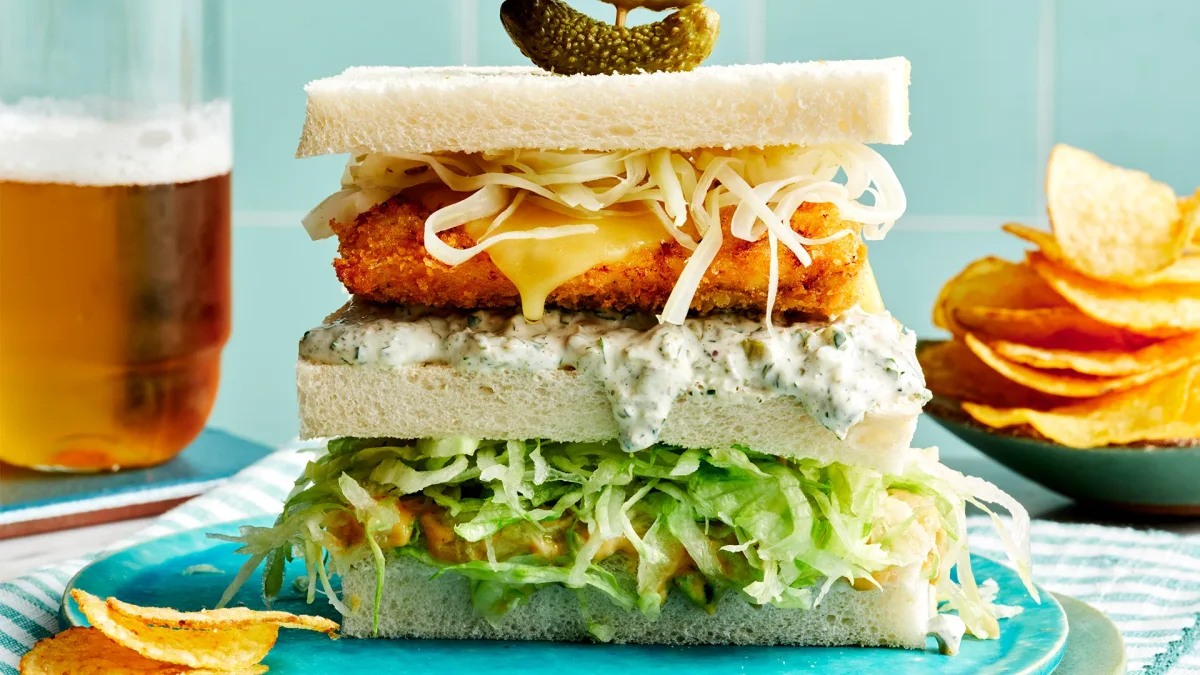
This Australian fish-shop-inspired sandwich layers crisp, pepperberry-crusted whiting with cheese, lettuce, pickled fennel and two punchy sauces. It takes a little planning for the brine and pickles, but the fish fries quickly and the result makes a generous summer meal.
Ingredients
- 8large sand whiting fillets (about 100 g each), skin on and pin-boned
- 600 mlbuttermilk
- 50 g (⅓ cup)plain flour
- 2 tspcoarsely crushed pepperberries
- 2 tspsalt
- 2eggs, lightly beaten
- 90 g (1½ cups)panko crumbs
- for shallow fryingvegetable oil
- 4slices Jack cheese, halved on an angle
- 12slices thick white bread, crusts removed and halved into fingers
- ½iceberg lettuce, thinly shaved
- to servepotato chips
- to garnishcornichons and guindilla (pickled chillies)
- 1½ tbspwhite wine vinegar
- 2 tspcaster sugar
- ¼ tsproasted fennel seeds, coarsely crushed
- ¼ tspsea salt flakes
- 1fennel, thinly sliced
- 60 g (¼ cup)Dijon mustard
- 1 tbsphoney
- 2 tsphot sauce
- 2 tsptarragon, finely chopped
- 75 g (¼ cup)mayonnaise
- 70 g (¼ cup)Greek-style yoghurt
- 8cornichons, finely chopped
- 1 tbspcapers, finely chopped
- ½ smallgolden shallot, finely chopped
- 1½ tbsp eachdill and parsley, finely chopped
- 1 tbspfinger lime pearls
- 1 tsp, or to tasteground lemon myrtle
Instructions
- 1
Brine the fish
Slash the skin of the fillets and cut them in half crossways. Put them in a large bowl, pour over the buttermilk to cover, then cover the bowl and refrigerate for 2 hours.
- 2
Make the accompaniments
For the pickled fennel, stir the vinegar, sugar, fennel seeds and ¼ tsp sea salt flakes together until the sugar dissolves. Toss in the fennel and leave for 15 minutes, tossing from time to time; drain before serving. For the spicy honey mustard, mix all its ingredients in a bowl. For the tartare, mix all its ingredients together and season to taste.
- 3
Crumb the fish
Drain the fish and pat it dry with paper towel. In a shallow dish, mix the flour, pepperberries and 2 tsp salt. Set the beaten egg and panko in separate shallow bowls. Coat each piece of fish in the flour mixture, shaking off the excess, then dip it in egg and press it into the panko until evenly coated. Arrange on a baking-paper-lined tray and refrigerate until ready to cook.
- 4
Fry until golden
Heat 1 cm of oil in a large frying pan over medium-high heat until shimmering. Fry the fish in batches, turning once, for 1 minute per side, until golden and just cooked through; take care as the hot oil may spit. Drain on a rack set over a paper-towel-lined tray, then immediately top each piece with cheese so it melts.
- 5
Assemble the sandwiches
Set one-third of the prepared bread pieces on a clean work surface. Spread with spicy honey mustard and add lettuce. Top with another layer of bread, spread that layer with tartare, then add the fish and pickled fennel. Close with the remaining bread. Garnish each with a cornichon and guindilla secured with a cocktail pick, and serve with potato chips.
What is an Australian fish sandwich?
This sandwich takes its cue from the fish-shop tradition of fried fish served with bread and familiar salty, tangy extras. Here, sand whiting is paired with Australian pepperberries, lemon myrtle and bright finger lime pearls.
The combination works because the crisp fish and soft white bread are balanced by crunchy lettuce, sharp pickles and two contrasting sauces. Its layered, finger-shaped bread also makes it easy to serve as a substantial shared meal.
Nutrition and macros by portion
The nutrition label shows one serving as written: 850 calories, 48g protein, 91g carbs, 33g fat.
| Portion | Adjustment | kcal | Protein | Carbs | Fat |
|---|---|---|---|---|---|
| Lighter | Less oil and chips | 595 kcal | 34g | 64g | 23g |
| This serving | As written | 850 kcal | 48g | 91g | 33g |
| Hungry | Add extra fish | 1275 kcal | 72g | 137g | 50g |
The bread and panko provide much of the carbohydrate, while the fish supplies most of the protein. Frying oil, mayonnaise and cheese contribute much of the fat, and the bread, pickles, sauces and seasoning can add a notable amount of sodium. For a more balanced plate, serve a moderate amount of chips and add extra lettuce or other fresh vegetables.
Why use buttermilk?
The fish sits in buttermilk for 2 hours before it is coated. This brief brine seasons the fillets and gives the flour and crumb a damp surface to cling to.
Drain the fish well and pat it dry before breading. Excess liquid can make the coating patchy or soggy.
Build a crisp coating
Flour first: the pepperberry and salt are mixed into the flour so the seasoning spreads across the fish. Shake off any surplus before dipping, so the egg can form an even layer.
Egg next: let excess egg drip away before pressing the fish into the panko. Press gently on all sides to help the crumbs adhere without crushing their texture.
Fry in shallow oil
The recipe uses 1 cm of oil in a large pan, heated until it shimmers. Cook the fish in batches rather than crowding the pan, which helps the coating fry instead of turning soft.
The guide is 1 minute per side, until the crumb is golden and the fish is just cooked through. Hot oil can spit, so lower each piece in carefully and keep the pan handle turned in.
Make the sauces and pickle
Quick fennel: the vinegar, sugar and crushed roasted fennel seeds make a lightly sharp pickle in 15 minutes. Toss the slices occasionally so they are coated evenly, then drain them before assembling.
Mustard and tartare: the honey mustard brings heat and sweetness, while the yoghurt-based tartare is savoury with herbs, capers, cornichons and finger lime. Mix both ahead of frying so they are ready when the fish comes out.
Choose bread and toppings
Thick white bread gives the sandwich a soft, familiar fish-shop feel, while removing the crusts and cutting the slices into fingers makes the layers easy to handle. Keep the shaved iceberg lettuce chilled until assembly for a fresh crunch.
Add the pickled fennel after the tartare and fish, then close the sandwich with the final bread layer. Potato chips, cornichons and guindilla complete the salty, tangy serving.
Recipe notes & tips
- Prepare the fennel pickle and both sauces before heating the frying oil.
- Keep the crumbed fillets chilled until the pan is ready.
- Use a rack for draining so the underside of the fish stays crisp.
- Put the cheese on the fish as soon as it leaves the pan to help it melt.
- Drain the pickled fennel before adding it, so the bread does not get wet.
- Assemble the sandwiches just before serving to preserve the crisp coating.
Variations
- Use another white fish: choose firm fillets of similar thickness and adjust frying until just cooked through.
- Change the herbs: swap the dill or parsley for extra tarragon in the tartare.
- Adjust the heat: use less hot sauce in the mustard for a gentler finish.
- Add more crunch: include extra shaved iceberg lettuce in each sandwich.
- Make it without finger lime: leave out the pearls and keep the lemon myrtle for a citrusy, aromatic tartare.
Common mistakes to avoid
- Skipping the drying step: wet fish can make the coating uneven, so pat each fillet thoroughly before breading.
- Leaving excess flour on: a thick dusting can turn pasty, so shake each piece well before dipping in egg.
- Crowding the pan: the fish may cook unevenly, so fry in batches with space around each piece.
- Heating the oil too much: the crumbs can brown before the fish cooks, so use medium-high heat and watch for shimmering oil.
- Draining on a flat plate: trapped steam softens the underside, so use a rack over paper towel.
- Assembling too early: sauce can soften the bread and crumb, so build the sandwiches close to serving.
How to store
Keep leftover fish, sauces and pickled fennel in separate airtight containers in the fridge and use within 2 days. Reheat the fish in an oven or air fryer until hot and crisp; assembled sandwiches are best eaten straight away.
Frequently asked questions
Can I prepare any parts ahead?
Yes. Make the sauces and pickled fennel ahead and refrigerate them separately. The fish can be crumbed and chilled on its tray until it is time to fry.
Can I use a different fish?
Yes, use another firm white fish fillet. Pieces of similar thickness are easiest to cook using the stated 1-minute-per-side guide.
How do I know when the fish is cooked?
The coating should be golden and the fish just cooked through after about 1 minute per side. Thicker pieces may need longer, so check the centre before serving.
Can I bake the crumbed fish instead?
The method is designed for shallow-frying, which gives the panko its crisp coating. Baking is possible, but the texture may differ and the recipe does not specify an oven time or temperature.
What can I use instead of lemon myrtle?
You can leave it out or use a little finely grated lemon zest for a different citrus note. Add it gradually and taste the tartare as you go.
What is guindilla?
Guindilla is a mild pickled chilli often served with Spanish-style tapas. If you cannot find it, use another mild pickled chilli or omit it.
Cook it from the original
This recipe comes from gourmettraveller.com.au. Their page has the author’s own photos, notes and tips — the best place to cook it from.
Open the recipe on gourmettraveller.com.au