
A cheat’s recipe for spinach and ricotta ravioli
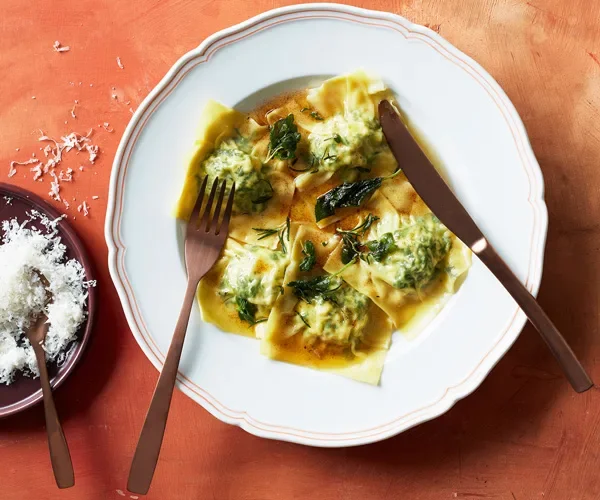
These spinach and ricotta ravioli use egg wonton wrappers as a quick alternative to making pasta dough from scratch. They are filled, boiled until they float and finished with nutty brown butter, sage and lemon.
Ingredients
- 250 gfrozen chopped spinach, defrosted and squeezed to remove excess liquid
- 200 gfirm ricotta, crumbled
- 50 g (2/3 cup)finely grated parmesan, plus extra to serve
- 1/4 tspfreshly grated nutmeg
- For dustingsemolina
- 36egg wonton wrappers
- lemon and sage brown butter
- 80 gchilled unsalted butter, diced
- 16sage leaves
- Juice of 1/2lemon (or to taste)
Instructions
- 1
Mix the filling
Combine the spinach, ricotta, parmesan and nutmeg in a bowl. Season to taste.
- 2
Fill the wrappers
Dust an oven tray with semolina. Lay half the wonton wrappers on a clean work surface and put 1 heaped tsp of filling in the centre of each. Moisten the edges with a little water, cover with the remaining wrappers and press the edges together to seal. Transfer the ravioli to the prepared tray.
- 3
Cook the ravioli
Bring a large saucepan of salted water to the boil and cook the ravioli until they float, about 3 minutes. Lift them out with a slotted spoon and place in warm bowls.
- 4
Make the sauce
Meanwhile, heat a frying pan over high heat. Add the butter and swirl it until foaming and nut brown, about 2 minutes. Take the pan off the heat at once, add the sage and swirl until crisp, 20–30 seconds. Stir in the lemon juice and season to taste. Drizzle over the ravioli and serve with parmesan.
What are spinach and ricotta ravioli?
Ravioli are filled pasta parcels associated with Italian cooking, traditionally made by enclosing a filling in pasta dough. This version takes a shortcut, using egg wonton wrappers instead of homemade pasta.
The spinach, ricotta and parmesan make a savoury, soft filling, while lemon and sage brown butter adds a fragrant, tangy finish. The filled parcels are a useful choice when you want the feel of handmade ravioli without preparing pasta dough.
Nutrition and macros by portion
The nutrition label shows one serving as written: 535 calories, 22g protein, 55g carbs, 25g fat.
| Portion | Adjustment | kcal | Protein | Carbs | Fat |
|---|---|---|---|---|---|
| Lighter | Use less brown butter | 375 kcal | 15g | 39g | 18g |
| This serving | As written | 535 kcal | 22g | 55g | 25g |
| Hungry | Add extra ravioli | 803 kcal | 33g | 83g | 38g |
The wrappers provide most of the carbohydrate, while butter and ricotta contribute much of the fat. Ricotta, parmesan and the wrappers also provide protein; parmesan and salted cooking water can contribute a notable share of the sodium. For a more balanced plate, serve a portion with salad or vegetables.
Why use wonton wrappers?
Wrapper choice: Egg wonton wrappers are thin and ready to fill, so the method skips rolling and cutting pasta dough. Keep them covered while working so their edges do not dry out.
Sealing: A little water helps the top and bottom wrappers stick together. Press around the filling to push out trapped air and close the edges firmly.
Getting the filling right
Spinach: Squeezing out excess liquid matters because a wet filling can make the wrappers soggy and harder to seal. Crumble the ricotta so it combines evenly with the spinach.
Seasoning: Parmesan and nutmeg give the filling savoury depth, but taste it before filling the wrappers and adjust the seasoning as needed. Keep the filling portions modest enough to leave room for sealing.
The brown butter finish
Browning: Swirl the diced butter in the hot pan and watch for it to foam and turn nut brown, as directed. It can darken quickly, so have the sage ready and remove the pan from the heat as soon as the butter reaches that colour.
Sage and lemon: The residual heat crisps the sage leaves after the pan comes off the hob. Add lemon juice afterwards to brighten the buttery sauce.
How to tell when they are done
Floating: Cook the ravioli in boiling salted water until they rise to the surface; the recipe gives about 3 minutes. Lift them out gently with a slotted spoon rather than pouring them into a colander.
Handling: The wrappers are delicate, especially around the seams. Use a large pan and avoid stirring vigorously while the parcels cook.
Serving suggestions
Serve the ravioli straight away in warm bowls, with the brown butter spooned over the top and extra parmesan alongside. A crisp green salad or simply dressed vegetables make a fresh counterpoint to the rich sauce.
Use a slotted spoon to divide any sage leaves and sauce evenly between the portions. The lemon is added to taste, so you can keep the finish subtle or more pronounced.
Recipe notes & tips
- Keep unused wonton wrappers covered as you assemble the ravioli.
- Squeeze the defrosted spinach thoroughly before mixing the filling.
- Use a small amount of water around each wrapper edge to help it seal.
- Press gently around the filling to remove air before closing the seams.
- Have the sage ready before the butter finishes browning, as the next steps happen quickly.
- Warm the serving bowls so the ravioli stay hot while you finish the sauce.
Variations
- Add black pepper: season the filling with freshly ground pepper for extra warmth.
- Use extra lemon: add more lemon juice to the sauce to taste for a brighter finish.
- Try another herb: swap some sage for another herb that pairs well with butter.
- Add greens: serve the ravioli with a side of wilted greens.
- Make smaller parcels: use a little less filling in each wrapper for more delicate ravioli.
Common mistakes to avoid
- Wet spinach: excess liquid can make the filling watery; squeeze the defrosted spinach well.
- Overfilling: crowded wrappers are difficult to seal; use the stated 1 heaped tsp per wrapper.
- Dry edges: wrappers may not stick together; moisten their edges lightly with water.
- Loose seams: water can get inside during boiling; press the edges together firmly.
- Overcooked butter: it can darken too far; take the pan off the heat when it is nut brown.
- Rough handling: delicate parcels can split; lift them gently with a slotted spoon.
How to store
These ravioli are best eaten freshly cooked. If you have leftovers, refrigerate them promptly in a covered container and use within 2 days; reheat gently in a pan with a splash of water or butter, taking care not to break the parcels.
Frequently asked questions
Can I make the ravioli ahead?
You can assemble them shortly before cooking and keep them covered on a tray dusted with semolina. Avoid leaving them uncovered, as the wrappers can dry out.
How do I stop the ravioli from opening?
Do not overfill them, lightly moisten the edges and press firmly around the filling to seal. Removing trapped air also helps the seams stay closed.
How do I know when the ravioli are cooked?
They are ready when they float to the surface; the recipe gives a cooking time of about 3 minutes. Lift one carefully with a slotted spoon.
Can I use fresh spinach?
The recipe specifies frozen chopped spinach. If substituting fresh spinach, cook it first and squeeze out its excess liquid before making the filling.
Can I freeze these ravioli?
The recipe does not specify freezing. For the best texture, cook them fresh rather than freezing the assembled parcels.
What can I serve with them?
A simple salad or vegetables work well alongside the buttery ravioli. Extra parmesan is served with the dish.
Cook it from the original
This recipe comes from gourmettraveller.com.au. Their page has the author’s own photos, notes and tips — the best place to cook it from.
Open the recipe on gourmettraveller.com.au