
Pan Seared Pork Chops (Juicy, Never Dry)
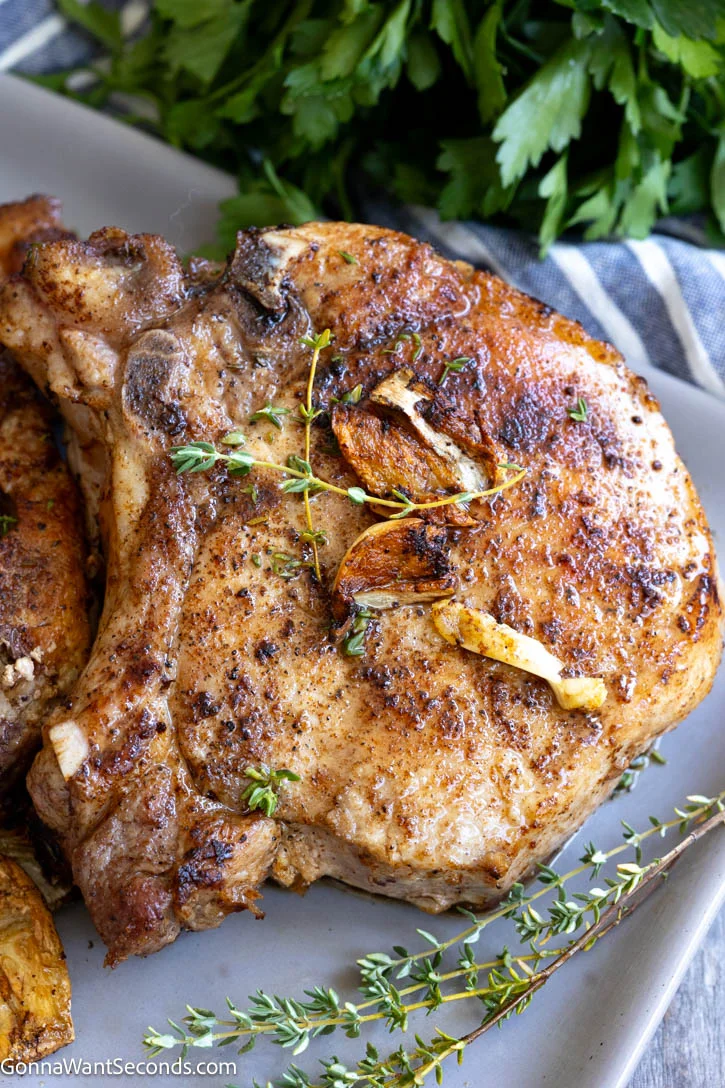
Thick-cut pork chops are seared in a hot pan, then basted with butter, garlic and thyme for a crisp, golden outside and a tender centre. This straightforward stovetop method makes a satisfying main course without needing an oven.
Ingredients
- 4 chops, 3.8 cm thick (1 1/2 inches; bone-in preferred)pork chops
- 5 ml (1 teaspoon)kosher salt
- 5 ml (1 teaspoon)black pepper
- 5 ml (1 teaspoon)garlic powder
- 5 ml (1 teaspoon)paprika
- 2.5 ml (1/2 teaspoon)onion powder
- 5 ml (1 teaspoon), optionalbrown sugar
- 30 ml (2 tablespoons)olive oil
- 28 g (2 tablespoons)butter
- 4–6 clovesfresh garlic, smashed
- 2–3 sprigs, optional but highly recommendedfresh thyme
Instructions
- 1
Dry and season
Pat the pork chops thoroughly dry with paper towels. Season both sides evenly with the salt, pepper, garlic powder, paprika, onion powder and brown sugar, if using. If time allows, leave them at room temperature for 15–20 minutes.
- 2
Heat the skillet
Heat a large skillet, preferably cast iron, over medium-high heat. Add the olive oil and wait until it is hot and shimmering.
- 3
Sear one side
Lay the pork chops in the skillet and leave them undisturbed for 3–5 minutes, until a deep golden crust forms. If a chop sticks, let it cook until it releases naturally.
- 4
Flip and lower
Turn the pork chops over and reduce the heat to medium. Add the butter, smashed garlic and thyme to the pan.
- 5
Baste the chops
Tilt the pan slightly and repeatedly spoon the melted butter over the pork chops. Cook for another 3–6 minutes, depending on their thickness.
- 6
Check the temperature
Remove the pork chops when their internal temperature reaches 140–145°F (60–63°C). The temperature is expected to rise to 145–150°F (63–66°C) while they rest.
- 7
Rest before serving
Transfer the pork chops to a plate and let them rest for 5–10 minutes before serving.
What are pan-seared pork chops?
Pork chops are cuts from the loin, cooked here in a skillet rather than in the oven. This is a familiar American home-cooking approach: season the meat, brown it in a hot pan and finish it with butter and aromatics.
The thick chops give the outside time to develop a crust while the middle cooks through. Garlic, thyme and butter add savoury flavour without taking attention away from the pork.
Nutrition and macros by portion
The nutrition label shows one serving as written: 335 calories, 29g protein, 3g carbs, 22g fat.
| Portion | Adjustment | kcal | Protein | Carbs | Fat |
|---|---|---|---|---|---|
| Lighter | Use less pan butter | 234 kcal | 20g | 2g | 15g |
| This serving | As written | 335 kcal | 29g | 3g | 22g |
| Hungry | Serve with extra potatoes | 503 kcal | 44g | 5g | 33g |
Most of the protein comes from the pork chops, while the olive oil and butter supply much of the fat. The small amount of brown sugar contributes a little carbohydrate, alongside the seasoning. Pair a chop with vegetables and a measured serving of potatoes or another starch for a balanced plate.
Choosing the chops
Thickness: Chops about 3.8 cm (1 1/2 inches) thick are less likely to overcook during searing than thin cuts. Bone-in chops are preferred in this recipe.
Dry surface: Patting the meat dry helps it brown rather than steam in the pan. Season both sides evenly so the flavour is distributed.
Building the crust
Hot pan: Let the oil become hot and shimmering before adding the chops. A well-heated skillet helps form the golden exterior.
Hands off: Leave the first side alone for 3–5 minutes. If the meat sticks, give it more time instead of forcing it loose; it should release once the crust has formed.
Basting with butter
Aromatics: Add the butter, smashed garlic and thyme after flipping the chops and lowering the heat to medium. This timing gives the garlic and herbs a chance to flavour the butter as the pork finishes cooking.
Spoon steadily: Tilt the pan and spoon the melted butter over the chops repeatedly. Keep the pan at medium heat so the butter and garlic do not scorch.
Knowing when they are done
Temperature: Check the thickest part of a chop with a thermometer, avoiding the bone. The recipe calls for removing the chops at 140–145°F (60–63°C), with the temperature expected to rise during resting.
Rest: Leave the chops on a plate for 5–10 minutes before serving. This gives the temperature time to rise as described in the method and lets the meat settle before cutting.
Timing and serving
The cooking times are guides, because the chops’ thickness and the heat of the skillet affect how quickly they cook. Use the thermometer reading alongside the stated searing and finishing times.
Serve with potatoes, rice or bread to make the meal more substantial, and add a green vegetable or salad for freshness. Spoon some of the garlicky pan butter over the chops at the table.
Recipe notes & tips
- Dry the chops carefully before seasoning to help the surfaces brown.
- If you have time, let the seasoned chops sit at room temperature for 15–20 minutes.
- Use a large skillet so the chops have room to sear rather than crowding them.
- Wait for a chop to release from the pan before turning it.
- Check the temperature in the thickest part of the meat, away from the bone.
Variations
- Skip the sugar: Leave out the optional brown sugar for a less sweet seasoning.
- Change the herbs: Use another fresh herb in place of thyme if preferred.
- Add extra garlic: Use the upper end of the 4–6-clove range for a stronger garlic flavour.
- Adjust the paprika: Use smoked paprika for a deeper, smoky note.
- Use boneless chops: Cook boneless chops with the same method, checking their temperature carefully as they may cook at a different rate.
Common mistakes to avoid
- Damp chops: They brown less readily; pat them thoroughly dry before seasoning.
- Moving too soon: The chops may stick before a crust forms; leave them undisturbed until they release.
- Crowding the skillet: The chops may not sear evenly; use a large pan with room for them.
- Burning the butter: The garlic and butter can scorch over excessive heat; lower the burner to medium after flipping.
- Guessing doneness: Cooking time varies with thickness; check the internal temperature with a thermometer.
How to store
Refrigerate leftover pork chops in a sealed container for up to 3 days. Reheat gently in a covered pan over low heat until warmed through, taking care not to cook them for longer than necessary.
Frequently asked questions
Can I use boneless pork chops?
Yes. The recipe prefers bone-in chops, but boneless chops can be cooked with the same seasoning and pan method. Check their temperature carefully, since their cooking time may differ.
Do I need a cast-iron skillet?
No, though the recipe prefers one. Use a large, heavy skillet that can be heated over medium-high heat.
Why are my chops sticking to the pan?
They may need more time to form a crust. Leave them in place and try turning them again once they release naturally.
Can I leave out the brown sugar?
Yes. It is optional and is included for subtle caramelisation, so the chops can be made without it.
How do I know when the chops are done?
Use a thermometer in the thickest part, avoiding the bone. The method says to remove them at 140–145°F (60–63°C) and rest them for 5–10 minutes.
Can I prepare the chops ahead?
You can season them and leave them at room temperature for 15–20 minutes if cooking soon. For longer advance preparation, refrigerate them and take them out only when you are ready to cook.
Cook it from the original
This recipe comes from gonnawantseconds.com. Their page has the author’s own photos, notes and tips — the best place to cook it from.
Open the recipe on gonnawantseconds.com