
Feijoada – delicious Brazilian-style beans
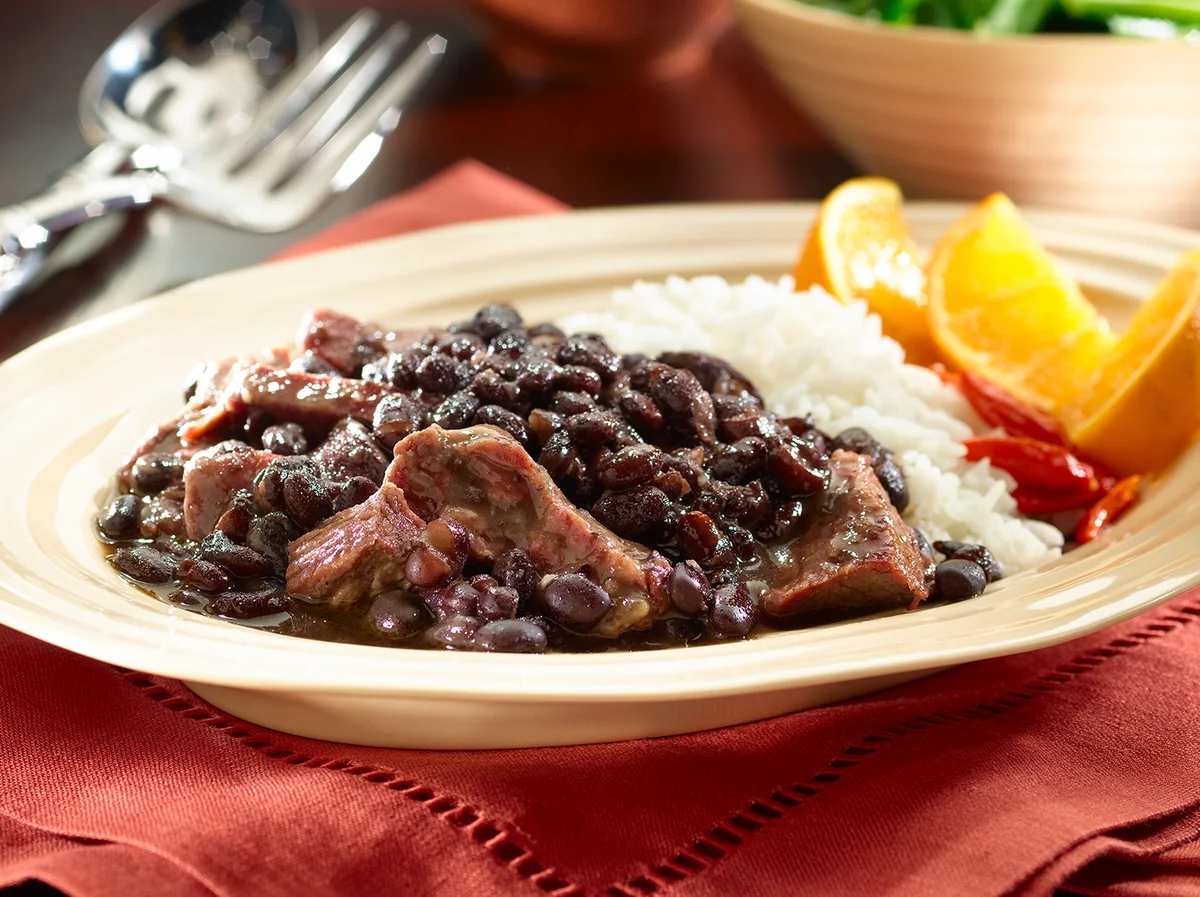
Feijoada is a slow-cooked Brazilian black bean stew with a generous mix of pork, beef and sausage, served with rice and orange. This hearty version uses readily available cuts and makes a large pot for sharing.
Ingredients
- 340 gsalt pork, cut into 1.3 cm cubes
- 1onion, finely chopped
- 1 tablespoonchopped garlic
- 1 envelopebeef-flavoured powdered stock
- 680 gpork ribs, cut into portions of 2 ribs
- 450 gbeef ribs
- 450 gsalt-cured beef, cut into 5 cm pieces
- 1ham hock
- 2bay leaves
- 1 packetblack beans
- 1 packetchorizo
- 570 gextra-long-grain rice
- 2oranges, sliced
- 1 jarhot chilli sauce
Instructions
- 1
Brown the pork
Put the salt pork in a large, heavy-based pot over medium-high heat. Cook, stirring occasionally with a wooden spoon, for about 10 minutes, until its fat has rendered and the pieces begin to brown. Add the onion and garlic and cook for about 10 minutes more, stirring now and then, until softened and starting to colour.
- 2
Simmer the meat
Add the beef stock mix, pork ribs, beef ribs, salt-cured beef, ham hock and bay leaves. Add water and bring it to the boil. Turn the heat to its lowest setting, cover and simmer for about 2 hours, until the rib meat begins to come away from the bones and the cured beef and ham hock are tender when tested with a fork. Skim off and discard foam and excess fat from the surface.
- 3
Cook the beans
Use a slotted spoon or tongs to transfer all the meat to a large bowl and set it aside. Add the black beans and chorizo to the pot. Bring the broth to the boil over high heat, then cover, reduce the heat and simmer for about 2 hours, until the beans are tender.
- 4
Return the meat
Remove and discard the pork and beef rib bones. Cut the meat from the ham hock, discarding its bones and skin, then thickly slice the pork ribs and cured beef. Stir all the meat into the pot with the cooked beans, broth and chorizo. Remove and discard the bay leaves.
- 5
Serve the feijoada
Serve the rice alongside the feijoada, with its ribs, cured beef, ham, chorizo, beans and broth. Finish with orange slices and hot chilli sauce. Serve with farofa.
What is feijoada?
Feijoada is a Brazilian black bean stew traditionally cooked with a variety of meats and served with rice and orange. Its roots are associated with cooking pork cuts together with beans, though the meat selection varies with availability.
This version combines salted, fresh and cured meats with chorizo, giving the beans a rich, savoury broth. Rice, citrus and chilli make a lively contrast to the slow-cooked stew.
Nutrition and macros by portion
The nutrition label shows one serving as written: 820 calories, 52g protein, 75g carbs, 34g fat.
| Portion | Adjustment | kcal | Protein | Carbs | Fat |
|---|---|---|---|---|---|
| Lighter | Less rice, leaner meat | 574 kcal | 36g | 53g | 24g |
| This serving | As written | 820 kcal | 52g | 75g | 34g |
| Hungry | Larger stew and rice portion | 1230 kcal | 78g | 113g | 51g |
The beans and rice provide most of the carbohydrates, while the pork, ribs, cured beef, ham and chorizo contribute protein and much of the fat. Salted meats and powdered stock are also likely to make the stew high in sodium. Serve a moderate helping with orange and add extra vegetables to the plate to balance the meal.
The meat and beans
Salt pork: cooking it first renders fat that flavours the onion and garlic. Because it is already salty, taste the finished broth before adding any extra salt.
Mixed meats: ribs, salt-cured beef and ham hock bring different textures to the pot. The long simmer gives the tougher cuts time to become tender.
Black beans: add them after the meat has simmered, as directed, so they cook in the flavourful broth while the meat is set aside.
Getting the simmer right
Keep the pot at a gentle simmer rather than a rolling boil. A low, steady heat helps the meat soften without making the broth churn vigorously.
The recipe gives about 2 hours for the meat and about 2 hours for the beans. Check tenderness rather than relying on the clock alone, since cuts and beans can take different amounts of time.
Check for tenderness
Meat: the ribs should be starting to pull away from their bones, while the cured beef and ham should yield readily to a fork. If they are still firm, continue simmering and check again.
Beans: they are ready when tender all the way through, not chalky in the centre. Keep them covered as they cook and maintain a gentle simmer.
Finish and serve
Shredding or slicing: remove the bones and ham skin before returning the meat to the pot. Thick slices keep the different meats distinct in each serving.
Rice and orange: serve the stew beside rice, with orange slices and chilli sauce at the table. Farofa is also suggested as an accompaniment.
Plan the cooking time
Allow plenty of time for the two long simmering stages, as well as time to cut and return the meat to the pot. The source does not give a total preparation time.
The recipe makes 12 servings, so it suits a gathering or a batch to portion for later. Keep the rice separate from the stew if you expect leftovers.
Recipe notes & tips
- Use a large, heavy-based pot that can hold the meat and beans comfortably.
- Keep the heat low once the pot reaches a simmer to avoid a vigorous boil.
- Skim foam and excess surface fat during the meat simmer, as directed.
- Taste the broth before seasoning, since several of the meats are salted or cured.
- Cook the rice while the beans finish simmering to help the meal come together.
- Serve the orange and chilli sauce on the side so everyone can adjust their plate.
Variations
- Adjust the chilli: serve the hot sauce separately for diners who prefer a milder bowl.
- Add more orange: offer extra slices at the table for a brighter citrus contrast.
- Choose another sausage: use a smoked sausage in place of chorizo if that is what is available.
- Serve with greens: add a simple side of cooked greens alongside the rice and stew.
- Make it less meaty: use fewer meat varieties and keep the beans as the main part of each serving.
Common mistakes to avoid
- Boiling hard: a rolling boil can agitate the stew; lower the heat once it reaches a boil.
- Rushing the meat: firm ribs need more time; continue simmering until the meat starts to pull from the bones.
- Stopping early on the beans: check that they are tender throughout before serving.
- Leaving bones in: remove rib and ham bones before returning the meat to the pot.
- Oversalting: cured meats and stock mix add salt; taste the broth before adding more.
- Mixing rice into leftovers: store rice separately so it does not soak up all the stew broth.
How to store
Cool leftovers promptly and refrigerate the stew and rice in separate covered containers for up to 3 days. Reheat the stew gently in a saucepan until steaming hot throughout, adding a little water if it has thickened; reheat the rice until piping hot as well.
Frequently asked questions
Can I make feijoada ahead?
Yes. Cook the stew ahead and refrigerate it once cooled. Reheat it gently until steaming hot, and cook or reheat the rice separately.
How do I know when the meat is tender?
The rib meat should begin to come away from the bone, and the cured beef and ham hock should be easy to pierce with a fork.
How do I know when the beans are done?
Taste a few beans: they should be soft throughout, without a firm or chalky centre. Continue simmering if needed.
What can I serve with feijoada?
This recipe pairs it with rice, orange slices, hot chilli sauce and farofa. The orange and chilli can be served on the side.
Can I use a different sausage?
A smoked sausage can stand in for chorizo if needed. The exact flavour will vary, so taste the broth before adding further seasoning.
Can I freeze the leftovers?
The stew can be frozen in airtight portions, ideally without the rice, for up to 3 months. Thaw it in the refrigerator and reheat until steaming hot throughout.
Cook it from the original
This recipe comes from goya.com. Their page has the author’s own photos, notes and tips — the best place to cook it from.
Open the recipe on goya.com