
Mashed potatoes
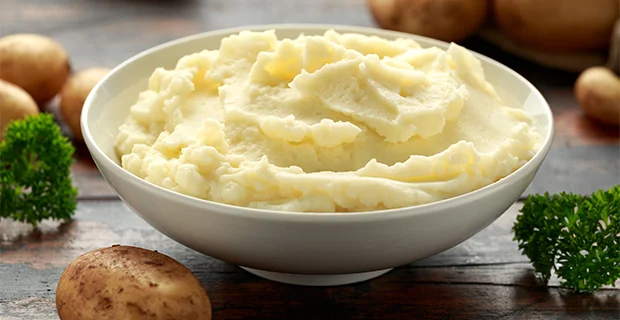
These creamy mashed potatoes are made by boiling peeled potatoes until very tender, then mashing them with warm milk and melted butter. They make a simple, comforting side dish that you can adjust to your preferred texture.
Ingredients
- 1 kgpeeled potatoes, cut into pieces
- to tastesea salt
- as neededmilk
- as neededbutter
- a pinchnutmeg
Instructions
- 1
Cover with water
Put the potatoes in a saucepan and cover them with cold water.
- 2
Boil until tender
Add salt and bring the water to the boil. Cook for about 25 minutes, or until the potatoes are very soft.
- 3
Mash the potatoes
Mash the potatoes with a potato ricer or masher.
- 4
Add milk and butter
Return the mashed potatoes to the pan. Stir in warm milk and melted butter, adding as much as needed to reach the texture you like.
- 5
Season to taste
Season with salt and a pinch of nutmeg.
- 6
Serve straight away
Serve immediately with your favourite protein.
What are mashed potatoes?
Mashed potatoes are a familiar comfort-food side found in many European and North American home-cooking traditions. This version keeps the preparation simple: boiled potatoes are mashed, then enriched with milk and butter.
The method works because very soft potatoes take up the warm dairy easily. A potato ricer or masher lets you control how smooth or rustic the finished dish is.
Nutrition and macros by portion
The nutrition label shows one serving as written: 260 calories, 6g protein, 43g carbs, 7g fat.
| Portion | Adjustment | kcal | Protein | Carbs | Fat |
|---|---|---|---|---|---|
| Lighter | Use less butter | 182 kcal | 4g | 30g | 5g |
| This serving | As written | 260 kcal | 6g | 43g | 7g |
| Hungry | Serve a larger scoop | 390 kcal | 8g | 65g | 11g |
The potatoes provide most of the carbohydrates, while butter contributes most of the fat; milk adds some protein as well as additional fat and carbohydrate. To balance the plate, serve a moderate scoop with a protein and a generous portion of vegetables.
Choosing the potatoes
Potatoes: Use a floury or all-purpose variety if available; these tend to mash easily and give a soft result. Cut them into similar-sized pieces so they cook at roughly the same rate.
Boiling them evenly
Cold water: Start the potatoes in cold water so the pieces heat through more evenly as the pan comes to the boil.
Doneness: After about 25 minutes, check that a knife passes through the largest piece with little resistance. If the centres still feel firm, cook them a little longer before draining and mashing.
Getting the texture right
Warm milk: Warm the milk before adding it so it blends into the potatoes smoothly. Add it gradually rather than all at once, stopping when the mash is as soft as you like.
Melted butter: Stir in the butter along with the milk for a richer, smoother mash. A ricer gives a finer texture, while a masher leaves more variation.
Seasoning the mash
Salt: Salt the cooking water, then taste the finished mash before adding more. The amount needed can vary with the saltiness of the butter and your preference.
Nutmeg: Use just a pinch so it adds gentle warmth without taking over the flavour of the potatoes.
Serving ideas
Serve the mash immediately while it is warm and soft, alongside your favourite protein. It also pairs well with gravy or a serving of cooked vegetables for a fuller plate.
Recipe notes & tips
- Cut the potatoes into evenly sized pieces so they cook at a similar pace.
- Start cooking the potatoes in cold, salted water.
- Check the largest piece for tenderness before draining or mashing.
- Warm the milk before stirring it into the potatoes.
- Add the milk gradually to avoid making the mash too loose.
- Taste before adding more salt, then finish with only a pinch of nutmeg.
Variations
- Chunky texture: Use a hand masher and stop while some small pieces remain.
- Extra smooth: Press the hot potatoes through a potato ricer before adding the milk and butter.
- Garlic note: Stir in a little cooked garlic along with the dairy for a savoury variation.
- Herb finish: Add finely chopped fresh herbs just before serving.
- Pepper: Add a little freshly ground black pepper with the nutmeg.
Common mistakes to avoid
- Uneven pieces: Large and small pieces cook at different speeds; cut the potatoes to a similar size.
- Undercooked potatoes: Firm centres make lumpy mash; keep boiling until a knife slips through easily.
- Cold milk: It can be harder to blend into the mash; warm it before adding.
- Too much milk: The mash can turn runny; add the milk a little at a time.
- Overworking the potatoes: Excessive beating can make the texture gluey; mash only until combined.
- Overseasoning: Salt and nutmeg can overpower the potatoes; season gradually and taste as you go.
How to store
Refrigerate leftovers in a covered container for up to 3 days. Reheat gently in a saucepan or microwave, stirring in a splash of milk if needed to loosen the texture.
Frequently asked questions
How do I know when the potatoes are done?
They should be very soft, and a knife should pass through the largest piece with little resistance. The recipe gives about 25 minutes as a guide.
Can I use a potato masher instead of a ricer?
Yes. A masher works well and gives a slightly more rustic texture; a ricer makes the mash finer.
How much milk and butter should I use?
The recipe leaves both to your preferred texture and richness. Add warm milk gradually and stir in melted butter until the mash tastes and feels right to you.
Can I make the mashed potatoes ahead?
They are best served straight away, but you can refrigerate leftovers and reheat them gently. Add a little milk if they have thickened.
What should I serve with mashed potatoes?
Serve them with your favourite protein, as the recipe suggests. Gravy and cooked vegetables also make good accompaniments.
Cook it from the original
This recipe comes from gourmet.cl. Their page has the author’s own photos, notes and tips — the best place to cook it from.
Open the recipe on gourmet.cl