
Quince paste
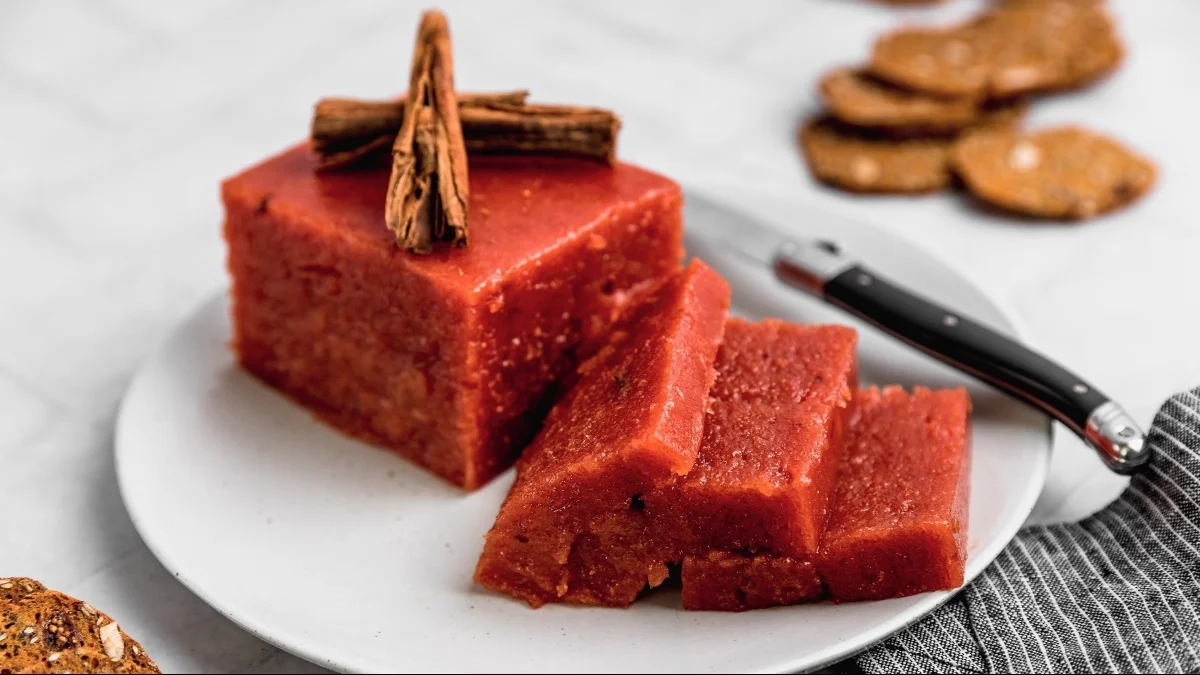
Quince paste is a firm, sweet fruit preserve made by cooking quince with sugar until it turns deep in colour and holds its shape. Serve it with afternoon tea or alongside cheese and savoury snacks.
Ingredients
- 1 kgquinces
- 700 gsugar
- to tastewhole cinnamon
- juice of 1lemon
Instructions
- 1
Wash and peel
Wash the quinces thoroughly, then peel them with a vegetable peeler.
- 2
Remove the cores
Cut the quinces into quarters and carefully remove the hard centres and seeds.
- 3
Combine ingredients
Put the prepared quinces in a deep pan with the sugar, lemon juice and cinnamon.
- 4
Soften the fruit
Cook over a medium-low heat for about 20 minutes, until the quinces begin to soften and break down when pressed.
- 5
Blend the mixture
Remove the cinnamon and blend the mixture with a hand blender until smooth.
- 6
Thicken the paste
Continue cooking over a low heat, stirring constantly, until the purée is thick and deeply coloured.
- 7
Check the texture
The paste is ready when it pulls away from the pan easily and a spoon drawn across the bottom leaves a clear path.
- 8
Check the temperature
If you have a thermometer, aim for a temperature of 105–107°C.
- 9
Keep stirring
Stir constantly to prevent the paste from catching and burning.
- 10
Fill the moulds
Pour the paste into moulds straight away and leave it to cool completely before turning it out.
What is quince paste?
Quince paste, known in Spain as dulce de membrillo, is a cooked fruit preserve that sets into a sliceable, jewel-coloured paste. It is a familiar part of Spanish cheese boards and also makes a sweet addition to an afternoon tea spread.
This version relies on just quince, sugar, lemon and cinnamon. Cooking the purée until very thick gives it the firm texture that makes it easy to unmould and cut.
Nutrition and macros by portion
The nutrition label shows one serving as written: 282 calories, 0g protein, 74g carbs, 0g fat.
| Portion | Adjustment | kcal | Protein | Carbs | Fat |
|---|---|---|---|---|---|
| Lighter | Serve a smaller slice | 197 kcal | 0g | 52g | 0g |
| This serving | As written | 282 kcal | 0g | 74g | 0g |
| Hungry | Add cheese and crackers | 423 kcal | 0g | 111g | 0g |
Most of each serving’s energy and carbohydrate comes from the sugar, with the quinces contributing natural sugars and a little fibre. The recipe contains very little fat or protein; serve a small slice with cheese or yoghurt and fresh fruit for a more balanced plate.
Preparing the quinces
Peeling the fruit: remove the skin before cooking so the finished paste has a smooth texture. A vegetable peeler makes this job straightforward.
Removing the cores: quince centres are hard, so take care when cutting them out. Discard the cores and seeds before adding the fruit to the pan.
The role of sugar and lemon
Sugar: it sweetens the fruit and helps the mixture cook down into a firm paste. Add it to the pan with the prepared quinces rather than waiting until after they have softened.
Lemon: the juice adds a touch of acidity to balance the sweetness. The recipe uses the juice of one lemon, so squeeze it into the pan along with the other ingredients.
Cooking to the right texture
Softening stage: cook the fruit over medium-low heat for about 20 minutes, until it yields when pressed. The exact time can vary with the ripeness and size of the pieces.
Thickening stage: once blended, keep the paste over low heat and stir constantly. It is ready when it pulls away from the pan and a spoon leaves a visible trail across the bottom; a thermometer reading of 105–107°C is another cue.
Stirring safely
As the mixture thickens, it can catch on the bottom of the pan, so keep stirring rather than leaving it unattended. Use a deep pan as specified, and take care around the hot, thick paste while stirring and pouring.
Setting and serving
Moulds: pour the paste into them as soon as it is ready, while it is still hot and easy to transfer. Let it cool completely before trying to turn it out.
Serving: cut the set paste into small pieces for afternoon tea or add it to a snack spread with cheese and crackers. Its concentrated sweetness pairs well with savoury accompaniments.
Recipe notes & tips
- Cut the quinces into similar-sized quarters so they soften at a similar pace.
- Use a deep pan to give yourself room to stir the thickening paste.
- Blend only after removing the cinnamon.
- Keep the heat low during the thickening stage to reduce the risk of scorching.
- Use the spoon-trail test as well as the thermometer reading to check the paste.
- Have the moulds ready before the paste finishes cooking so you can pour it in straight away.
Variations
- Cinnamon level: use more or less whole cinnamon to suit your preference.
- Without cinnamon: leave it out for a simpler quince flavour.
- Cheese board: serve slices with a selection of cheeses for a sweet-savoury pairing.
- Tea spread: cut the paste into small pieces and serve with crackers or bread.
- Smaller moulds: divide the hot paste between several moulds for individual portions.
Common mistakes to avoid
- Skipping the peeling: the finished paste may not be as smooth; peel the quinces before cooking.
- Leaving hard cores in: they can affect the texture; remove the centres and seeds carefully.
- Turning the heat up: the paste can catch as it thickens; keep it on low and stir constantly.
- Stopping before it thickens: the paste may not set firmly; wait until it pulls away from the pan and leaves a clear trail.
- Waiting to fill the moulds: the paste becomes harder to transfer as it cools; pour it in immediately after cooking.
- Unmoulding too soon: warm paste may not hold its shape; let it cool completely first.
How to store
Once completely cool, store the quince paste in a covered container in the refrigerator. Keep it chilled and cut off pieces as needed; serve cold or bring a portion to room temperature before serving.
Frequently asked questions
How can I tell when the quince paste is ready?
It should be thick, deeply coloured and pull away from the pan, leaving a clear trail when you draw a spoon across the bottom. If using a thermometer, the recipe gives a target of 105–107°C.
Do I need a thermometer?
No. Use the visual and texture cues: the paste should be thick and should separate from the pan when stirred.
Can I use a blender instead of a hand blender?
The method specifies a hand blender. If using another blender, work carefully with the hot mixture and follow your blender’s instructions for hot foods.
Why does the paste need constant stirring?
The mixture becomes thick as it cooks and can stick to the bottom of the pan. Stirring helps prevent it from burning.
When should I turn the quince paste out of the moulds?
Wait until it has cooled completely so it has time to firm up before unmoulding.
What goes well with quince paste?
Serve it with cheese, crackers or bread as part of a snack spread, or offer small pieces with afternoon tea.
Cook it from the original
This recipe comes from gourmet.cl. Their page has the author’s own photos, notes and tips — the best place to cook it from.
Open the recipe on gourmet.cl