
Chicken Milanese
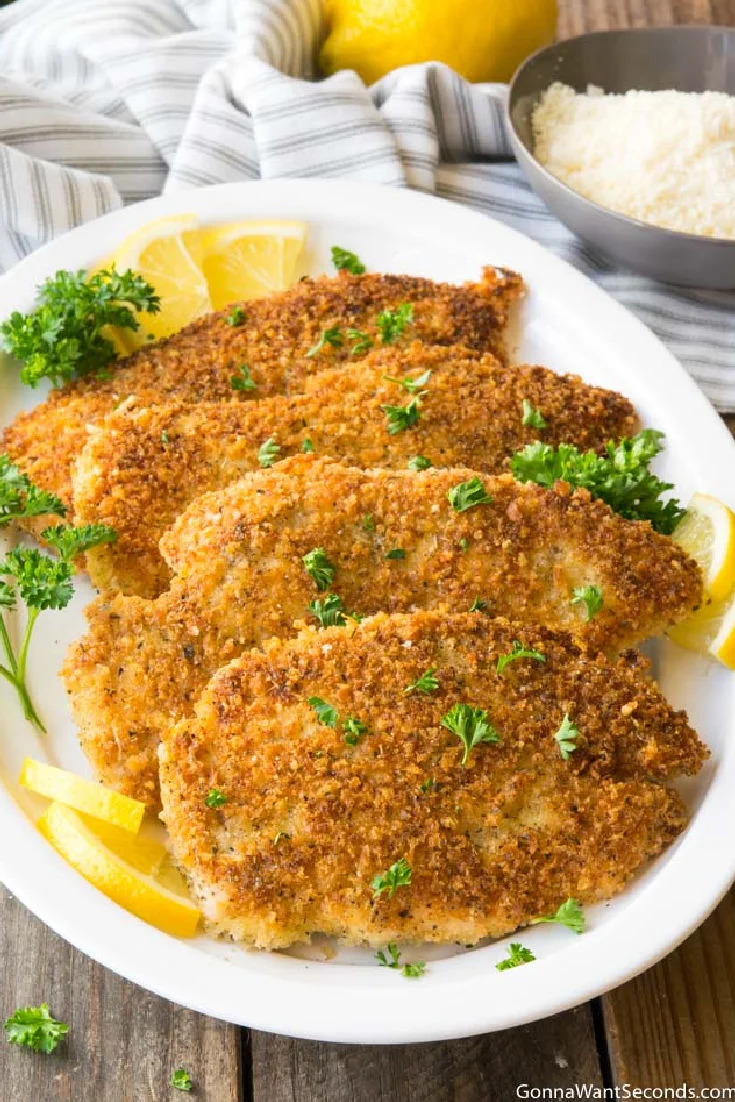
Chicken Milanese is thin chicken coated in Parmesan-seasoned panko and pan-fried until crisp and golden. It comes together quickly and pairs easily with a fresh squeeze of lemon.
Ingredients
- 4thin-cut boneless, skinless chicken breasts
- 40 g (⅓ cup)plain flour
- 2 largeeggs, lightly beaten
- about 90 g (1½ cups)panko breadcrumbs
- about 67 g (⅔ cup)grated Parmesan
- 2 teaspoonsdried Italian seasoning
- to tastesalt
- to tasteblack pepper
- 28 g (2 tablespoons), dividedbutter
- 30 ml (2 tablespoons), dividedolive oil
- about 8 g (2 tablespoons)fresh parsley, chopped
- 1lemon, sliced
Instructions
- 1
Pound the chicken
Place the chicken breasts between two sheets of waxed paper on a chopping board. Using the smooth side of a meat mallet, gently pound them to an even 6 mm (¼-inch) thickness. Season both sides generously with salt and pepper.
- 2
Coat the chicken
Set out three shallow dishes: put the flour in one and the beaten eggs in another. In the third, mix the panko with the Parmesan and Italian seasoning. Coat each piece of chicken in flour, dip both sides briefly in egg, then cover both sides with the breadcrumb mixture.
- 3
Fry until golden
Heat 14 g (1 tablespoon) butter and 15 ml (1 tablespoon) olive oil in a large non-stick frying pan. Add two chicken pieces and cook for 2–4 minutes on each side, until golden; transfer them to a plate. Add the remaining butter and oil to the pan and repeat with the remaining chicken.
- 4
Garnish and serve
Scatter the chopped parsley over the chicken and serve with the sliced lemon.
What is chicken Milanese?
Chicken Milanese is an Italian-style dish of thin, breaded meat cooked in a pan until crisp. The name refers to Milan, where cotoletta alla Milanese is traditionally made with breaded veal.
This version uses chicken breast and adds Parmesan and Italian seasoning to the panko coating. Thin pieces cook quickly, while lemon cuts through the richness of the fried crust.
Nutrition and macros by portion
The nutrition label shows one serving as written: 476 calories, 37g protein, 28g carbs, 23g fat.
| Portion | Adjustment | kcal | Protein | Carbs | Fat |
|---|---|---|---|---|---|
| Lighter | Use less frying fat | 333 kcal | 26g | 20g | 16g |
| This serving | As written | 476 kcal | 37g | 28g | 23g |
| Hungry | Add roasted potatoes | 714 kcal | 56g | 42g | 35g |
The chicken supplies most of the protein, while the flour, panko and eggs contribute carbohydrates. Parmesan, butter and olive oil account for much of the fat. Serve with a generous portion of salad or vegetables to round out the plate.
Why the coating works
Panko: Its coarse, airy crumbs give the chicken a crisp exterior. Mixing it with grated Parmesan adds savoury flavour and helps the coating brown.
Three-stage coating: Flour gives the egg a surface to cling to, and the egg helps the crumbs adhere. Coat each piece just before frying so the crumbs stay in place.
Pound for even cooking
Even thickness: Gently pound the chicken to about 6 mm so the pieces cook at a similar rate. Keep the chicken between the sheets of waxed paper to make this step neater.
Gentle handling: Use the flat side of the mallet and stop once the meat is evenly thin. Too much force can tear the chicken.
Get a golden crust
Hot fat: Heat the butter and olive oil before adding the chicken. The pan should be hot enough for the coating to sizzle, but not so hot that the Parmesan darkens before the centre cooks.
Room to fry: Cook two pieces at a time as directed, leaving space between them. A crowded pan can make the coating steam rather than crisp.
Check doneness and texture
Colour: Look for a golden-brown crust and turn the chicken once it has had 2–4 minutes on the first side. The second side should brown in a similar amount of time.
Doneness: The timing depends on the thickness of the pieces and the heat of the pan. Check the thickest part is cooked through before serving.
Serve with lemon
Lemon: Serve the slices alongside the chicken so everyone can add juice to taste. The brightness works especially well with the buttery, cheesy crumb.
Sides: Pair with a green salad, steamed vegetables or roasted potatoes for a fuller meal. Add the parsley just before serving for a fresh finish.
Recipe notes & tips
- Pound the chicken evenly so the thin edges do not finish cooking long before the thicker parts.
- Arrange the coating dishes in order before you start breading.
- Press the breadcrumb mixture gently onto each piece to help it stick.
- Let excess egg drip off before placing the chicken in the crumbs.
- Fry in batches and add the second measure of butter and oil only when the first batch is done.
- Serve soon after cooking for the crispest coating.
Variations
- Add garlic: Mix a little garlic powder into the panko and Parmesan.
- Use fresh herbs: Add finely chopped fresh oregano or thyme to the breadcrumb mixture.
- Try another cheese: Replace some of the Parmesan with finely grated Pecorino.
- Make it gluten-free: Use gluten-free flour and breadcrumbs in the same coating sequence.
- Add a salad: Serve the chicken with dressed rocket and shaved Parmesan.
Common mistakes to avoid
- Uneven chicken: Pound each breast to a consistent thickness so it cooks evenly.
- Loose coating: Shake off excess flour and egg before moving to the next coating dish.
- Cold pan: Wait until the butter and oil are hot before adding the chicken.
- Crowded frying pan: Cook only two pieces at a time so the coating can brown.
- Over-browning: Lower the heat if the crumbs darken before the chicken is cooked through.
How to store
Refrigerate leftovers in a sealed container for up to 3 days. Reheat in an oven or air fryer until hot, which helps the coating crisp again; a microwave will soften it.
Frequently asked questions
Can I use regular breadcrumbs instead of panko?
Yes, though the coating will usually be finer and less airy. Use the same amount and follow the same coating steps.
How do I know when the chicken is cooked?
Check the thickest part of a piece to make sure it is cooked through. Thin pieces can cook quickly, so use the 2–4 minutes per side as a guide rather than relying on colour alone.
Can I prepare the chicken ahead?
You can pound the chicken and set up the coating dishes ahead. For the crispest result, coat it shortly before frying.
Why is the coating falling off?
Excess flour or egg can make the coating slide, and turning the chicken too soon can loosen it. Shake off extra coating at each stage and let the underside brown before flipping.
Can I bake chicken Milanese instead?
This recipe is written for pan-frying, so baking will give a different crust. If you adapt it for the oven, cook until the chicken is done and the coating is browned.
Cook it from the original
This recipe comes from gonnawantseconds.com. Their page has the author’s own photos, notes and tips — the best place to cook it from.
Open the recipe on gonnawantseconds.com