
Tonkatsu with curry sauce
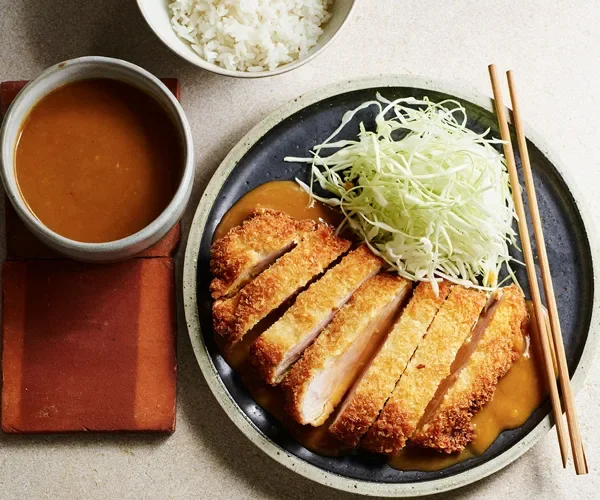
Tonkatsu with curry sauce pairs crisp, panko-coated pork with a gently spiced Japanese-style sauce. It makes a warming dinner for cold nights, especially served with rice, shredded cabbage and pickled ginger.
Ingredients
- 4boneless pork loin chops, pounded to 2–3 cm thick
- for dustingseasoned plain flour
- 2eggs, lightly beaten
- 100 g (2 cups)panko breadcrumbs
- for shallow-fryingsunflower oil
- to servesteamed rice, very thinly shredded cabbage and pickled ginger (optional)
- 1 tbspneutral oil, such as grapeseed or sunflower oil
- 1 tbspfinely grated ginger
- 1garlic clove, finely chopped
- 1 tbspJapanese curry powder (such as S&B) or mild curry powder
- 1 tbspplain flour
- 400 mlchicken stock
- 2 tbsplight soy sauce
- 2 tbspapple juice
- 2 tsphoney
Instructions
- 1
Make the curry sauce
Heat 1 tbsp neutral oil in a saucepan over medium-high heat. Add the ginger and garlic and sauté for 1–2 minutes, until fragrant. Stir in the curry powder until fragrant, then add 1 tbsp plain flour and cook, stirring, for 1–2 minutes, until dark golden. Slowly whisk in the chicken stock, soy sauce, apple juice and honey. Simmer for 4–6 minutes, whisking occasionally, until thick.
- 2
Fry the pork
Preheat the oven to 100°C. Dust the pork with seasoned flour and shake off the excess, then dip in the beaten eggs and coat with panko, shaking off any excess. Heat 2 cm sunflower oil in a large frying pan over medium-high heat until shimmering. Fry the pork for 2–3 minutes on each side, until golden, then transfer it to the oven for 2 minutes, until cooked medium. Slice the pork thickly.
- 3
Plate and serve
Spoon some curry sauce onto each plate and top with the sliced pork. Serve with steamed rice, shredded cabbage and the remaining curry sauce, adding pickled ginger if you like.
What is tonkatsu with curry sauce?
Tonkatsu is a Japanese dish of breaded, fried pork, usually served sliced so its crisp coating is easy to eat. Japanese curry sauce is a mild, thick curry, often served with rice; here it accompanies the pork rather than replacing its crunchy crumb.
This version builds flavour by cooking curry powder with ginger, garlic and flour before whisking in stock. The sauce brings warmth and savouriness, while cabbage and pickled ginger offer a fresh, sharp contrast.
Nutrition and macros by portion
The nutrition label shows one serving as written: 850 calories, 52g protein, 89g carbs, 28g fat.
| Portion | Adjustment | kcal | Protein | Carbs | Fat |
|---|---|---|---|---|---|
| Lighter | More cabbage, less rice | 595 kcal | 36g | 62g | 20g |
| This serving | As written | 850 kcal | 52g | 89g | 28g |
| Hungry | Add extra rice | 1275 kcal | 78g | 134g | 42g |
The pork and egg provide most of the protein, while the panko and rice contribute most of the carbohydrates. Frying oil and the pork supply much of the fat; curry sauce and soy sauce also contribute sodium. For a more balanced plate, serve with plenty of shredded cabbage alongside the rice and pork.
Set up the coating
Flour first: dust the chops lightly and shake off the excess so the egg has an even surface to cling to.
Egg and panko: coat each chop in beaten egg, then press it into the breadcrumbs. A light, even layer helps the crust brown without becoming heavy.
Build a smooth curry sauce
Aromatic base: cook the ginger and garlic until fragrant, then stir in the curry powder. Keep the ingredients moving so the spices toast without scorching.
Flour and stock: cook the flour until dark golden, then add the stock gradually while whisking. A slow pour and steady whisk help prevent lumps; simmer until the sauce thickens.
Fry for a crisp crust
Oil cue: heat the shallow layer until it shimmers before adding the pork. If the oil is not hot enough, the panko can absorb more oil instead of browning promptly.
Space and colour: fry in batches if the chops do not fit comfortably in the pan. Turn them once the undersides are golden, then use the stated oven finish to bring them to medium.
Keep the textures distinct
Slice the pork thickly after cooking so the crumb stays attached and the meat remains juicy. Spoon sauce onto the plate rather than pouring it over the whole crust, which lets some of the coating stay crisp.
Serve the cabbage finely shredded for a cool, crunchy counterpoint. The rice makes the meal more substantial and also catches any extra curry sauce.
Plan the cooking order
Make the curry sauce first and keep it warm while you prepare and fry the pork. The sauce needs 4–6 minutes of simmering after the stock is added, while the pork cooks for 2–3 minutes per side and then spends 2 minutes in the oven.
Prepare the rice and cabbage before frying, so the pork can go straight from slicing to the plates. This helps avoid leaving the crust to soften while you finish the sides.
Recipe notes & tips
- Pat the pork dry before coating so the flour sticks evenly.
- Shake off excess flour, egg and panko at each stage for a neat crust.
- Whisk the stock into the curry roux gradually to help keep the sauce smooth.
- Let excess oil drain from the fried chops before transferring them to the oven.
- Slice the pork just before serving to help the coating stay crisp.
- Keep some curry sauce aside to serve at the table.
Variations
- Use chicken: Swap in boneless chicken pieces and cook them through before serving.
- Make it spicier: Choose a hotter curry powder or add a little more to the sauce.
- Add vegetables: Serve with cooked peas or carrots alongside the rice.
- Try pork tenderloin: Cut it into even pieces and adjust frying to suit their thickness.
- Skip the ginger: Leave out the pickled ginger if you prefer a milder, less tangy garnish.
Common mistakes to avoid
- Overcrowding the pan: The oil temperature can drop and the coating may soften; fry in batches.
- Adding stock too quickly: The sauce can turn lumpy; whisk it in gradually.
- Scorching the spices: Curry powder can taste bitter if left still over high heat; stir it until fragrant.
- Coating too heavily: Excess flour or egg makes the crumb clumpy; shake off the extra at each stage.
- Saucing all the crust: The panko softens quickly; spoon sauce underneath and serve the rest separately.
How to store
Refrigerate leftover pork, sauce and rice in separate airtight containers within 2 hours; use within 3 days. Reheat the pork in an oven until hot throughout to help revive the crust, and warm the sauce and rice separately, adding a splash of water to the sauce if needed.
Frequently asked questions
What does tonkatsu mean?
Tonkatsu is a Japanese dish of pork coated in breadcrumbs and fried. It is commonly served sliced, with cabbage and a sauce.
Can I make the curry sauce ahead?
Yes. Make it ahead and refrigerate it in a covered container, then reheat gently while whisking. Add a little stock or water if it has thickened too much.
How can I tell when the oil is ready?
The recipe's cue is shimmering oil. Add the pork carefully and avoid crowding the pan so the coating can brown.
Can I use ordinary breadcrumbs instead of panko?
Panko gives the pork a light, crisp coating. Ordinary breadcrumbs can be used, though the texture may be finer and denser.
What should I serve with tonkatsu?
Serve it with steamed rice and finely shredded cabbage, as in this recipe. Pickled ginger is optional and adds a tangy note.
Cook it from the original
This recipe comes from gourmettraveller.com.au. Their page has the author’s own photos, notes and tips — the best place to cook it from.
Open the recipe on gourmettraveller.com.au