
Basil pesto
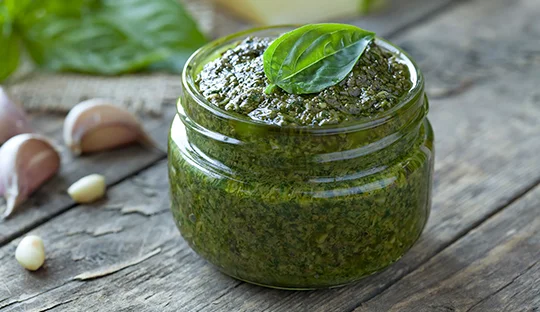
A quick Italian-style basil pesto blended with Parmesan, walnuts and olive oil. Make it in minutes to toss with pasta or serve alongside snacks.
Ingredients
- 100 gParmesan
- 90 gwalnuts (or another nut such as almonds, pine nuts or a mixture)
- 1½ tbspchopped garlic in olive oil
- 110 gfresh basil leaves
- 200 ml, plus more if neededolive oil
- to tastesea salt
- to tastemixed pepper
Instructions
- 1
Blend the ingredients
Put the basil, garlic, walnuts, Parmesan, sea salt and mixed pepper in a food processor or use an immersion blender to combine them.
- 2
Add the oil
Keep blending and gradually pour in the olive oil. Blend steadily until the pesto reaches your preferred consistency.
- 3
Adjust the seasoning
Taste the pesto and adjust the salt and pepper.
What is basil pesto?
Pesto is an Italian sauce traditionally associated with Liguria, where basil, cheese, nuts and olive oil are pounded together. This quick version uses a food processor or immersion blender for a smooth, creamy result.
Walnuts give it a rich, rounded flavour, while Parmesan adds savoury depth. The olive oil brings the ingredients together and lets you adjust the texture.
Nutrition and macros by portion
The nutrition label shows one serving as written: 450 calories, 11g protein, 4g carbs, 46g fat.
| Portion | Adjustment | kcal | Protein | Carbs | Fat |
|---|---|---|---|---|---|
| Lighter | Use less olive oil | 315 kcal | 8g | 3g | 32g |
| This serving | As written | 450 kcal | 11g | 4g | 46g |
| Hungry | Serve a larger portion | 675 kcal | 17g | 6g | 69g |
The olive oil and walnuts provide most of the fat and energy, while Parmesan contributes much of the protein as well as additional fat. Basil and garlic add relatively little to the overall macros, and the nuts and cheese also contribute some carbohydrates. For a balanced plate, pair a moderate amount of pesto with pasta and add vegetables or a salad.
Choosing the ingredients
Fresh basil: Use leaves that are fragrant and in good condition; their flavour is the defining note of the sauce.
Nuts: Walnuts are specified here, but almonds, pine nuts or a mixture can be used instead. Each gives the pesto a slightly different flavour and texture.
Parmesan: Finely grated cheese blends more evenly than large pieces. As it is already salty, taste before adding extra salt.
Blending for the right texture
Start by blending the basil, garlic, nuts, cheese and seasoning together. Add the oil gradually while the machine runs, so it incorporates evenly.
Stop when the pesto is as thick or loose as you like. Add a little more olive oil if you want a softer consistency.
Seasoning to taste
Salt and mixed pepper are added to taste, so begin modestly and adjust after blending. The Parmesan contributes saltiness, and tasting at the end helps keep the balance right.
For a more pronounced pepper flavour, add a little more mixed pepper and blend briefly to distribute it.
How to serve it
Toss the pesto with your favourite pasta, loosening it with a little pasta cooking water if needed. It also works as a dip or accompaniment for snacks.
Because it is rich and concentrated, start with a small spoonful per serving and add more to suit the dish.
Making it in five minutes
The listed total time is 5 minutes, and the method has only three stages: blend the solids, stream in the oil and adjust the seasoning. Having the ingredients ready beside the processor makes the quick preparation easier.
The recipe gives no cooking step; the pesto is blended and ready to serve.
Recipe notes & tips
- Grate the Parmesan finely so it blends smoothly.
- Add the olive oil gradually to control the final texture.
- Taste before adding much salt, as the Parmesan is already salty.
- Use fresh, aromatic basil for the clearest herbal flavour.
- Blend only until the pesto reaches the consistency you want.
Variations
- Try almonds: Swap the walnuts for almonds for a different nutty flavour.
- Use pine nuts: Replace the walnuts with pine nuts for a more traditional-style variation.
- Mix the nuts: Combine different nuts to vary the flavour and texture.
- Make it looser: Blend in a little extra olive oil to soften the consistency.
- Increase the pepper: Add more mixed pepper for a bolder finish.
Common mistakes to avoid
- Adding all the oil at once: Pour it in gradually while blending so it incorporates evenly.
- Over-salting: Parmesan is salty, so season lightly first and adjust after tasting.
- Using stale basil: Choose fresh, fragrant leaves for a lively flavour.
- Blending too little: Continue until the nuts and cheese are incorporated and the texture is even.
- Making it too thick: Blend in a little more olive oil to loosen the pesto.
How to store
Keep leftover pesto in a clean, airtight container in the fridge and use within 3–4 days. Stir before serving; if it has thickened, loosen it with a little olive oil.
Frequently asked questions
Can I use a different nut?
Yes. The recipe suggests almonds, pine nuts or a mixture as alternatives to walnuts.
Can I make pesto without a food processor?
Yes. The method also allows for an immersion blender. Blend the ingredients together, then add the oil gradually.
How do I make the pesto thinner?
Blend in a little more olive oil until it reaches the consistency you want.
What can I serve basil pesto with?
Serve it with your favourite pasta or alongside snacks, as suggested in the recipe.
Do I need to cook the pesto?
No cooking step is included. Blend the ingredients, adjust the seasoning and serve.
When should I add the salt?
Add it with the other ingredients, but start sparingly and check the seasoning at the end because Parmesan is salty.
Cook it from the original
This recipe comes from gourmet.cl. Their page has the author’s own photos, notes and tips — the best place to cook it from.
Open the recipe on gourmet.cl