
Sushi bowls
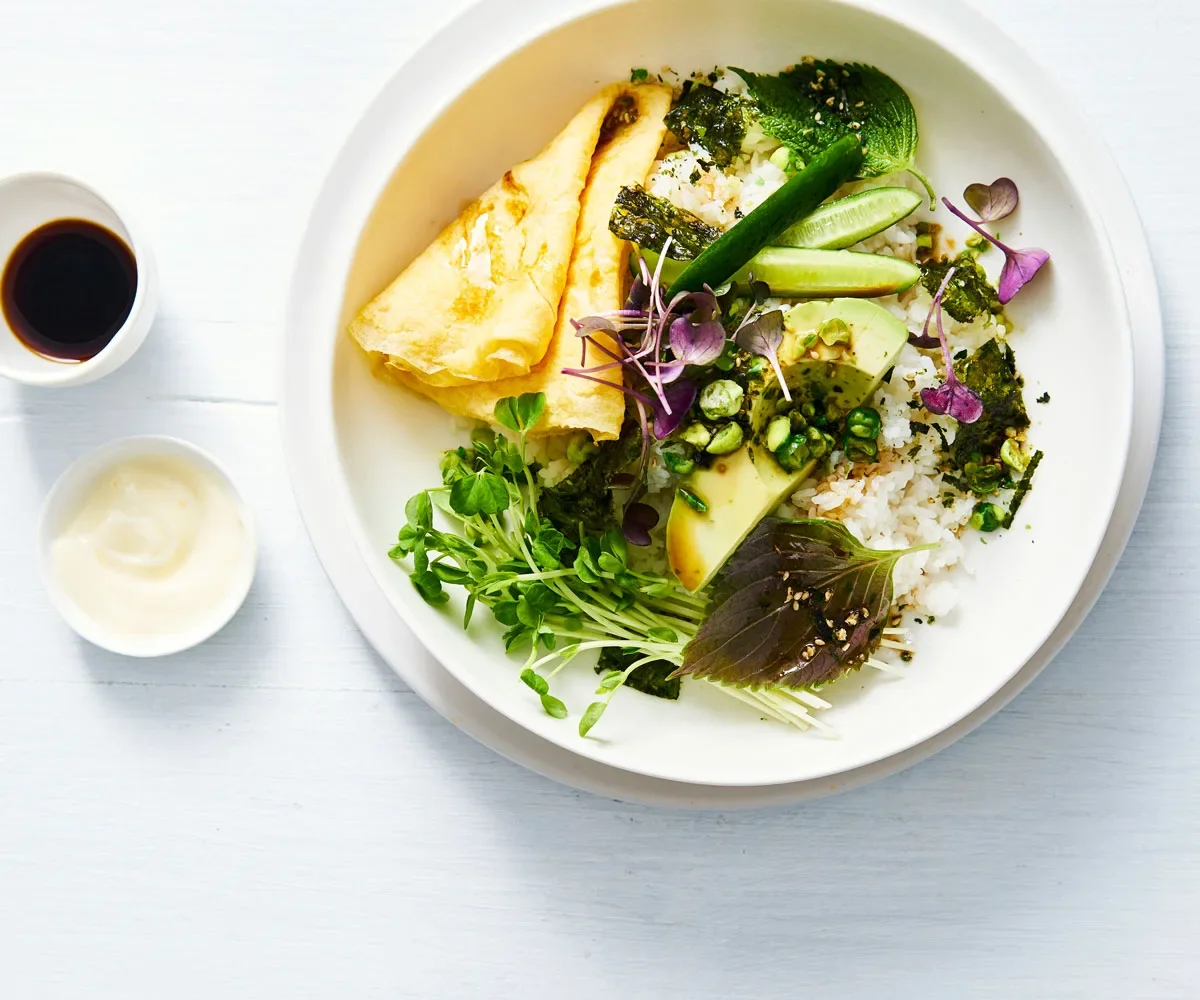
These sushi bowls pair seasoned rice with egg, fresh vegetables, sprouts and crisp nori for a colourful Japanese-inspired dinner. They are quick to assemble once the rice is cooked, and each person can add soy sauce and mayonnaise to taste.
Ingredients
- 300 g (1½ cups)short-grain or medium-grain rice
- 60 ml (¼ cup)sushi seasoning
- 1 tbspvegetable oil
- 3eggs, lightly beaten
- 200 gbaby cucumbers (qukes), cut lengthways into wedges
- 1 large (about 320 g)avocado, sliced
- ½ cupdaikon radish sprouts
- ½ cupmixed sprouts
- ½ cupshiso leaves
- 4 sheetsnori, toasted and coarsely chopped
- 1 tbspwasabi peas, coarsely chopped
- To servefurikake
- To tastesoy sauce
- To serveJapanese mayonnaise
Instructions
- 1
Cook the rice
Rinse and drain the rice until the water runs clear. Put it in a medium saucepan with 560 ml (2¼ cups) water and bring to the boil with a tightly fitting lid on. Turn the heat to low and cook, covered, for 12 minutes. Remove from the heat and leave covered for 15 minutes to steam. Spread the rice on a large flat tray, sprinkle with the sushi seasoning and fold it through with a spatula.
- 2
Cook the egg
Meanwhile, heat the oil in a large frying pan over medium heat. Add the beaten egg and cook for 3 minutes, occasionally swirling the pan, until just set. Turn it out onto a board and cut it into quarters.
- 3
Assemble the bowls
Divide the rice between serving bowls and place the egg alongside it. Top the rice with cucumber, avocado, sprouts, shiso leaves, nori and wasabi peas. Add furikake and soy sauce to taste, and serve with Japanese mayonnaise.
What are sushi bowls?
Sushi bowls take familiar sushi ingredients and serve them together over a bed of rice rather than shaping them into rolls. This version uses seasoned rice, egg, crunchy toppings and fresh produce for a mix of textures in every bowl.
The dish draws on Japanese sushi flavours, especially the vinegared rice and nori. Keeping the ingredients in separate toppings makes it straightforward to prepare and easy for diners to customise.
Nutrition and macros by portion
The nutrition label shows one serving as written: 500 calories, 12g protein, 74g carbs, 18g fat.
| Portion | Adjustment | kcal | Protein | Carbs | Fat |
|---|---|---|---|---|---|
| Lighter | Less mayonnaise, more sprouts | 350 kcal | 8g | 52g | 13g |
| This serving | As written | 500 kcal | 12g | 74g | 18g |
| Hungry | Larger rice portion | 750 kcal | 18g | 111g | 27g |
Rice is the main source of carbohydrates, while avocado, vegetable oil and mayonnaise contribute most of the fat; eggs and sprouts provide some protein. For a more balanced plate, serve with extra cucumber or sprouts and keep the mayonnaise and soy sauce to your preferred amount.
Get the rice right
Rinsing: Wash the rice until the water runs clear to remove excess surface starch. Drain it well before cooking.
Steaming: Keep the lid on during both the 12-minute cooking time and the 15-minute rest. That trapped steam helps the grains finish cooking evenly.
Seasoning: Fold the sushi seasoning into the rice while it is spread on a tray. Use a gentle lifting motion so the grains stay intact.
Cook the egg gently
Low fuss: Swirl the pan now and then as the egg cooks over medium heat. Take it off as soon as it is set; leaving it longer can make it dry.
Serving: Cutting the egg into quarters gives each bowl a substantial piece alongside the rice and toppings.
Build contrast with toppings
Freshness: Cucumber, avocado, sprouts and shiso bring cool, fresh flavours against the seasoned rice. Slice the avocado shortly before serving to keep it looking bright.
Crunch: Toasted nori and chopped wasabi peas add crisp texture. Scatter them over the bowls at the end so they do not sit against the rice for too long.
Finish to taste
Seasoning: Furikake and soy sauce give the bowls a savoury finish, while Japanese mayonnaise adds a creamy contrast. Put the condiments on the table so everyone can choose how much to use.
Balance: Taste a little of the seasoned rice before adding soy sauce, as the sushi seasoning and furikake already contribute flavour.
Serving ideas
Serve the bowls as a complete meal, with the toppings arranged over the rice or kept in separate sections. Extra cucumber or sprouts make a simple fresh side if you want more crunch.
Recipe notes & tips
- Use a saucepan lid that fits tightly so the rice steams properly.
- Measure the water carefully and keep the rice covered while it cooks.
- Fold the seasoning into the rice gently rather than stirring it vigorously.
- Have the toppings ready while the rice steams so assembly is quick.
- Add the nori and wasabi peas just before serving to preserve their crunch.
- Serve soy sauce and mayonnaise separately so each person can season their bowl.
Variations
- Add salmon: Top each bowl with cooked or ready-to-eat salmon.
- Use edamame: Add cooked, shelled edamame for another tender topping.
- Swap the leaves: Use another mild salad leaf if shiso is unavailable.
- Make it spicy: Add extra chopped wasabi peas to the finished bowls.
- Change the egg: Cook the beaten egg into a thin omelette and slice it into strips.
Common mistakes to avoid
- Lifting the lid: Steam escapes and the rice may cook unevenly; keep the saucepan covered.
- Skipping the rinse: Excess starch can make the cooked rice gummy; rinse until the water runs clear.
- Stirring too firmly: The grains can break and turn mushy; fold the seasoning through gently.
- Overcooking the egg: It can become dry; remove it from the pan as soon as it is just set.
- Adding toppings too early: Nori and wasabi peas can lose their crunch; scatter them on at serving time.
- Adding too much soy sauce: It can overwhelm the seasoned rice; start with a little and add more at the table.
How to store
Store leftover rice and toppings separately in airtight containers in the fridge and use within 1–2 days. Reheat the rice until steaming hot, then add the cold toppings and condiments just before serving; avocado and crisp toppings are best freshly cut or added.
Frequently asked questions
Can I make the rice ahead?
You can cook and season it ahead, then cool it promptly and refrigerate it in a covered container. Reheat until steaming hot before assembling the bowls.
What can I use instead of shiso?
Use another fresh, mild salad leaf if shiso is not available. The flavour will differ, but the bowls will still have a fresh element.
Can I use a different type of rice?
Short-grain or medium-grain rice is specified because it suits the seasoned, sushi-style base. Other rice may cook to a different texture, so follow its packet instructions.
What is sushi seasoning?
It is a ready-made seasoning used for sushi rice. The recipe refers to a note for more information, but that note was not provided here.
How do I keep the nori crisp?
Add the toasted, chopped nori just before serving rather than mixing it into the rice ahead of time.
Can I serve the bowls without mayonnaise?
Yes. The bowls can be served with soy sauce and furikake alone, or with the mayonnaise offered separately for anyone who wants it.
Cook it from the original
This recipe comes from gourmettraveller.com.au. Their page has the author’s own photos, notes and tips — the best place to cook it from.
Open the recipe on gourmettraveller.com.au