
Corn, Cucumber, & Radish Tartine
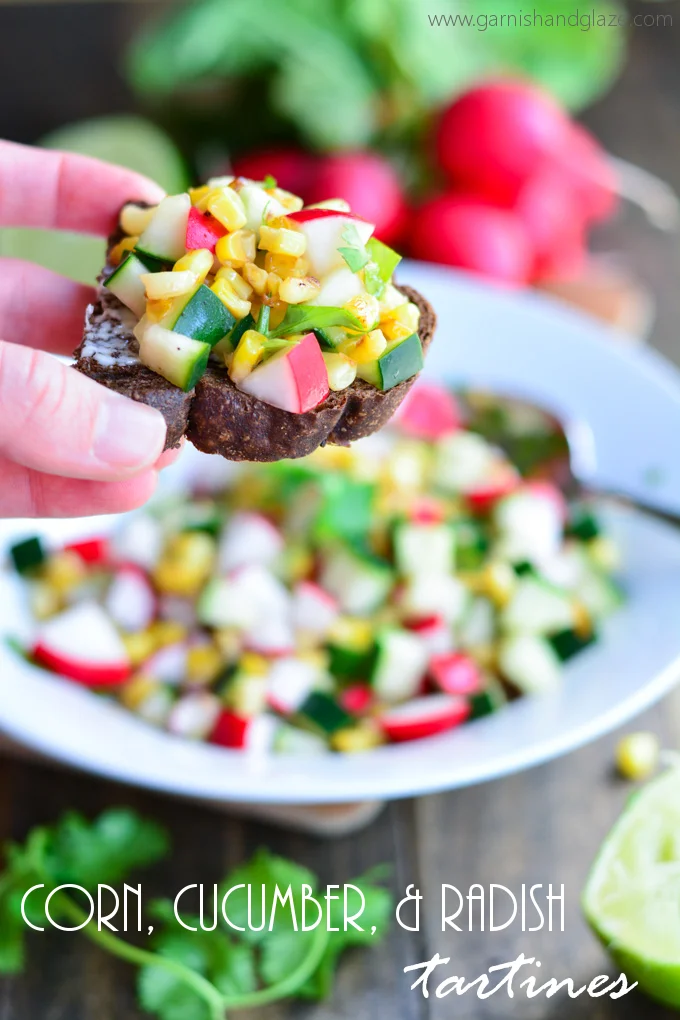
These tartines pair toasted pumpernickel and butter with a fresh relish of corn, cucumber and radishes. They come together in minutes and make a colourful light lunch or a quick starter to share.
Ingredients
- 5 slicesartisan pumpernickel bread
- 5 teaspoonsbutter, at room temperature
- 80 ml (1/3 cup)radishes, diced
- 120 ml (1/2 cup)cucumber, diced and deseeded
- 120 ml (1/2 cup)corn, preferably grilled or roasted
- 30 ml (2 tablespoons)fresh coriander
- 15 ml (1 tablespoon)fresh lime juice
- to tastefreshly ground salt and pepper
Instructions
- 1
Mix the relish
Put the radish, cucumber, corn, coriander, lime juice, salt and pepper in a bowl and combine. Set aside.
- 2
Toast the bread
Toast the bread, then spread 1 teaspoon of butter on each slice. Cut each slice in half and spoon about 2 tablespoons of relish onto each half, or let guests add their own. Serve straight away, while the toast is warm.
What are tartines?
Tartines are open-faced sandwiches, a simple format found in French café cooking and used for everything from breakfast to a light meal. Here, dark, earthy pumpernickel provides a sturdy base for a crisp, lime-bright vegetable relish.
The combination works because the bread is rich and slightly sweet, while cucumber and radish bring freshness and crunch. Grilled or roasted corn adds a lightly toasted flavour.
Nutrition and macros by portion
The nutrition label shows one serving as written: 165 calories, 4g protein, 27g carbs, 5g fat.
| Portion | Adjustment | kcal | Protein | Carbs | Fat |
|---|---|---|---|---|---|
| Lighter | Use less butter | 115 kcal | 3g | 19g | 4g |
| This serving | As written | 165 kcal | 4g | 27g | 5g |
| Hungry | Add another slice | 248 kcal | 6g | 41g | 8g |
The bread supplies most of the carbohydrates, while the butter contributes much of the fat. Corn adds some carbohydrate, and the vegetables provide a modest amount of fibre; there is relatively little protein in the listed ingredients. Pair a serving with a protein-rich side such as beans or yoghurt and a salad for a more balanced plate.
Choosing the bread
Pumpernickel: its dense texture holds the topping better than a soft, airy loaf. Choose slices that are substantial enough to support the relish once cut in half.
Toast: toast the slices until warm and firm, but not so hard that they become difficult to bite. Butter them while warm so it spreads easily.
Keep the relish crisp
Cucumber: remove the seeds before dicing, as they release extra moisture into the mixture. Cut the pieces small enough to sit neatly on the toast.
Radish and corn: dice the radishes evenly and use grilled or roasted corn if available for a more savoury, toasted note. Mix the relish shortly before serving to keep its fresh texture.
Balance the lime
Citrus: lime juice lifts the sweetness of the corn and the peppery radish. Start with the stated tablespoon, then taste before adding any more.
Seasoning: salt and pepper are added to taste, so season the relish rather than relying on the bread for all its saltiness. Stir well to distribute the lime and seasoning.
Serve while warm
Timing: the recipe takes 7 minutes, and the two main tasks can be done one after the other. Prepare the relish while the bread toasts if you want to serve everything promptly.
Assembly: add the relish just before serving so it does not soften the toast. For a shared meal, set the bowl of relish beside the buttered toast and let guests assemble their own.
What to serve alongside
For lunch, pair the tartines with a leafy salad or a simple bowl of soup. Choose a lightly dressed side so it complements the lime and crunch rather than competing with them.
As a starter, serve the halves on a platter while the bread is still warm. They also work well as part of a spread of small savoury bites.
Recipe notes & tips
- Deseed the cucumber before dicing to keep excess liquid out of the relish.
- Cut the radish and cucumber into small, similar-sized pieces for easier topping.
- Use fully cooled grilled or roasted corn so it does not wilt the fresh vegetables.
- Taste the relish before serving and adjust the salt and pepper to your preference.
- Butter the bread while it is warm for easier spreading.
- Keep the relish separate from the toast until just before serving.
Variations
- Add chilli: stir a little finely chopped fresh chilli into the relish for heat.
- Use lemon: replace the lime juice with lemon juice for a gentler citrus flavour.
- Try another herb: swap the coriander for chopped parsley or mint.
- Add avocado: fold in diced avocado just before serving for a softer, creamy contrast.
- Change the bread: use toasted rye or sourdough if pumpernickel is unavailable.
Common mistakes to avoid
- Wet cucumber: leaving the seeds in can make the topping watery; scoop them out before dicing.
- Soggy toast: adding the relish too early softens the bread; assemble just before serving.
- Uneven pieces: large chunks can slide off the tartines; dice the vegetables small.
- Over-toasting: very hard bread is difficult to bite; toast until firm and warm, not brittle.
- Over-seasoning: salt can mask the fresh flavours; season a little at a time and taste.
How to store
Store any leftover relish in a covered container in the fridge and use it within 1 day for the best texture. Keep it separate from the bread; toast fresh slices and assemble just before eating, as assembled tartines do not reheat well.
Frequently asked questions
Can I make the relish ahead?
You can dice the vegetables and prepare the relish a few hours ahead, then cover and refrigerate it. For the crispest result, add the lime juice and season shortly before serving.
Can I use tinned or frozen corn?
Yes. Drain tinned corn well, or cook and cool frozen corn first. Grilled or roasted corn gives the relish a more toasted flavour.
How do I keep the toast from going soggy?
Toast and butter the bread close to serving time, and spoon on the relish just before eating. Serving the relish on the side lets guests assemble each tartine themselves.
What can I use instead of pumpernickel?
Rye or sourdough are good alternatives. Choose slices that toast firmly and can hold the topping.
Can I serve these cold?
They can be eaten cold, but the recipe is best when the buttered toast is still warm. Keep the relish chilled and assemble just before serving.
Cook it from the original
This recipe comes from garnishandglaze.com. Their page has the author’s own photos, notes and tips — the best place to cook it from.
Open the recipe on garnishandglaze.com