
Ultimate Grilled Cheese Sandwich
This grilled cheese layers pesto, Parmesan, Muenster, tomato and cheddar between sourdough slices. Cook it gently in a skillet for a crisp, golden exterior and melted cheese.
Ingredients
- 2 slicessourdough bread
- 15 ml (1 tablespoon)pesto sauce
- 10 ml (2 teaspoons)Parmesan cheese
- 1 sliceMuenster cheese
- 3–4 slicestomato
- 1 slicecheddar cheese
- As neededbutter, for the outside of the bread
Instructions
- 1
Mix pesto
Stir the pesto sauce and Parmesan together, then spread the mixture over one slice of sourdough.
- 2
Layer the filling
Add the Muenster, tomato slices and cheddar in that order, then top with the remaining bread slice.
- 3
Butter the bread
Butter the outside of both bread slices.
- 4
Cook the sandwich
Cook in a skillet over medium heat until the underside is golden. Keep the heat steady and cook slowly so the cheese has time to melt before the bread gets too dark. Flip and cook the other side until golden.
- 5
Cut and serve
Cut the sandwich in half and serve warm.
What is a grilled cheese sandwich?
Grilled cheese is a simple hot sandwich made by cooking bread around a cheese filling until the outside is toasted and the centre melts. It is especially associated with American home cooking, though toasted bread-and-cheese combinations appear in many food traditions.
This version adds pesto, Parmesan and tomato to the familiar pairing of Muenster and cheddar. Sourdough gives it a tangy base that stands up to the rich cheese.
Nutrition and macros by portion
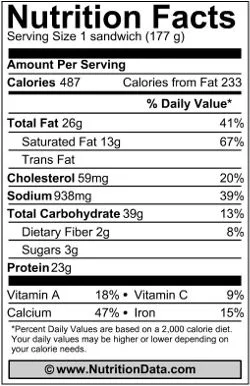
The nutrition label shows one serving as written: 490 calories, 21g protein, 42g carbs, 27g fat.
| Portion | Adjustment | kcal | Protein | Carbs | Fat |
|---|---|---|---|---|---|
| Lighter | Use less butter | 343 kcal | 15g | 29g | 19g |
| This serving | As written | 490 kcal | 21g | 42g | 27g |
| Hungry | Add another sandwich | 735 kcal | 32g | 63g | 41g |
Most of the carbohydrates come from the sourdough, while the cheese and butter supply much of the fat and the cheeses contribute protein. Add a green salad or vegetable soup alongside for a more balanced plate.
Why the cheese combination works
Muenster: this slice softens as it heats and helps make the middle gooey.
Cheddar: its stronger flavour balances the milder Muenster, while Parmesan stirred into pesto brings a savoury edge.
Use pesto as a spread
Pesto: mixing it with Parmesan makes a thicker spread that is easier to distribute over the bread. Spread it in an even layer so each bite gets some flavour.
Keep the tomato in check
Tomato: the slices add freshness and moisture, but very thick slices can make the sandwich awkward to turn. Pat especially juicy slices dry before layering if needed.
Cook gently for a melted centre
Moderate heat: a slower cook gives the cheese time to soften while the bread turns golden. If the crust darkens before the filling melts, lower the heat.
What to serve alongside
A green salad or a bowl of vegetable soup makes a fresh counterpoint to the buttery bread and melted cheese. For a simple meal, serve the sandwich on its own while it is still warm.
Recipe notes & tips
- Use bread slices of similar thickness so the sandwich cooks evenly.
- Spread the pesto-Parmesan mixture right to the edges for flavour in every bite.
- Keep the tomato slices thin so the filling stays easy to flip.
- Cook over steady medium heat rather than turning the heat up to speed things along.
- Press the sandwich lightly with a spatula while it cooks to help the layers hold together.
Variations
- Add basil: tuck a few fresh leaves in with the tomato for a fragrant note.
- Try another melting cheese: swap the Muenster for mozzarella for a milder, stretchy filling.
- Use roasted tomato: replace the fresh slices with roasted tomato for a more concentrated flavour.
- Add a little heat: spread a small amount of chilli paste with the pesto.
- Change the bread: use another sturdy, crusty loaf if sourdough is unavailable.
Common mistakes to avoid
- Cooking too hot: the bread can brown before the cheese melts; lower the heat and give it more time.
- Using thick tomato slices: they can make the sandwich slippery; slice the tomato thinly.
- Overfilling: too much filling may slide out when flipped; keep the layers even.
- Skipping the butter: the outside may not toast as evenly; coat both outer faces lightly.
- Cutting it too soon: the filling can spill out; let the sandwich settle briefly before slicing.
How to store
This sandwich is best eaten freshly cooked. If needed, refrigerate leftovers in a covered container for up to 2 days and reheat in a skillet over low heat until warmed through; the bread will be less crisp than when freshly made.
Frequently asked questions
How do I know when the sandwich is ready?
The bread should be golden on both sides and the cheese should feel soft when gently pressed. If the bread is colouring too quickly, lower the heat.
Can I make this without butter?
Yes, but the bread may not brown in quite the same way. You can use a little oil on the skillet instead.
Can I use a different kind of bread?
Yes. Choose bread sturdy enough to hold the cheese and tomato, and adjust the cooking time if the slices are thicker or thinner.
How can I stop the filling from sliding out?
Keep the cheese and tomato layers even, avoid overfilling, and flip the sandwich carefully with a wide spatula.
Can I prepare it ahead?
You can mix the pesto and Parmesan in advance, but assemble and cook the sandwich just before serving for the best texture.
Cook it from the original
This recipe comes from garnishandglaze.com. Their page has the author’s own photos, notes and tips — the best place to cook it from.
Open the recipe on garnishandglaze.com