
Gluten-Free Puff Pastry
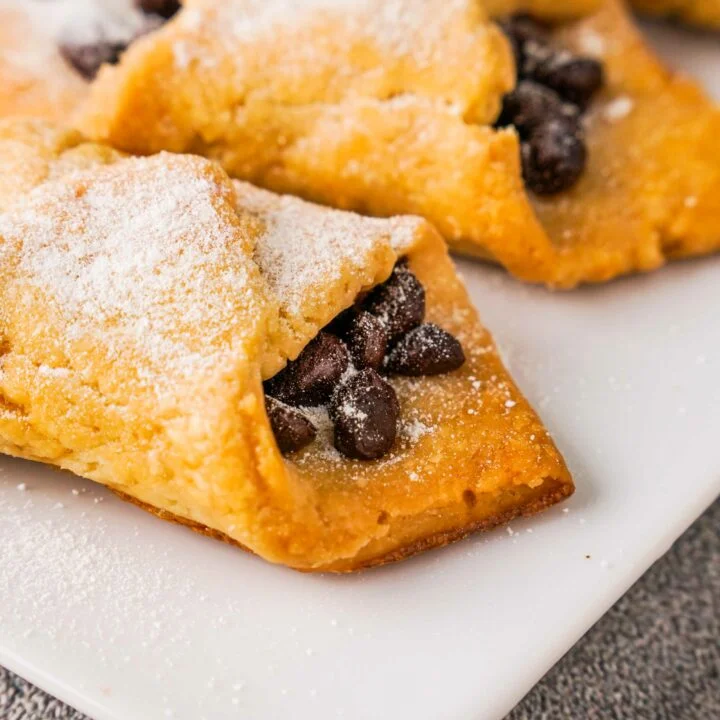
This gluten-free puff pastry uses rice flour and starches for a crisp, flaky result without wheat. Make it for filled pastries or as a homemade pastry base when you need a gluten-free option.
Ingredients
- 125 g (1 cup)white rice flour
- 60 g (½ cup)tapioca starch
- 80 g (½ cup)potato starch
- 3 g (1 teaspoon)xanthan gum
- 3 g (¾ teaspoon)baking soda
- 4 g (¾ teaspoon)salt
- 227 g (16 tablespoons; two sticks)frozen unsalted butter, grated
- 120 ml (½ cup)cold water
- 1egg, for an egg wash (or heavy cream)
Instructions
- 1
Mix dry ingredients
Put the white rice flour, tapioca starch, potato starch, xanthan gum, baking soda and salt in a large bowl. Stir until evenly combined.
- 2
Coat the butter
Grate the cold butter into the flour mixture, stirring as you go so the pieces are coated. Alternatively, cut the butter into the flour mixture with a pastry blender.
- 3
Bring dough together
When the butter pieces are about the size of peas, make a well in the centre and pour in the cold water. Use your hands to bring the mixture together into a ball.
- 4
Chill the dough
Refrigerate the dough for up to 2 hours.
- 5
Rest and preheat
Take the dough out of the refrigerator and leave it to sit for 20 minutes. Preheat the oven to 204°C (400°F).
- 6
Press into rectangle
Place the dough on wax paper or baking parchment and press it into a rectangle. If the edges crack, leave the dough at room temperature for another 20 minutes; if it feels too soft, refrigerate it for 20 minutes.
- 7
Fold the dough
Cover the dough with another sheet of wax paper or baking parchment and roll it to about 2 cm (¾ inch) thick. Turn it vertically, fold the top and bottom towards the centre like a letter, then rotate and roll it out again. Repeat this process two more times, for three rounds in total.
- 8
Cut the pastry
Roll the dough into a rectangle about 6 mm (¼ inch) thick and cut it into 12–16 pieces. If using the pastry in another recipe, follow that recipe's directions for cutting, shaping and baking.
- 9
Add the filling
Put your chosen filling on each piece. Fold one corner over the filling, then fold the other corner over it.
- 10
Brush with egg
Brush the tops with egg wash.
- 11
Bake until golden
Bake for 18–20 minutes, until the pastry has puffed and the tops are golden brown.
- 12
Cool before serving
Take the pastries out of the oven and let them cool before serving.
What is gluten-free puff pastry?
Puff pastry is a laminated dough that rises into crisp, distinct layers as its butter melts in the oven. This American-style gluten-free version uses rice flour with tapioca and potato starch instead of wheat flour.
The blend gives the dough structure, while grated frozen butter makes it easier to distribute the fat through the flour. Repeated rolling and folding creates the layers.
Nutrition and macros by portion
The nutrition label shows one serving as written: 211 calories, 2g protein, 24g carbs, 12g fat.
| Portion | Adjustment | kcal | Protein | Carbs | Fat |
|---|---|---|---|---|---|
| Lighter | Use a smaller pastry | 148 kcal | 1g | 17g | 8g |
| This serving | As written | 211 kcal | 2g | 24g | 12g |
| Hungry | Serve extra pastries | 317 kcal | 3g | 36g | 18g |
The recipe's stated nutrition per serving is 211 kcal, with 24 g carbohydrates, 12 g fat and 2 g protein. The flour and starches contribute most of the carbohydrates, while butter supplies most of the fat; serve a savoury pastry with vegetables or salad to round out the plate.
Why this flour blend works
Rice flour: It provides the main flour base and a neutral flavour. The starches help make a dough that can be rolled and folded.
Tapioca and potato starch: Together they help the pastry hold together and bake up tender. Xanthan gum helps bind the gluten-free mixture.
Keep the butter cold
Frozen butter: Grating it into the flour spreads small pieces through the mixture while keeping them cold. Stir as you grate so the pieces get coated and are less likely to clump.
Cold water: Add it only once the butter is about pea-sized. Work the dough just until it holds together rather than kneading it extensively.
Read the dough as you roll
Cracked edges: The dough may still be too cold to roll comfortably. Leave it at room temperature for 20 minutes, then try again.
Soft dough: If it feels too soft to handle, return it to the refrigerator for 20 minutes. Use the paper to help roll and fold without adding extra flour.
Folding builds layers
Letter folds: Fold the top and bottom towards the centre, rotate the dough and roll again. This recipe calls for three rounds of folding and rolling in total.
Even thickness: Roll gently and aim for an even rectangle so the pastry can be cut and baked consistently. Finish at about 6 mm thick before cutting.
Fill and bake
Filling: Add your chosen filling to each piece, then fold the two corners over it. For another recipe or shape, follow that recipe's cutting and baking instructions.
Doneness: Bake at 204°C for 18–20 minutes, looking for puffed pastry and golden tops. Let the pastries cool before serving.
Serving ideas
These pastries can be filled with a favourite sweet or savoury filling, or the unfilled pastry can be used as a base in another recipe. Serve filled pieces as a snack or alongside a meal.
For a fuller plate, pair savoury pastries with a fresh salad or cooked vegetables. Keep the filling in mind when choosing a side.
Recipe notes & tips
- Grate the butter while it is frozen so it stays firm as you work.
- Stir the flour mixture as you grate to coat the butter pieces.
- Use the dough's texture to guide resting: give cracked dough more time at room temperature and chill dough that feels too soft.
- Roll between sheets of wax paper or baking parchment to make the dough easier to handle.
- Follow the filling recipe's instructions if it calls for a different shape or baking method.
Variations
- Sweet filling: Fold the pastry around a favourite sweet filling before baking.
- Savoury filling: Use a savoury filling and serve the baked pastries with vegetables or salad.
- Cream wash: Use heavy cream instead of egg for brushing the tops.
- Pastry base: Leave the dough unfilled and prepare it according to the recipe where you plan to use it.
Common mistakes to avoid
- Butter too warm: Keep it frozen before grating so it remains in small, distinct pieces.
- Dough cracks: Let it sit at room temperature for another 20 minutes before rolling.
- Dough feels too soft: Refrigerate it for 20 minutes, then continue.
- Skipping folds: Complete all three rolling-and-folding rounds to build the pastry layers.
- Baking too little: Wait until the pastry has puffed and the tops are golden brown, allowing 18–20 minutes.
How to store
Cool the baked pastries before storing them in an airtight container in the refrigerator, and eat within 3 days. Reheat in an oven until warmed through and crisp; the unbaked dough can be chilled for up to 2 hours as directed.
Frequently asked questions
Can I use a pastry blender instead of grating the butter?
Yes. Cut the butter into the flour mixture with a pastry blender, stopping when the pieces are about the size of peas.
Why is my dough cracking when I roll it?
It may still be too cold. Leave it at room temperature for another 20 minutes before trying again.
What should I do if the dough is too soft?
Refrigerate it for 20 minutes, then resume rolling.
How many pieces does this make?
The rolled dough is cut into 12–16 pieces. The final number depends on how you cut it and whether another recipe calls for a different shape.
Can I use this pastry in another recipe?
Yes. Follow the other recipe's directions for cutting, shaping, filling and baking.
How do I know the pastries are ready?
Bake for 18–20 minutes, until they have puffed and the tops are golden brown.
Cook it from the original
This recipe comes from glutenfreepalate.com. Their page has the author’s own photos, notes and tips — the best place to cook it from.
Open the recipe on glutenfreepalate.com