
Gluten-Free Sweet Potato Pie
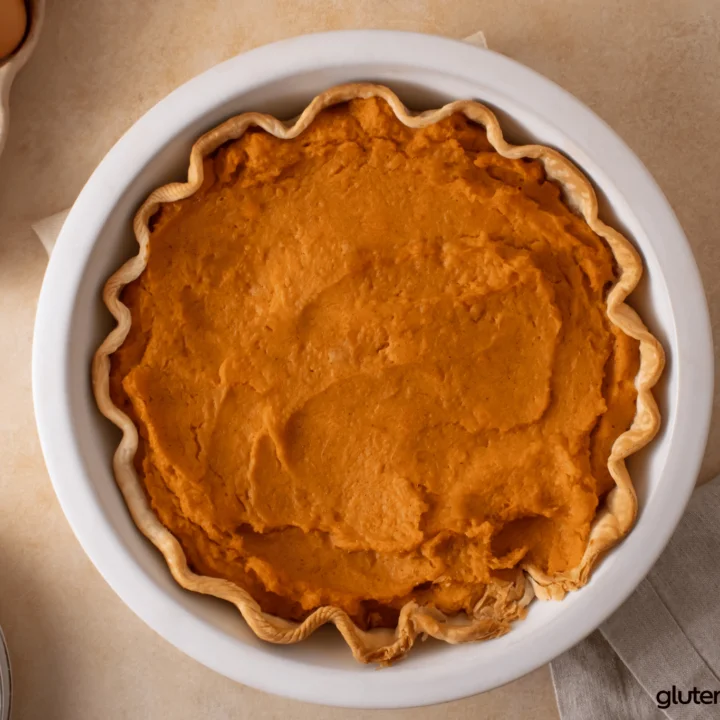
This American-style gluten-free sweet potato pie pairs a warmly spiced filling with a homemade crust made from alternative flours. It is a cosy bake for a weekend morning, and the filling is simple to mix by hand.
Ingredients
- 710 ml (3 cups)sweet potato purée, about 3 large sweet potatoes
- 2eggs
- 60 ml (1/4 cup)coconut milk
- 1lemon, zest and juice
- 1 tspground cinnamon
- 1 tspground nutmeg
- 1 tspvanilla extract
- A pinchsalt
- 120 g (1 cup)chickpea or almond flour
- 53 g (1/3 cup)sweet rice flour
- 32 g (1/4 cup)potato starch
- 1 tspsalt
- 30 ml (2 tbsp)ghee or coconut oil
- 1egg, lightly beaten
- 75–120 ml (5–8 tbsp)cold water
Instructions
- 1
Make the crust
Put the chickpea or almond flour, sweet rice flour, potato starch, salt and ghee in a food processor. Pulse until the mixture resembles small couscous grains.
- 2
Bring dough together
Add the beaten egg and cold water a tablespoon at a time, stopping when the dough holds together. Roll it out on a floured work surface and form it into a ball, then cut the ball in half and shape each half into a separate ball. Cover each with a large piece of cling film.
- 3
Roll the dough
Use a rolling pin to roll one ball into a thin 23–25 cm (9–10 inch) circle.
- 4
Save remaining dough
Keep the second ball of dough for another pie.
- 5
Preheat the oven
Heat the oven to 200°C (400°F).
- 6
Mix the filling
In a large bowl, combine the sweet potato purée, 2 eggs, coconut milk, lemon juice, cinnamon, nutmeg, vanilla extract and a pinch of salt. Stir until combined.
- 7
Fill the crust
Set the rolled dough in a pie dish and press it against the sides. Pour in the sweet potato mixture.
- 8
Shield the edges
Cover the sides of the crust with aluminium foil to help prevent them from burning.
- 9
Bake the pie
Bake for about 20 minutes, then remove the foil and bake for a further 20 minutes.
- 10
Cool before serving
Leave the pie to cool before serving.
What is sweet potato pie?
Sweet potato pie is an American dessert, especially associated with Southern cooking, made with a smooth sweet potato filling in a pastry shell. This version keeps the familiar cinnamon-and-nutmeg warmth while using a gluten-free crust.
The filling combines sweet potato with lemon, vanilla and coconut milk, so it is gently spiced with a little citrus brightness.
Nutrition and macros by portion
The nutrition label shows one serving as written: 576 calories, 17g protein, 82g carbs, 22g fat.
| Portion | Adjustment | kcal | Protein | Carbs | Fat |
|---|---|---|---|---|---|
| Lighter | Smaller slice, fruit alongside | 403 kcal | 12g | 57g | 15g |
| This serving | As written | 576 kcal | 17g | 82g | 22g |
| Hungry | Larger slice | 864 kcal | 26g | 123g | 33g |
The sweet potato and flours provide most of the carbohydrates, while the eggs contribute protein and the crust fat, ghee or coconut oil and coconut milk contribute fat. Pair a slice with fruit or a lighter savoury side to balance the plate.
Choosing the flours
Chickpea or almond flour: either can form the base of the crust, though they bring different flavours and textures. Chickpea flour has a more savoury, earthy note, while almond flour is milder and richer.
Sweet rice flour and potato starch: these round out the gluten-free blend. Pulse the mixture with the fat until it looks like small grains before adding the egg and water.
Getting the dough together
Add the cold water gradually, a tablespoon at a time, and stop as soon as the dough clumps together. The full amount can vary, so avoid pouring it all in at once.
Gluten-free dough can be delicate to roll. The cling film helps contain it as you roll, and the recipe sets aside the second ball for another pie.
Mixing a smooth filling
Sweet potato purée: use purée that is smooth and evenly measured so it blends readily with the eggs and coconut milk. Stir the filling until the spices and lemon are distributed throughout.
Lemon and spices: the zest and juice add a fresh note alongside cinnamon, nutmeg and vanilla. Keep the pinch of salt in the filling separate from the teaspoon used in the crust.
Baking and checking doneness
Bake at 200°C (400°F) for about 20 minutes with the crust edges covered in foil, then remove the foil and bake for another 20 minutes. This staged approach gives the filling time to bake while shielding the pastry edges.
The recipe gives time rather than a separate doneness test, so check the pie at the end of the second baking period and let it cool before serving.
Serving the pie
Let the pie cool before cutting so the filling has time to settle. It works as a dessert on its own or with a simple spoonful of yoghurt or cream.
For a more substantial plate, serve a slice after a meal with fruit or a lightly dressed salad alongside.
Recipe notes & tips
- Measure the sweet potato purée after mashing or blending it.
- Keep the water cold and add it gradually until the crust dough just holds together.
- Roll the dough between the cling film to make handling it easier.
- Use foil to cover the crust sides for the first 20 minutes of baking.
- Allow the pie to cool before slicing so the filling can settle.
Variations
- Use almond flour: choose it instead of chickpea flour for a milder, richer crust.
- Adjust the spice: vary the cinnamon and nutmeg to suit your taste.
- Add citrus zest: include the lemon zest in the filling for a more pronounced citrus note.
- Serve with yoghurt: add a spoonful alongside each slice for a cool contrast.
- Use coconut oil: choose it instead of ghee to make the crust without dairy.
Common mistakes to avoid
- Adding water too quickly: the dough can become difficult to handle, so add it one tablespoon at a time.
- Overworking the crust: pulse only until the mixture resembles small grains, then add the wet ingredients.
- Rolling without a cover: the dough may be fragile, so use the cling film to help handle it.
- Skipping the foil: the crust edges can overbrown, so cover them for the first part of baking.
- Cutting the pie while hot: the filling may not hold its shape, so let it cool before serving.
How to store
Cover and refrigerate leftover pie for up to 3 days. Reheat slices gently in the oven or microwave, or serve them chilled.
Frequently asked questions
Can I use chickpea flour or almond flour?
The recipe allows either. They have different flavours and textures, so use whichever you prefer.
Why is there dough left over?
The method makes two dough balls but uses one for this pie. Save the second ball for another pie.
How much water should I add to the crust?
Add 5–8 tablespoons (75–120 ml) of cold water one tablespoon at a time, stopping when the dough sticks together.
Can I make the pie ahead?
Yes. Bake it, let it cool, then cover and refrigerate it. Serve chilled or reheat a slice gently.
How do I stop the crust edges burning?
Cover the sides with aluminium foil for the first 20 minutes, then remove it for the remaining 20 minutes of baking.
Cook it from the original
This recipe comes from glutenfreepalate.com. Their page has the author’s own photos, notes and tips — the best place to cook it from.
Open the recipe on glutenfreepalate.com